
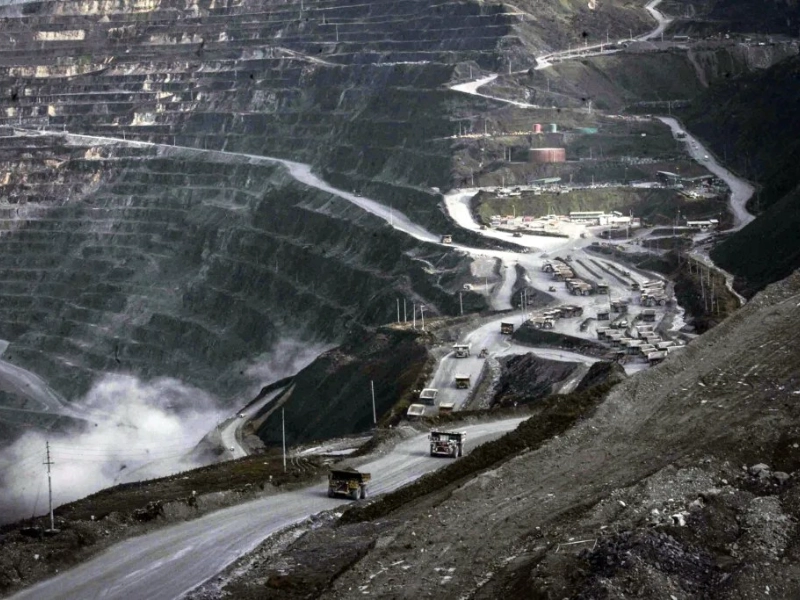
1. Grasberg (Indonesia)
Like Grasberg, porphyry copper-gold systems usually arise in volcanic settings and emerge from intricate geological events spanning millions of years. These systems start with magma invading the Earth’s crust. Minerally rich fluids released by this lava as it cools and crystallises infiltrate the surrounding rock. Superheated and under extreme pressure, these fluids pass dissolved metals—including copper and gold—through rock cracks and pores. These metals precipitate out of solution as the fluids cool and pressure drops to create the ore deposits miners are looking for.
Especially remarkable for size and grade is the Grasberg deposit. With gold values quite high for a porphyry system, the ore deposit stretches from the surface to depths more than 1,000 meters. Multiple phases of mineralisation are responsible for this richness; consecutive pulses of mineral-rich fluids have over time concentrated the important metals.
Grasberg’s geological context also fascinates me. The deposit is in the Cenozoic Central Range of New Guinea, an area marked by intricate tectonic action. The collision of the Australian and Pacific plates has sculpted this region via extreme folding, faulting, and volcanic activity. The creation and exposure of the Grasberg deposit have been considerably aided by these tectonic pressures.
Grasberg’s mining activities comprise both open-pit and underground techniques. Visible from space, the open-pit mine with its unique tiered walls reminds us of the extent of human activity in the search of minerals. The emphasis is moving to underground operations as surface reserves run out, creating fresh mining technological innovation possibilities as well as constraints.
Getting and processing ore from Grasberg is a difficult task. The ore includes not only gold and copper but also rather large concentrations of molybdenum and silver. Using flotation, leaching, and electrowinning methods, advanced metallurgical procedures separate and recover these precious minerals.
Although the Grasberg mine has been a major source of income and prosperity for Indonesia, environmental and social issues have also come under attention there. Particularly with regard to waste rock and tailings disposal, the remote location and high altitude of the mine provide special difficulties for environmental management. Advanced water treatment systems and continuous environmental monitoring initiatives are among the efforts meant to minimise these effects.
Research of the Grasberg deposit keeps helping us to grasp porphyry copper-gold systems all around. By examining the features of the deposit, geologists and mining engineers help to enhance exploration models and advance mining methods. The knowledge acquired from Grasberg has consequences not just for next mineral discoveries but also for our understanding of the crustal dynamics of the Earth and the development of mineral deposits throughout geological time.
Looking ahead, the Grasberg mine acts as a microcosm of the opportunities and problems the worldwide mining sector faces. It emphasises in mining operations the requirement of sustainable practices, technical innovation, and responsible resource extraction. The continuous evolution of this remarkable deposit will surely influence our knowledge of geology, mineral formation, and the intricate interaction between environmental care and resource use.
 zi ang