
16. Chengdu J-10 – China
Manufacturer: Chengdu Aircraft Design Institute
Primary Users: People’s Liberation Army Air Force
Program Cost: $74 million* (allocated in 1982)
Unit Cost: $28 million* (FY2010)
Though Chengdu might not have the size of some of the largest defense firms like Lockheed Martin, it is still the firm behind some of China’s most impressive military planes. The Chengdu J-10 (with a NATO reporting name of “Firebird”) is also called the Menglong (meaning “vigorous dragon”) in China.
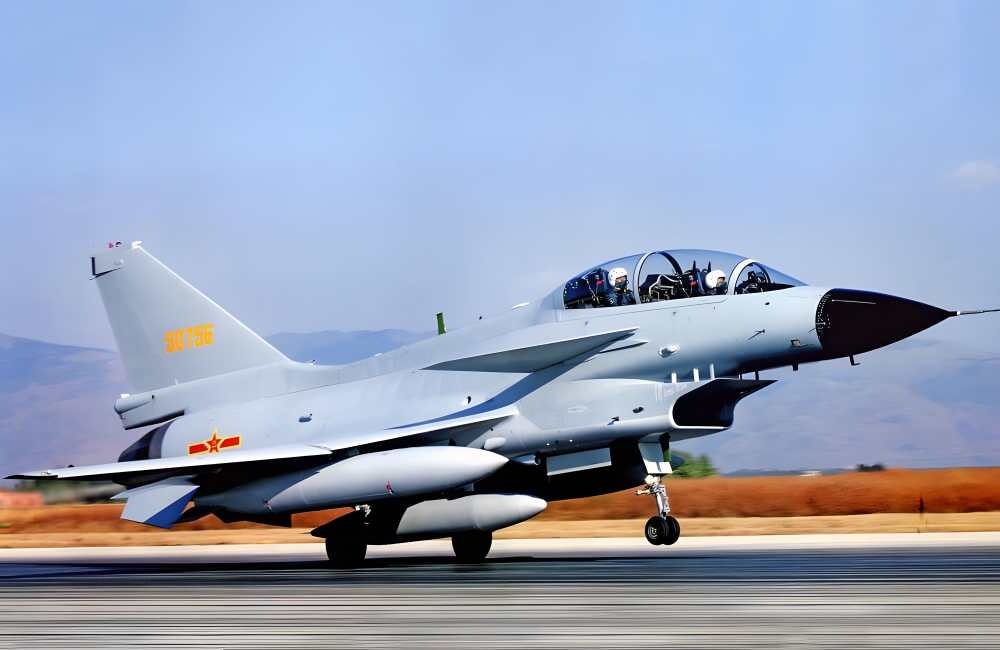
Chengdu J-10 (China) @Avions et, armement&espace / Facebook.com
The J-10 is a single-engine, lightweight, multirole fighter jet that is capable of operating in all weathers. It has a canard and delta wing design, as well as fly-by-wire flight controls. The J-10 was initially supposed to be a specialized fighter, but it later became a multi-role jet used for both ground-attack and air-to-air combat.
The internal armament on the J-10 includes a Gryazev-Shipunov twin-barrel cannon, air-to-air missiles like the PL-10 and PL-8, laser-guided bombs, the KD-88 air-to-surface missile, and the YJ-91A anti-ship missile. The Chengdu can also carry the YJ-91, an anti-radiation missile. All in all, the aircraft can hold 13,228 of either bombs, missiles, drop-tanks, or avionics equipment.
17. Tu-95 “Bear” Bomber – Russia
Manufacturer: Joint Stock Company Tupolev
Primary Users: Russian Aerospace Forces
Program Cost: $103 million*
Unit Cost: $34.33 million*
At the height of the Soviet Union, Andrei Tupolev’s design bureau based many of its plane designs on those already done by US companies. For that reason, the Tupolev Tu-95 is based on the Boeing Superfortress B-29. The Tu-95 is a heavy strategic bomber with four engines and a turboprop-powered platform.
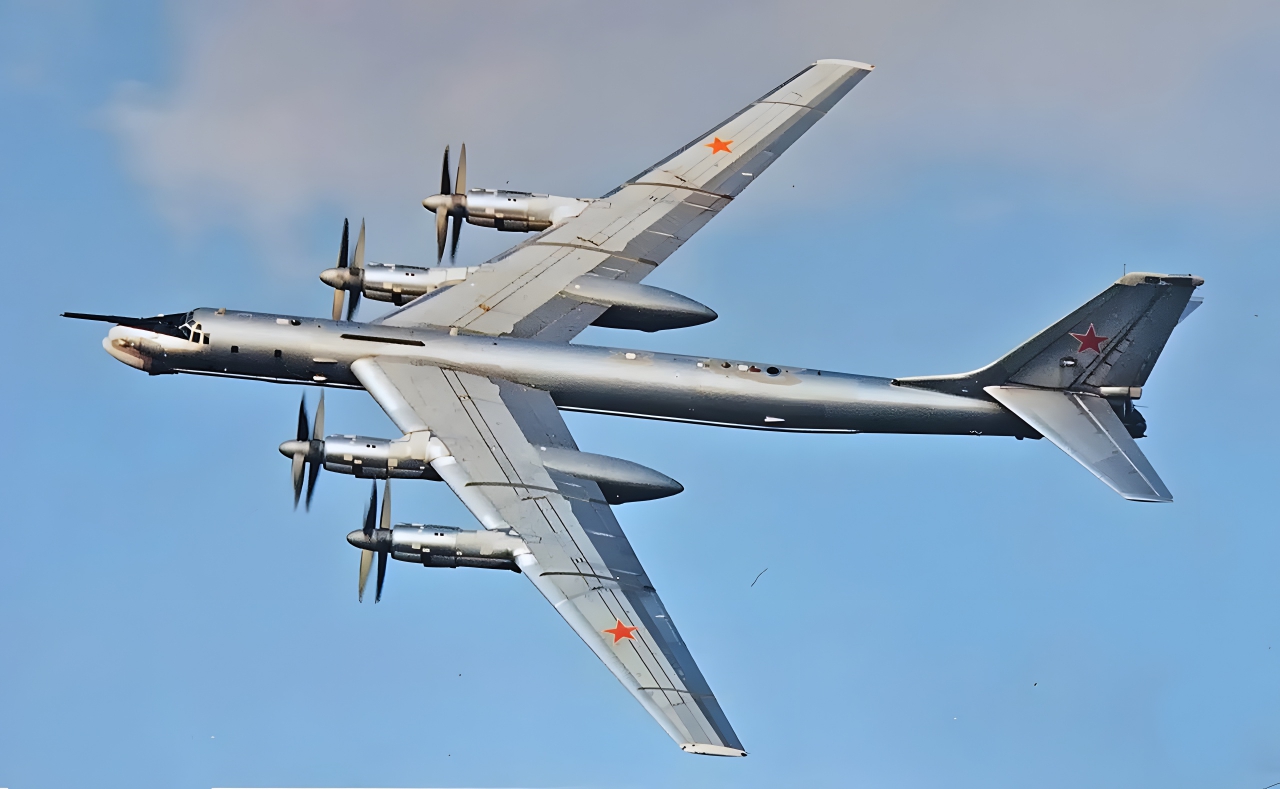
Tu-95 “Bear” Bomber (Russia) @aviationphotodigest / Facebook.com
The Tu-95 entered service in the fifties, and it is expected to be a staple of the Russian Aerospace Forces until 2040, if not longer. The Tu-142 is the maritime patrol version of the bomber. The passenger airline derivative of the Tu-95 is the Tu-114. Over 500 Tu-95 planes have been built, making it unique for propeller-driven, swept-wing aircraft.
The Bear has a few derivatives, including an airliner variation, called the Tu-114. The Tu-116 is a Tu-95 fitted with several passenger cabins, and the Tu-142 is a maritime recon and anti-submarine derivative. Other modifications have existed, though the Western intelligence either didn’t pick up on them or they were scrapped by the Soviet Union before reaching operational status.
18. F-15 Eagle C – Israel
Manufacturer: McDonnell Douglas Boeing Defense Space & Security
Primary Users: Israeli Air Force U.S. Air Force, Royal Saudi Air Force, Japan Air Self-Defense Force
Program Cost: $3.594 billion*
Unit Cost: $65 million*
The F-15 Eagle (designed by McDonnell Douglas) has been around since 1976. In addition to servicing the US Air Force, it has also served the Israeli Air Force, the Japan Air Self-Defense Force,and the Royal Saudi Air Force. The F-15C is an improved version of the base models for the Eagle.
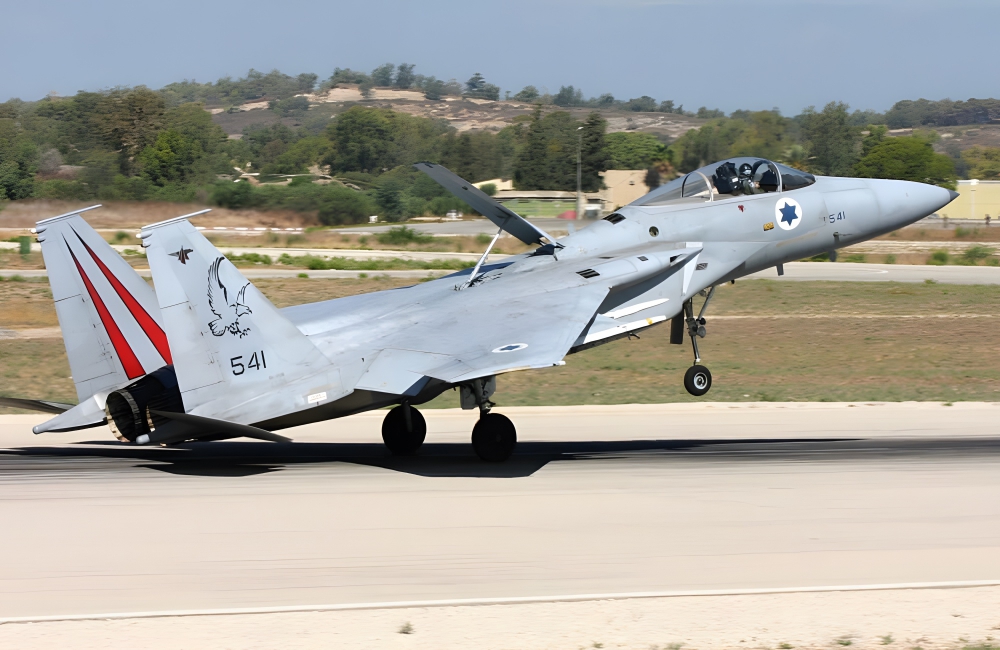
F-15 Eagle C (Israel) @Udi Sapir / Pinterest
The F-15C is a single-seat air superiority fighter jet that can fly in any weather. 483 F-15C jets were built from 1979 until 1985, and the final 43 of that 483 have AN/APG-63(V)1 radar (upgraded from AN/APG-70 radar). The Israeli and South Korean models may be getting an upgrade in the near future, but for now, the F-15 2040C is still just a prototype.
The F-15C can carry any number of air-to-air weapons. There is an automated weapons system, which allows the pilot to release the weapons safely and effectively through the use of head-up display that automatically provides visual guidance when the pilot changes from one arms system to another. The aircraft can be armed with four different weapons systems in total.
19. USS Gerald Ford – USA
Manufacturer: Newport News Shipbuilding, Northrop Grumman
Primary Users: U.S. Navy
Program Cost: $11.5 billion*
Unit Cost: $40.2 billion* (for three ships)
Named after President Gerald Ford (who did combat duty in the Pacific Theater aboard a light aircraft carrier called the Monterey), the USS Gerald R. Ford is the flagship aircraft carrier of its class. It was made by Newport News Shipbuilding and Northrop Grumman. Construction commenced in August of 2005.
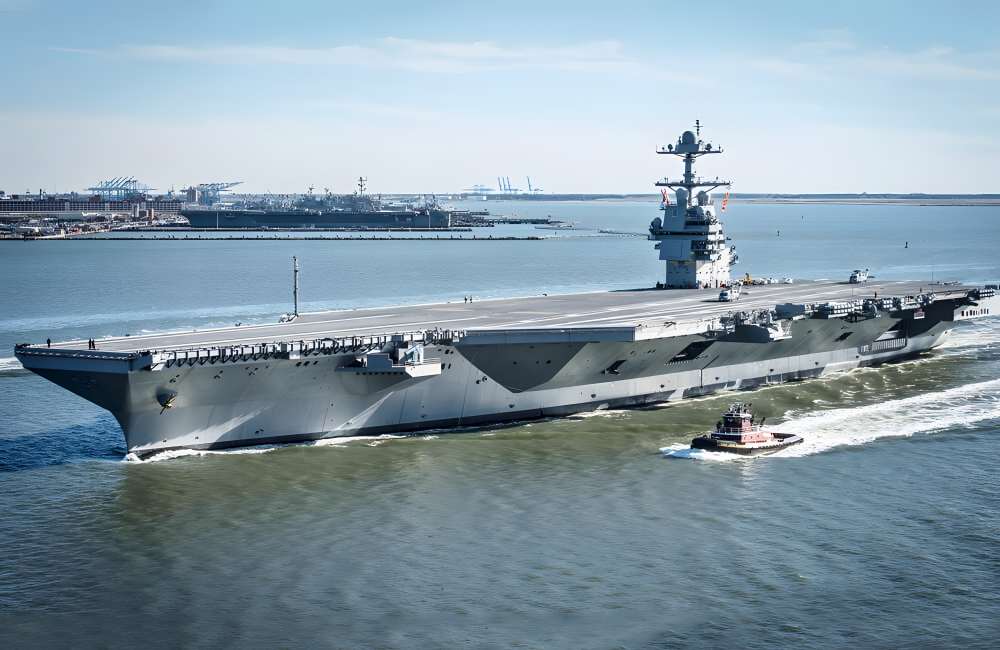
USS Gerald Ford (USA) ©U.S. Navy / Wikimedia.org
The Gerald R. Ford-class is a substantial improvement over the Nimitz class. The USS Gerald R. Ford is equipped with upgraded radar, weapons, and an EMALS (Electromagnetic Aircraft Launch System) which replaces the steam catapults. The EMALS means that the below-deck area will have more space, as the ship won’t have to generate/store steam for launches.
Unfortunately, the Gerald R. Ford is still struggling to become combat-ready. The GAO reported in the summer of 2020 that the ship was still having major problems with its weapons elevators. In early 2021, the Department of Defense confirmed that the EMALS only achieved 181 out of 4,166 aircraft launches.
20. Mil Mi-24 – Russia
Manufacturer: Mil Moscow Helicopter Plant
Primary Users: Russian Air Force
Program Cost: $1.953 billion*
Unit Cost: $15-$16 million*
With the NATO reporting name “Hind,” the Mil MI-24 is based in part on the American helicopters and gunships that were used during the Vietnam War. The majority of these gunships and helicopters were made by Lockheed Martin, Boeing, and Vought. Mikhail Mil was the designer behind the Hind.
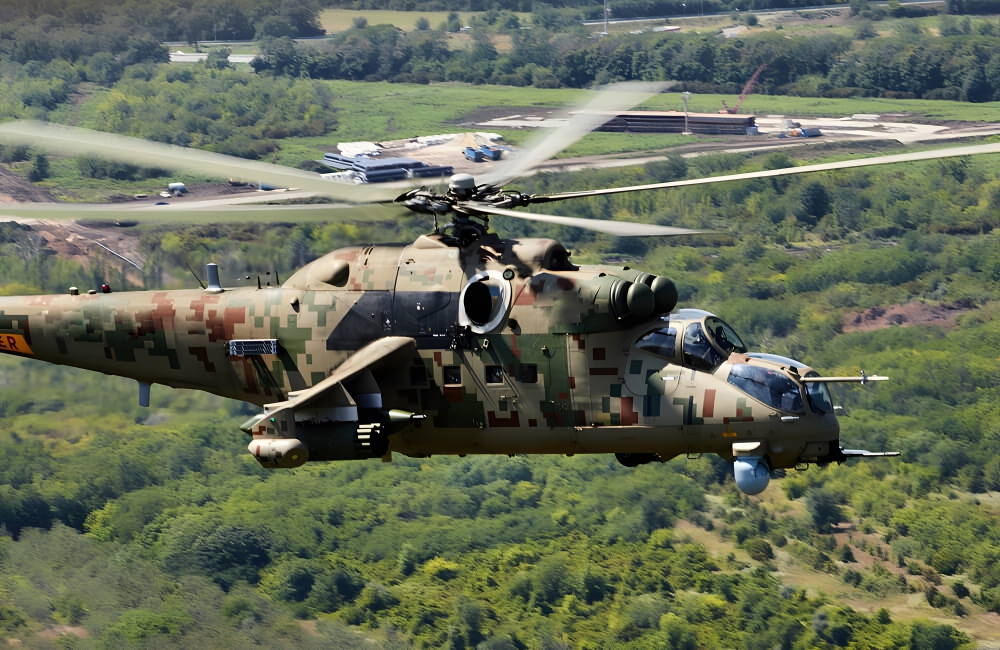
Mi-35P ©J_K/Shutterstock
Mil was originally opposed by senior members of the Soviet Union when he proposed the idea to them. He was finally able to persuade Andrey A. Grechko, a Soviet Marshal, to hold a panel on the need for armed helicopter ground support. Grechko’s and Mil’s panel led to the Soviet Union funding the MI-24 project.
The “Mi-24” is nicknamed the “flying tank” (летающий танк), which was historically used to designate Soviet ground-attack aircraft during WWII. The Russians also nicknamed their plans “Galina” or Crocodile because of the color scheme, as well as “Stakan” or “Drinking Glass,” due to the flat glass plates surrounding the earlier Mi-24 cockpits.
21. MQ-4C Triton – USA
Manufacturer: Northrop Grumman
Primary Users: U.S. Navy
Program Cost: $12.7665 billion*
Unit Cost: $120 million*
The MQ-4C Triton is a long endurance UAV that can fly at high altitudes. The Triton, which is made by Northrop Grumman, was developed for the Navy. The Navy uses it, along with the Royal Australian Air Force, for ISR missions over coastal and ocean regions. The Triton also conducts search and rescue missions and continuous maritime surveillance.
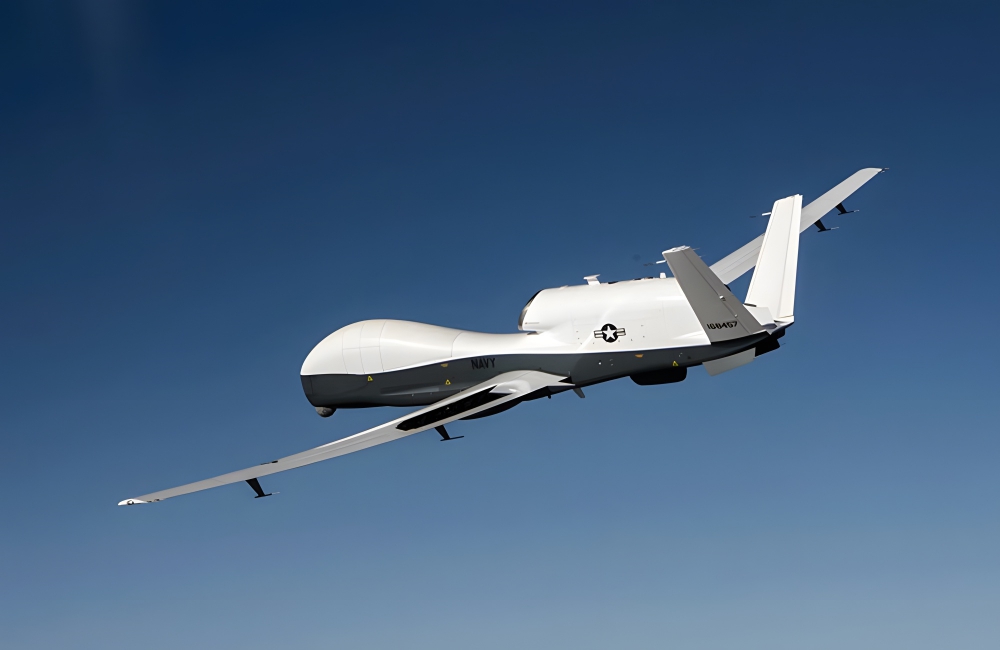
MQ-4C Triton (USA) @airlivenews / Facebook.com
The Triton is a complement to the P-8 Poseidon, though it is based on the RQ-4 Global Hawk. Unlike the Global Hawk, the Triton has new reinforcements to its wing and airframe. It has better de-icing and lightning protection systems. This allows the Triton to travel through clouds to get a better look at ships and other sea targets.
Full Operating Capability for the Triton is planned for 2023, a full twelve years after the SDD was delivered. The Triton can remain in the air for over thirty hours at 55,000 feet, traveling at speeds of up to 380MPH. The Triton is semi-autonomous. All operators have to do is set the controls and choose an operating area.
22. Bell Boeing V-22 Osprey – Japan
Manufacturer: Bell Textron, Boeing
Primary Users: Japan Ground Self-Defense Force, U.S. Marines, Air Force & Navy
Program Cost: $35.6 billion*
Unit Cost: $72.1 million* (FY2015)
After the failure that was Operation Eagle Claw, a botched operation during the Iranian Hostage Crisis of 1980, the U.S. military realized that it needed a new long-range, vertical-takeoff, high-speed aircraft. The Bell Boeing V-22 Osprey is what emerged from several years of programs dedicated to finding just that.
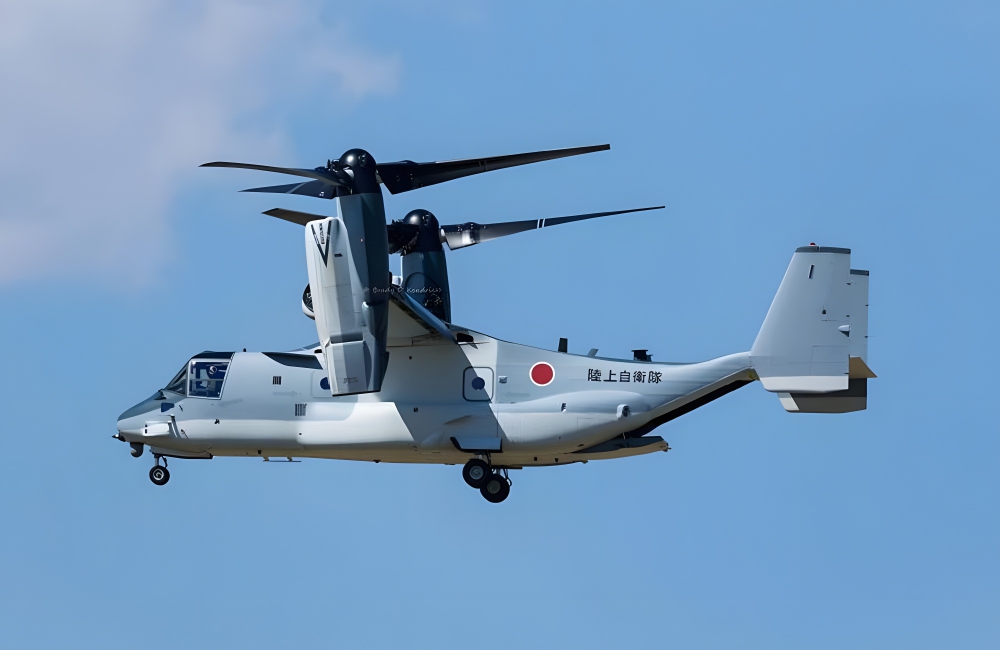
Bell Boeing V-22 Osprey (USA/Japan) @osprey.fan.club / Facebook.com
The large cost increases almost sank the program midway through. Development took a long time, and it was hotly debated. The budget was first set in 1986 at $2.5 billion, but, in just two years, the cost grew to $30 billion. By 2008, the budget expanded to nearly $55 billion, and that number only grew with maintenance and support costs.
The Osprey is a tiltrotor, multi-mission aircraft. It has VTOL and STOL capabilities, combining the functionality of a helicopter with the performance of a turboprop aircraft (especially in terms of long-range, high-speed cruising). The Osprey numbers 400 as of 2020, and production has continued steadily since 1988. In 2021, the Navy will be getting the CMV-22B, an upgraded COD variation of the V-22.
23. Seawolf-Class Submarine – USA
Manufacturer: General Dynamics Electric Boat
Primary Users: United States Navy
Program Cost: $15 billion* (FY2018)
Unit Cost: $5 billion* (FY2018)
The Seawolf-class is a SSN class that the U.S. Navy uses. 29 were scheduled for construction over a decade-long period, but that has been reduced, because of budget constraints and the end of the Cold War, to just three submarines. The Seawolf-class is unlikely to get any more members.
The Seawolf ended up leading to the construction of a smaller class of ships, the Virginia-class. Each Seawolf unit costs $3 billion, with the USS Jimmy Carter tacking on an extra $500 million to that. This makes the Seawolf the most expensive SSN in the history of SSNs, as well as the second-most-expensive submarine in the world.
Built by General Dynamics, the Seawolf-class was first developed in 1989. It is faster, larger, and far quieter than Los Angeles submarines. The Seawolf-class can carry more weapons, as it has twice the number of torpedo tubes. The Seawolf-class can carry up to fifty UGM-109 Tomahawks. These cruise missiles are used to attack both sea-surface and land targets.
24. B-2 Spirit – USA
Manufacturer: Northrop Grumman, Northrop Corporation, Hughes Aircraft Company
Primary Users: United States Air Force
Program Cost: $44.75 billion* (through 2004)
Unit Cost: $737 million*
Also called the Stealth Bomber, the B-2 Spirit is a heavy strategic bomber, built by Northrop Grumman. The B-2 Spirit has stealth technology that is specifically designed for penetrating even the densest anti-aircraft defenses. The B-2 Spirit has a flying wing design and requires a crew of two people.
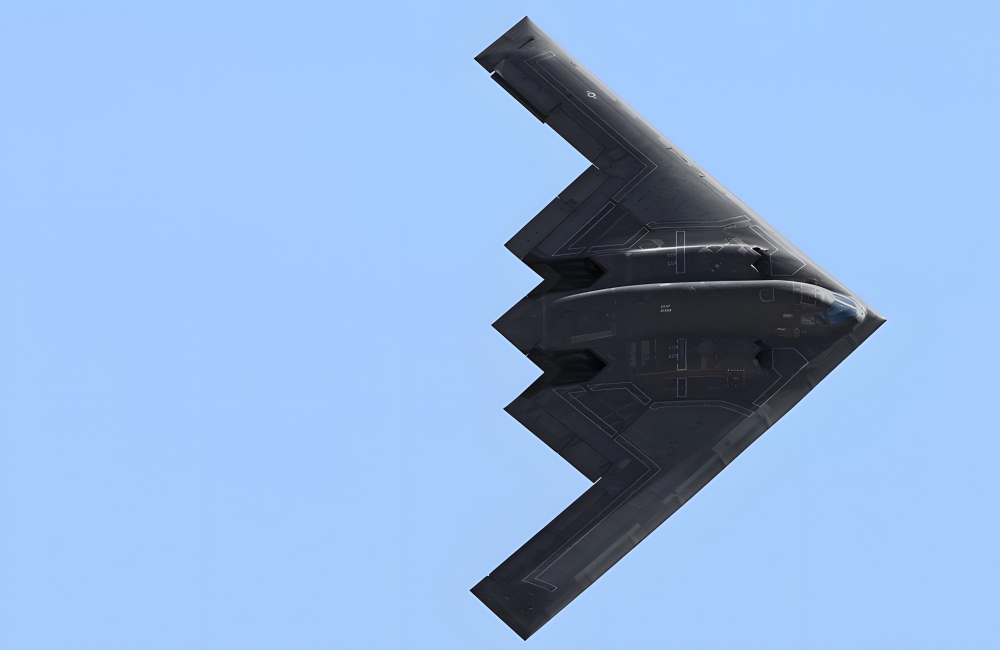
B-2 Spirit (USA) ©Angel DiBilio / Shutterstock
The bomber’s operating costs and capital required caused a stir in Congress. The Cold War wound down in the late 1980s, which meant that aircraft like the B-2 Spirit weren’t as urgent anymore. The B-2 Spirit’s purchase order was slashed in the early 1990s from 132 bombers to just 21.
The B-2 Spirit can carry out attack missions at altitudes of 50,000 feet. It has a range of over 6,900 miles using internal fuel. With one midair-refueling, the B-2 Spirit can travel over 12,000 miles. This bomber saw combat for the first time in the late nineties when it dropped non-nuclear, conventional ordnance on land targets.
25. Nimitz-class aircraft carrier – USA
Manufacturer: Newport News Shipbuilding Company
Primary Users: United States Navy
Program Cost: $93.6 billion (FY2019)
Unit Cost: $9.36* (FY2019)
Ten Nimitz-class nuclear-powered aircraft carriers exist. They are in service with the U.S. Navy. The leading ship of Nimitz is named after Fleet Admiral Chester W. Nimitz, who was a U.S. Pacific Fleet Commander during WWII. The Nimitz-class held the distinction of being the largest warships until 2017 when the U.S.S. Gerald R. Ford was commissioned.
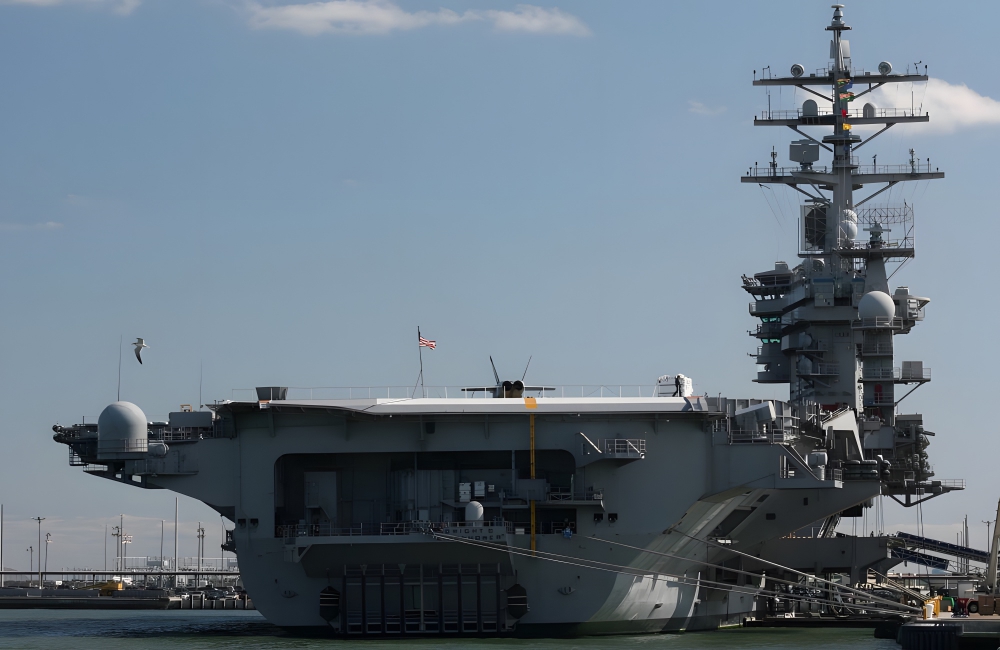
Nimitz-class aircraft carrier (USA) ©Jeffery Stone / Shutterstock
The Nimitz-class was built by Newport News Shipbuilding Company. The Nimitz-class has seen combat since the 1970s. The class has a CATOBAR configuration, and it uses arrestor wires and steam catapults for both launch and recovery. The Nimitz-class has faster flight-deck operations, and it can launch more aircraft than preceding warships (which predominantly used the STOVL configuration).
In 2018, the cost of each Nimitz-class aircraft carrier was $9.36 billion. Ten were planned, ten were completed, and ten were active. The carriers have a fifty-year active service life, and, at the end of their lives, they will be decommissioned, a process that will take between $750 and $900 million per ship. A conventionally-powered carrier costs just $53 million to decommission.
26. Admiral Kuznetsov Aircraft Carrier – Russia
Manufacturer: Nikolayev South, Nevskoye Planning & Design Bureau
Primary Users: Russian Navy
Cost: Program/Unit cost $2 billion* (FY2018)
Admiral Kuznetsov is a Russian class that rivals the US Navy’s carriers. The Admiral Kuznetsov, named after a former Admiral of the Fleet of the USSR, is a TAVKR – meaning that it is a heavy aircraft carrier. It is intended to defend and support the Russian Navy.
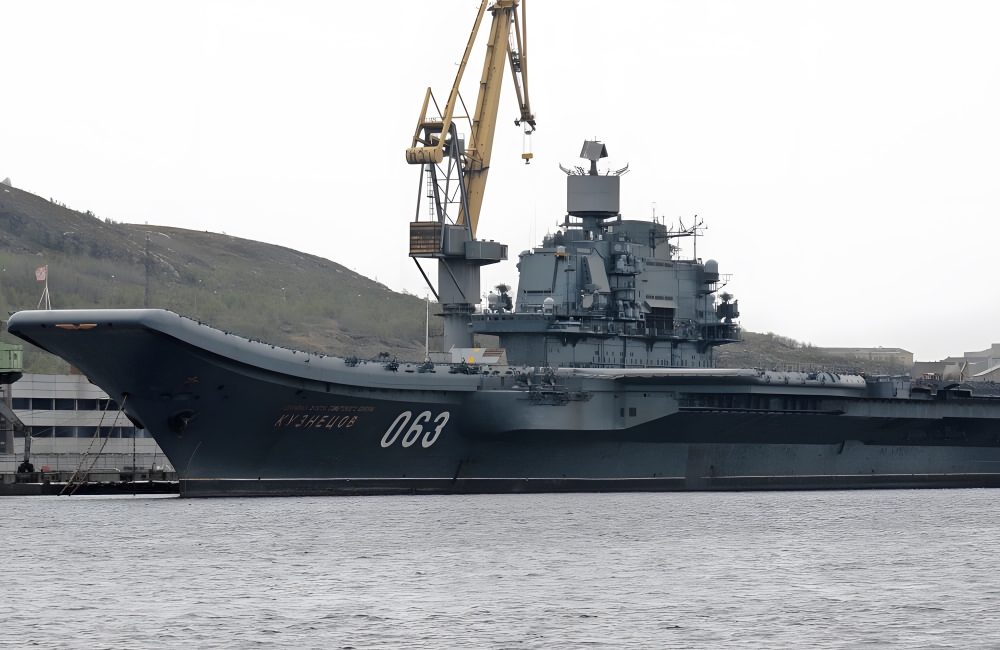
Admiral Kuznetsov Aircraft Carrier (Russia) ©VPales / Shutterstock
The Soviet Union was the first to use Admiral Kuznetsov, as it was launched in 1985. She was intended to be the lead ship of the class, but the Soviet Union disbanded in 1991 before the second member of the class, Varyag, was finished. Admiral Kuznetsov was refit in July 2018, and the refit is still ongoing.
27. A-10 Warthog – USA
Manufacturer: Fairchild Republic
Primary Users: U.S. Air Force
Cost: Program cost $33.15 billion* (FY2020) / Unit cost $46.3 million* (FY2020)
The A-10 Thunderbolt II is better known by its nickname the Warthog (or, simply, “The Hog”). The Warthog was designed for CAS of allies, as well as attacking tanks and armored vehicles. The Warthog also provides quick-action and air controller support. The Warthog was designed with a 30mm Avenger GAU-8 rotary cannon.
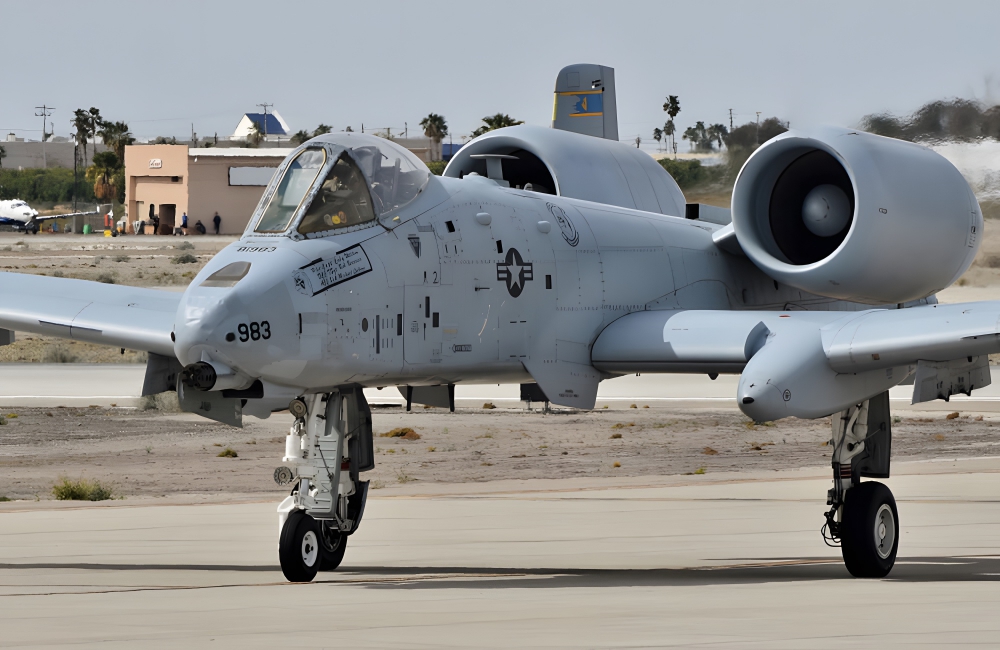
A-10 Warthog (USA) ©Michael Fitzsimmons / Shutterstock
The Warthog is as durable as the animal after which it is nicknamed. The airframe has 1,200 pounds of titanium armor around the cockpit. The Warthog was produced from 1972 until 1984, and 716 were built. It was officially introduced to the USAF in October of 1977. Each unit costs $46.3 million.
28. Liaoning Aircraft Carrier – China
Manufacturer: Mykolaiv South (hull), Nevoskye Planning and Design (hull), Dalian Shipbuilding Industry
Primary Users: People’s Liberation Army Navy Surface Force
Cost: Program/Unit cost $120 million* (FY2002)
The Liaoning was originally developed by the Soviet Union as the “Varyag.” However, the Soviet Union disbanded before Varyag was completed, so the Russian government cut its losses and sold Varyag to the Chinese, who renamed it Liaoning. Liaoning was sold off by the Soviets when it was 68% completed.
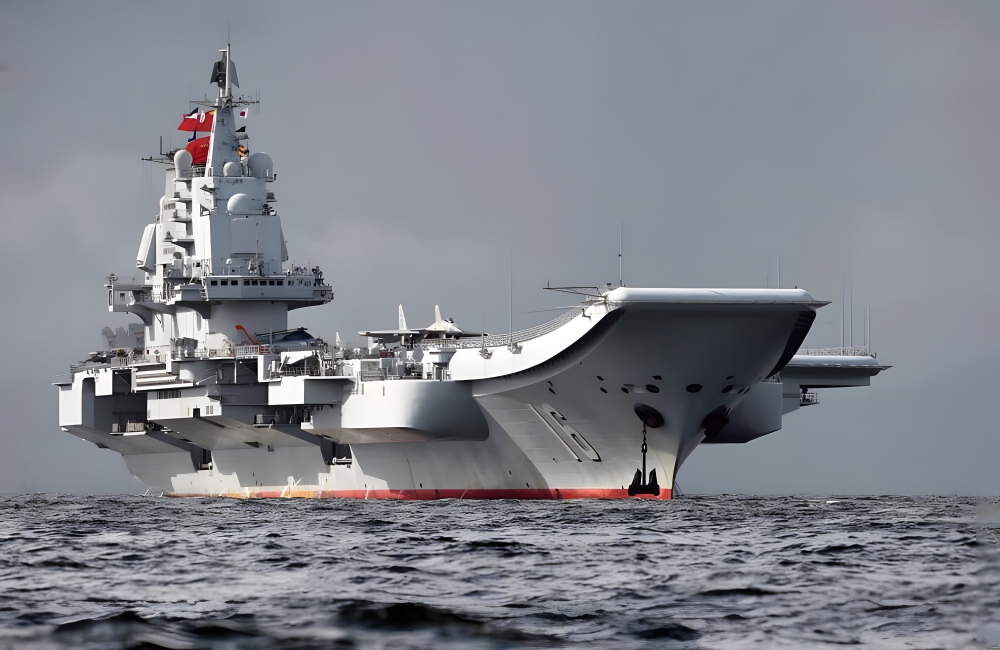
Liaoning Aircraft Carrier (China) @740kvor / Facebook.com
The Chinese Navy finished building it and commissioned it in 2002. Liaoning is a Type 001 aircraft carrier, the first of its kind to be used by the Chinese Navy. It was originally a training ship for the military, but the Chinese government-controlled media announced that Liaoning would become a combat ship in 2019.
29. Virginia Class Submarine – USA
Manufacturer: General Dynamics, Huntington Ingalls, Newport News
Primary Users: U.S. Navy
Cost: Program cost $118.8 billion* (FY2009) / Unit cost $1.8 billion* (FY2009)
Virginia class submarines benefit from America’s newest technologies, which allows each unit to have $1 billion less in building costs. The submarines are also called the SSN-774 class. They are nuclear-powered, fast-attack submarines that are the latest in the Navy’s undersea warfare platform. Virginia class submarines can do pretty much anything, from open ocean to littoral missions.
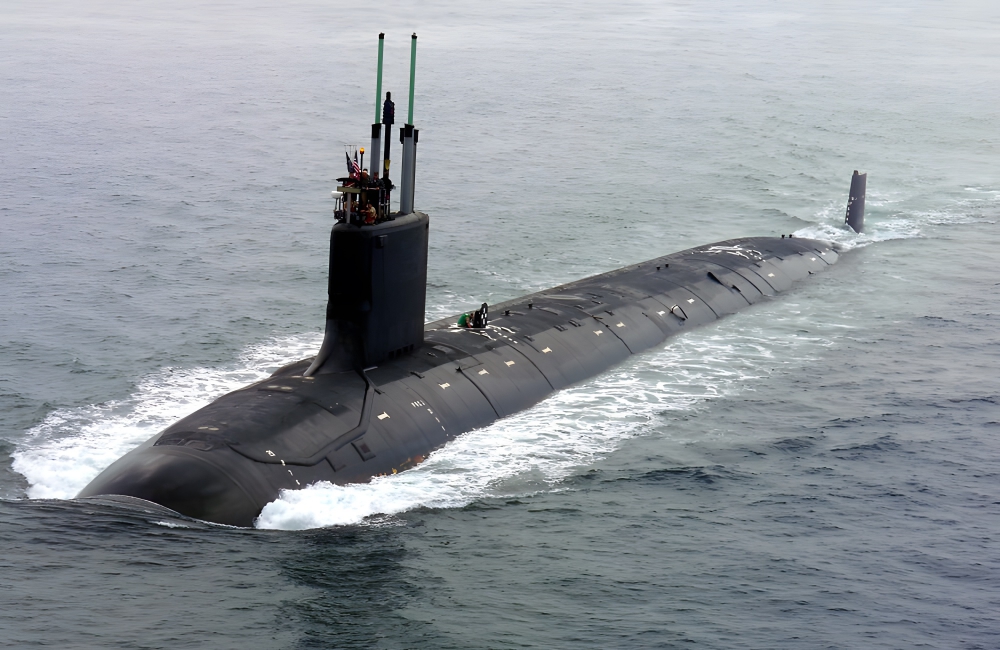
Virginia Class Submarine (USA) ©General Dynamics Electric Boat / Wikimedia.com
They are armed with Tomahawk missiles, RGM-84 Harpoons, and MK-48 torpedoes. Virginia-class submarines will replace the Los Angeles-class submarines, which are aging. 66 are planned. 19 have been completed and are in active service. Eleven are in the building process, and six are on order.
30. INK Vikramaditya Aircraft Carrier – India
Manufacturer: Black Sea Shipyard, JSC PO Sevmash, Chernomorskiy Yard, Nikolayev
Primary Users: Indian Navy
Cost: Program/Unit purchase price $2.35 billion* (FY2004)
Vikramaditya means “Brave as the Sun” in Sanskrit. This aircraft carrier is a former member of the Soviet Navy’s Kiev-class, where it was originally built under the name Baku. Baku was commissioned in 1987 and decommissioned nine years later. India bought it from the Russians in 2004 for $2.35 billion. It took years of negotiations before the deal was closed.
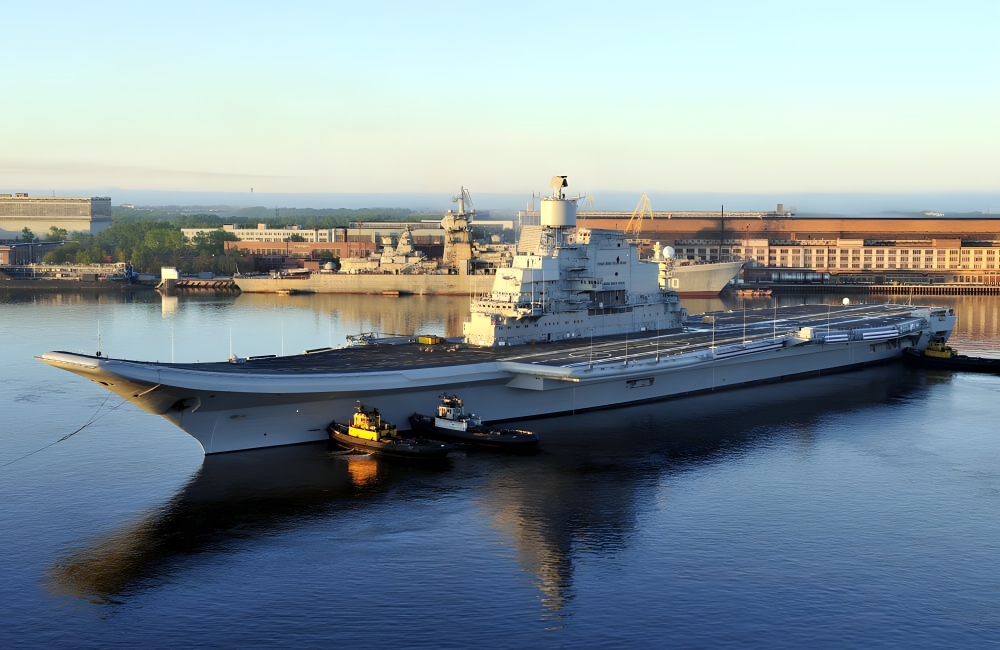
INK Vikramaditya Aircraft Carrier (India) @INSVikramadityaR33 / Facebook.com
Vikramaditya had to be overhauled before it could be launched in 2008. 99% of the structure and 50% of the cabling had to be replaced. New equipment (engines, diesel generators, and a deck that could handle an MiG-29K aircraft) was installed as well.