
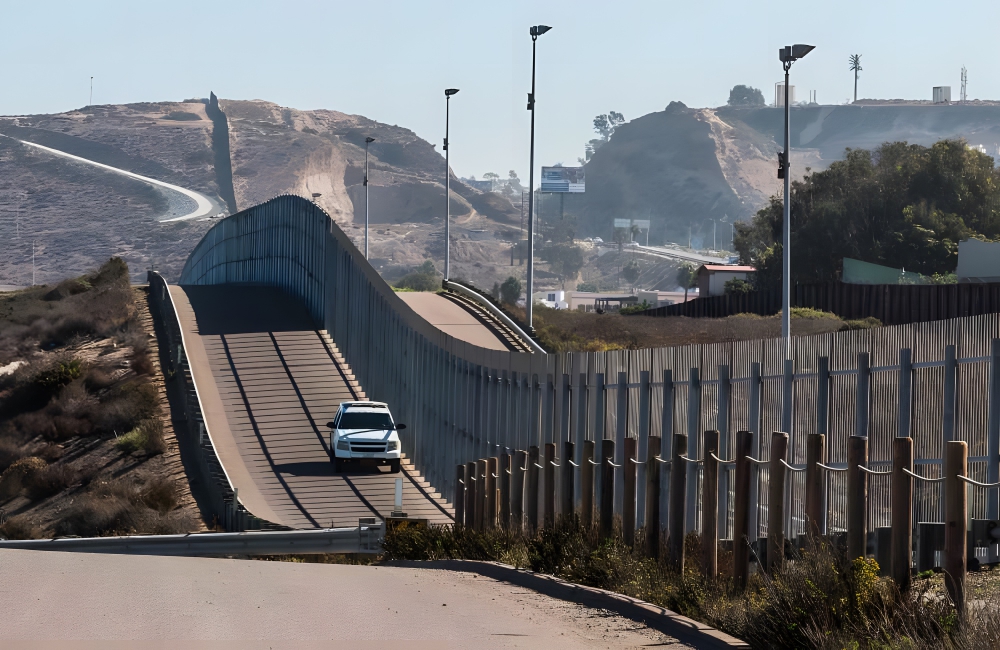
USA and Mexico ©Sherry V Smith/Shutterstock
In a world stitched together by lines both seen and unseen, the borders between countries often tell a story far richer than mere geography. From historic treaties to natural landscapes, these dividing lines are more than just markers on a map; they’re the backdrop to a fascinating narrative of human interaction, conflict, resolution, and cooperation.
Some borders defy logic with their peculiarities, while others enchant with their unique beauty, each offering a glimpse into the complexities of nationhood and neighborliness. This article embarks on a journey to explore the most unusual borders between countries, revealing the quirky, the beautiful, and the downright astonishing ways in which nations meet.
1. The Netherlands and Belgium
Border: Baarle-Nassau and Baarle-Hertog enclaves
Area: Unknown
Est. Gross Domestic Product: $1.1 trillion (The Netherlands) / $627 billion (Belgium)*
Baarle-Nassau and Baarle-Hertog represent a border conundrum like no other, where the Netherlands and Belgium are intricately woven together in a complex patchwork of enclaves and exclaves. This unique arrangement consists of more than two dozen parcels of Belgian territory nestled within the Dutch landscape, a product of centuries-old treaties and land exchanges.
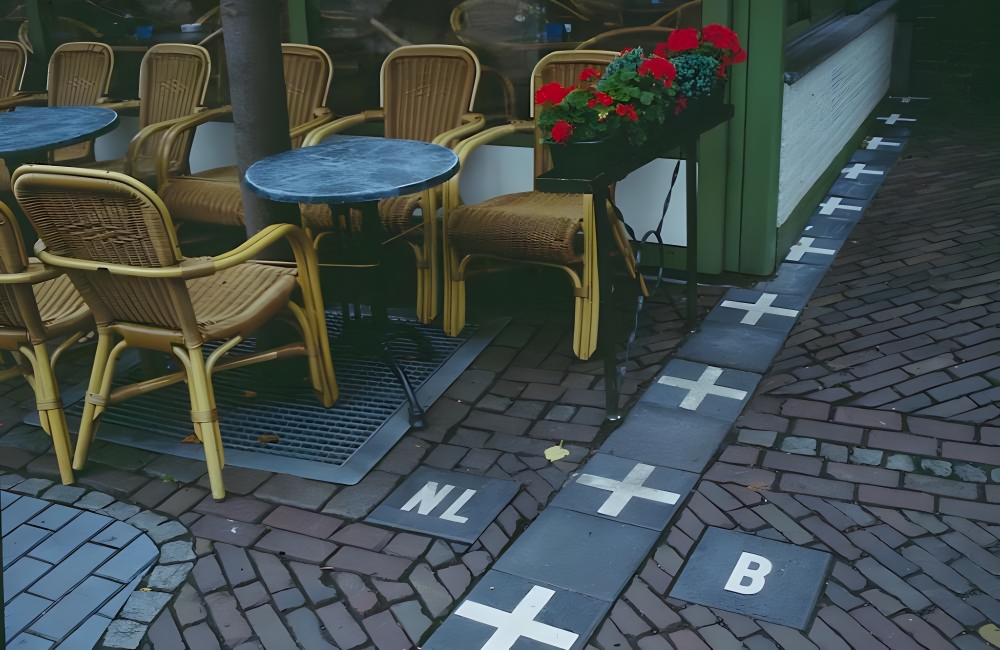
The Netherlands and Belgium ©Jérôme/Wikimedia
The border slices through the town with such precision that it intersects buildings and streets, marked by white crosses to delineate one nation from the other. This bizarre demarcation affects daily life in quirky ways—restaurants may change countries at the whim of law, and homes are designated as Dutch or Belgian based on the location of their front doors.
2. Slovakia, Austria, and Hungary
Border: Trilateral border point near Bratislava
Area: N/A
Est. Gross Domestic Product: $226 billion (Slovakia) / $613 billion (Austria) / $53,284 million (Hungary)*
The tripoint near Bratislava, where Slovakia, Austria, and Hungary converge, offers a unique geographical curiosity: a place where three nations meet. This spot is marked by a triangular picnic table, symbolizing a rare point of unity and shared space in the complex tapestry of European borders.
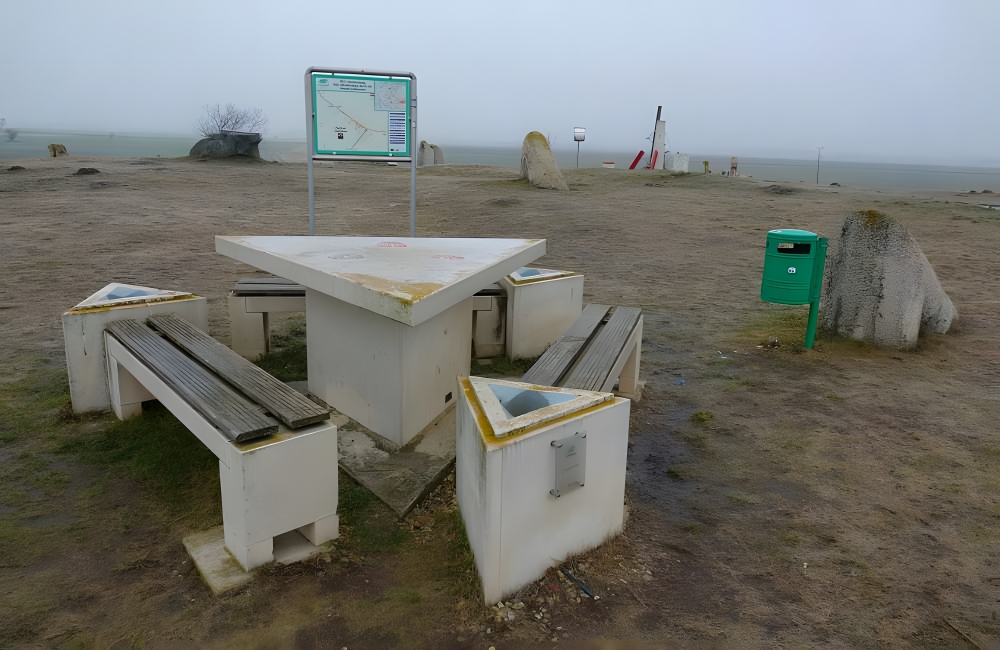
Slovakia, Austria, and Hungary @uspn/Pinterest
Visitors here can quite literally dine in three countries in one sitting, a testament to the open and peaceful relations between these nations. This peculiar border arrangement highlights the fluidity and friendship that can exist amidst the rigid demarcations of national territories.
3. Nepal and China
Border: Mount Everest
Area: Over 1,414 km* long
Est. Gross Domestic Product: $46.097 billion (Nepal) / $17.52 trillion (China)*
Straddling the summit of Mount Everest, the border between Nepal and China scales the heights of the extraordinary, marking one of the highest international frontiers in the world. This natural boundary, peaking at approximately 29,000 feet, not only separates two nations but also unites them through the breathtaking majesty of the Himalayas.
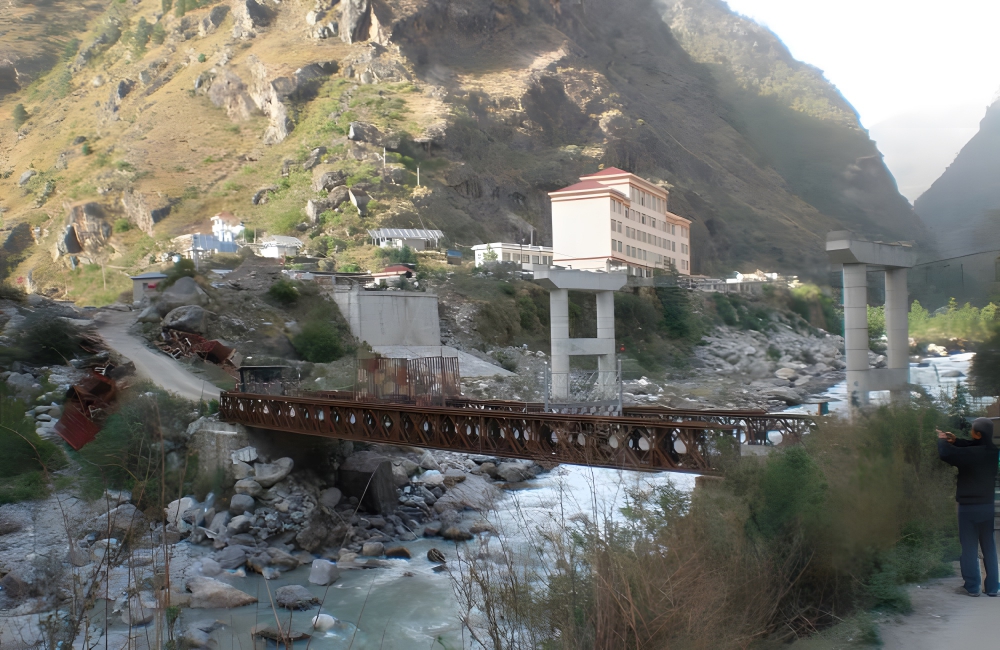
Nepal and China ©Urusa Sharma/Wikimedia
The Friendship Highway, extending from the border to Tibet’s capital, Lhasa, symbolizes the blend of challenge and camaraderie this border represents. Despite the sparse human presence, due to the extreme conditions and the rigorous ascent, Everest’s crest remains a testament to human ambition and the sheer force of nature, making this border uniquely awe-inspiring.
4. Vatican City and Italy
Border: Encircled by Vatican Walls
Area: 3.2 km*
Est. Gross Domestic Product: $30 billion (Vatican City) / $2.629 trillion (Italy)*
Encircled by the imposing Vatican Walls, the border between Vatican City and Italy is as much a symbol of spiritual authority as it is a geopolitical boundary. This unique demarcation encloses the smallest independent state in the world, both in area and population.
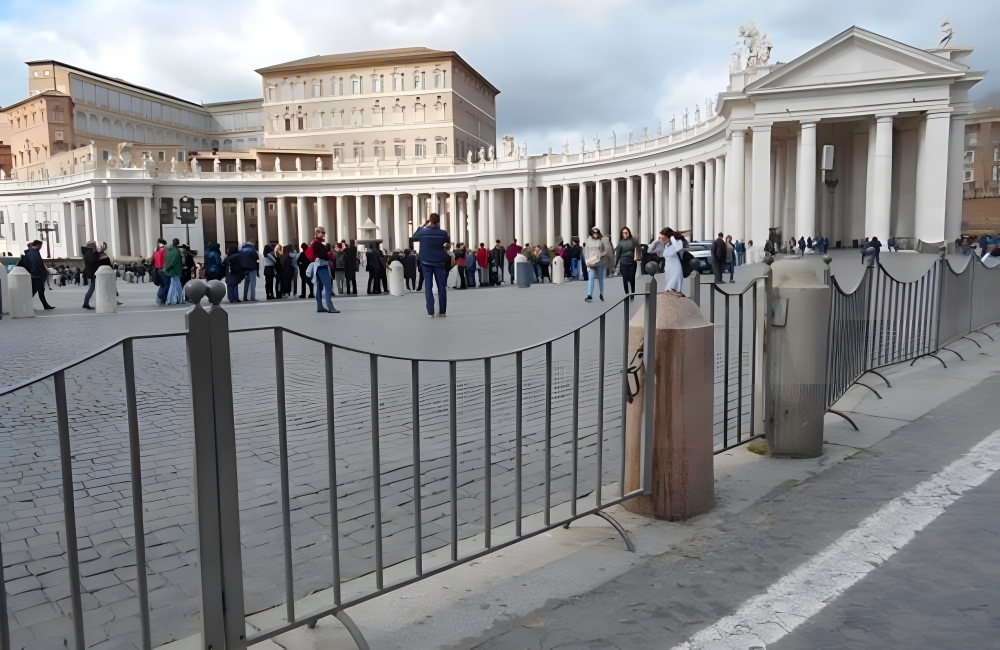
Vatican City and Italy ©r/polandball/Reddit
Established in 1929 by the Lateran Treaty, the walls not only define the physical limits of this sovereign city-state but also encapsulate a rich tapestry of religious, cultural, and historical significance. Within these walls lies a powerhouse of religious influence, home to the Roman Catholic Church and the Pope.
5. France and Switzerland
Border: Hotel L’Arbézie Franco-Suisse
Area: 573 km* (total border length)
Est. Gross Domestic Product: $3.049 trillion (France) / $640 billion (Switzerland)*
Hotel L’Arbézie Franco-Suisse offers guests an unparalleled experience, straddling the border between France and Switzerland in the quaint alpine village of La Cure. Built in the 19th century amidst a border redrawing by Napoleon III, this charming establishment capitalizes on its unique location by allowing guests to dine and sleep across two nations simultaneously.
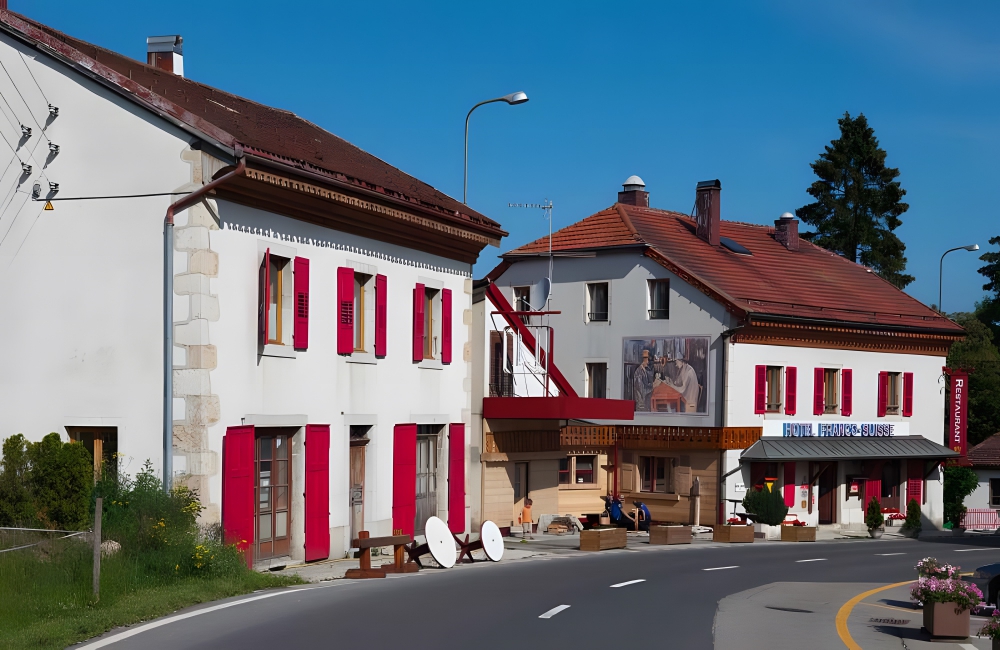
France and Switzerland ©Roland Zumbuehl/Wikimedia
The hotel’s historical quirkiness extends beyond its dual-nationality; it was originally a home with a bar on the French side and a store on the Swiss side, later transformed into a hotel by the original owner’s sons.
6. US and Canada
Border: Haskell Free Library and Opera House
Area: 8,891 km* (total border length)
Est. Gross Domestic Product: $27.36 trillion (US) / $1.928 trillion (Canada)*
Straddling the border between the U.S. state of Vermont and Quebec, Canada, the Haskell Free Library and Opera House embodies a rare symbol of peace and cooperation between two nations. Constructed intentionally on the international boundary in 1904, this architectural marvel allows visitors to freely roam a space shared by both countries without leaving the building.
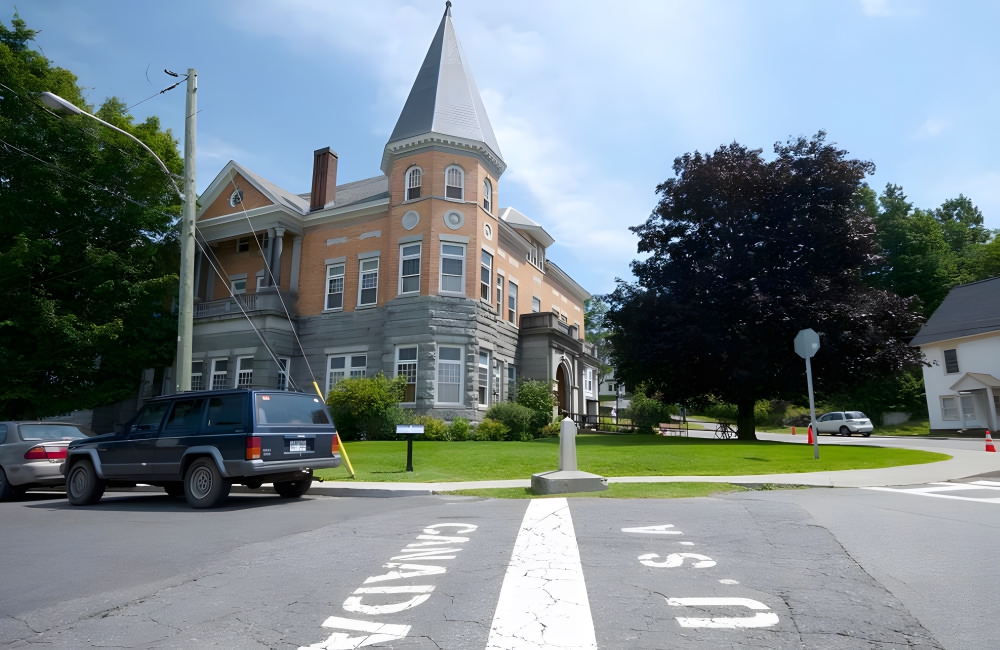
US and Canada ©richardmcguire/Flickr
The library’s reading room and the opera stage sit in the U.S., while most of the audience seats are in Canada, illustrating a unique cultural exchange. However, crossing the border within the building without official procedure can lead to legal complications, a reminder of the invisible lines that define nations.
7. Spain and Portugal
Border: Zipline between Sanlúcar de Guadiana (Spain) and Alcoutim (Portugal)
Area: 1,214 km* (total border length)
Est. Gross Domestic Product: $1.582 trillion (Spain) / $276.432 billion (Portugal)*
The border between Spain and Portugal offers an exhilarating twist on international travel: a zipline that whisks thrill-seekers from Sanlúcar de Guadiana in Spain to Alcoutim in Portugal. Known as Limitezero, this unique mode of transportation not only serves as a novel way to cross borders but also symbolizes the friendly ties between these two nations.
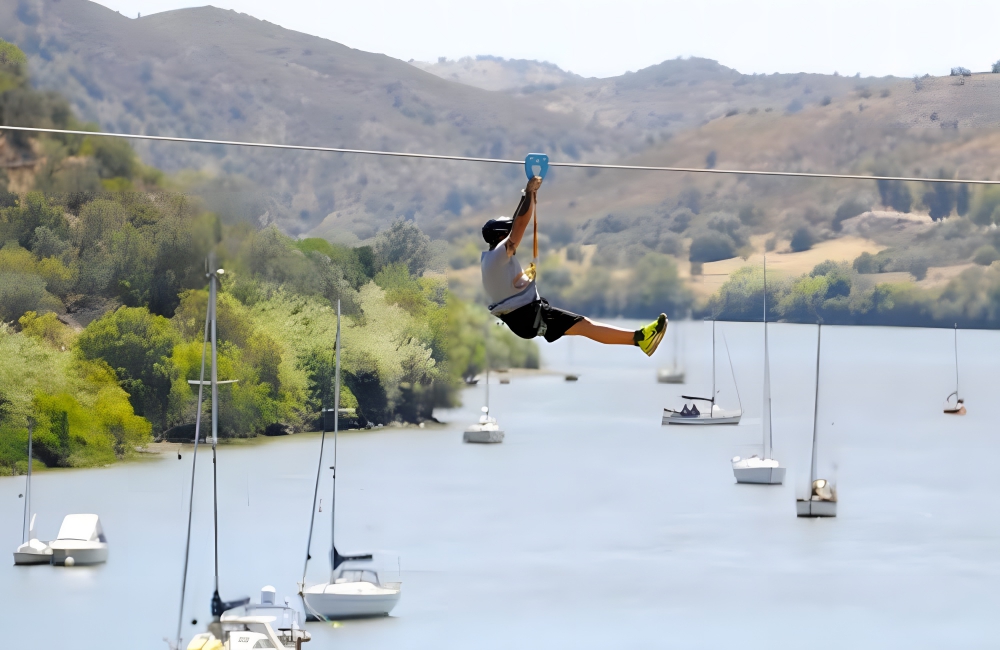
Spain and Portugal @insider/Pinterest
Covering the span of the Guadiana River, participants experience the rare sensation of zipping across time zones, albeit briefly, as they glide from one country to the other. As the world’s first cross-border zipline, it represents a blend of adventure and international harmony, making this border crossing an unforgettable experience.
8. Haiti and Dominican Republic
Border: Massacre River
Area: 376 km*
Est. Gross Domestic Product: $33 billion (Haiti) / $226 billion (Dominican Republic)*
The border between Haiti and the Dominican Republic is starkly delineated by more than just political lines; it is vividly etched into the landscape itself. The Massacre River, which runs along part of this border, is named for a historical conflict but today tells a tale of environmental divergence.
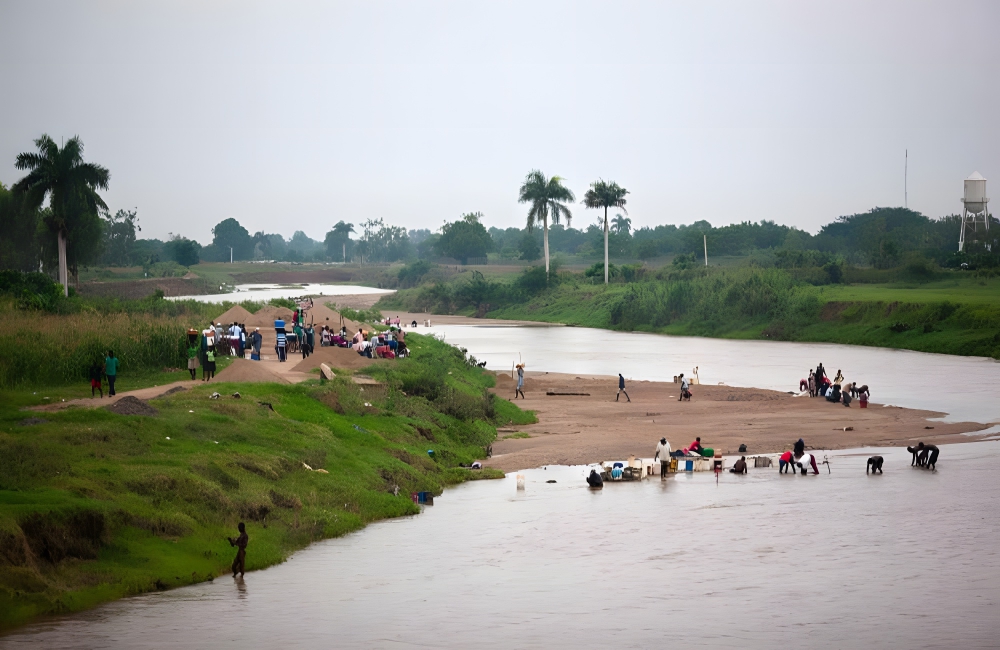
Haiti and Dominican Republic ©Fran Afonso/Wikimedia
Aerial views reveal a dramatic contrast: lush forests on the Dominican side stand in sharp relief against the deforested expanse of Haiti. This visual demarcation underscores the profound environmental and socio-economic disparities between the two nations.
9. North Korea and South Korea
Border: Korean Demilitarized Zone (DMZ)
Area: 250 km* long, 4 km* wide
Est. Gross Domestic Product: $48.3 billion (North Korea) / $1.7 trillion (South Korea)*
Stretching 250 kilometers across the Korean Peninsula, The Korean Demilitarized Zone (DMZ) is anything but demilitarized, bristling with watchtowers, landmines, and troops on both sides. Established in 1953 as part of the Korean Armistice Agreement, the DMZ serves as both a physical and symbolic division, encapsulating the tension and unresolved status of the two nations.
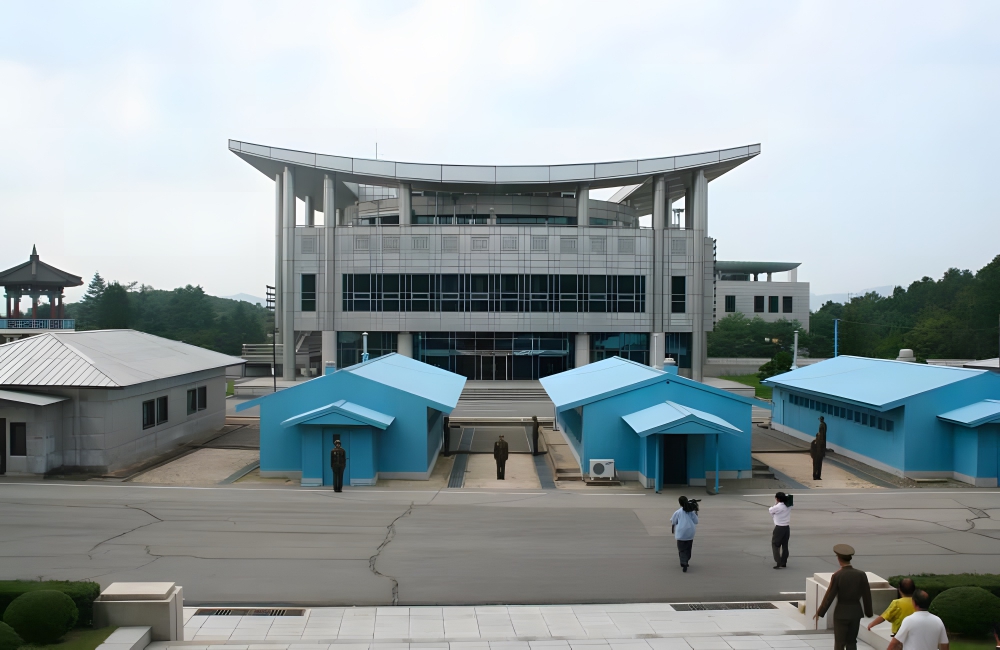
North Korea and South Korea ©Michael Day/Wikimedia
Despite the palpable threat of conflict, the DMZ has paradoxically become a place of ecological significance, with its untouched land fostering a unique biodiversity. This juxtaposition of danger and natural tranquility makes the DMZ one of the most intriguing and complex borders in the world.
10. San Marino and Italy
Border: Entirely surrounded by Italy
Area: 39 km*
Est. Gross Domestic Product: $1.807 billion (San Marino) / $2.629 trillion (Italy)*
San Marino’s border with Italy is a testament to the enduring sovereignty of one of the world’s smallest and oldest republics. Entirely enveloped by Italian territory, this microstate boasts a unique geopolitical status, being a landlocked enclave within Italy. Its borders, running through the scenic regions of Emilia Romagna and Marche, have remained virtually unchanged since the 16th century, underscoring a remarkable historical continuity.
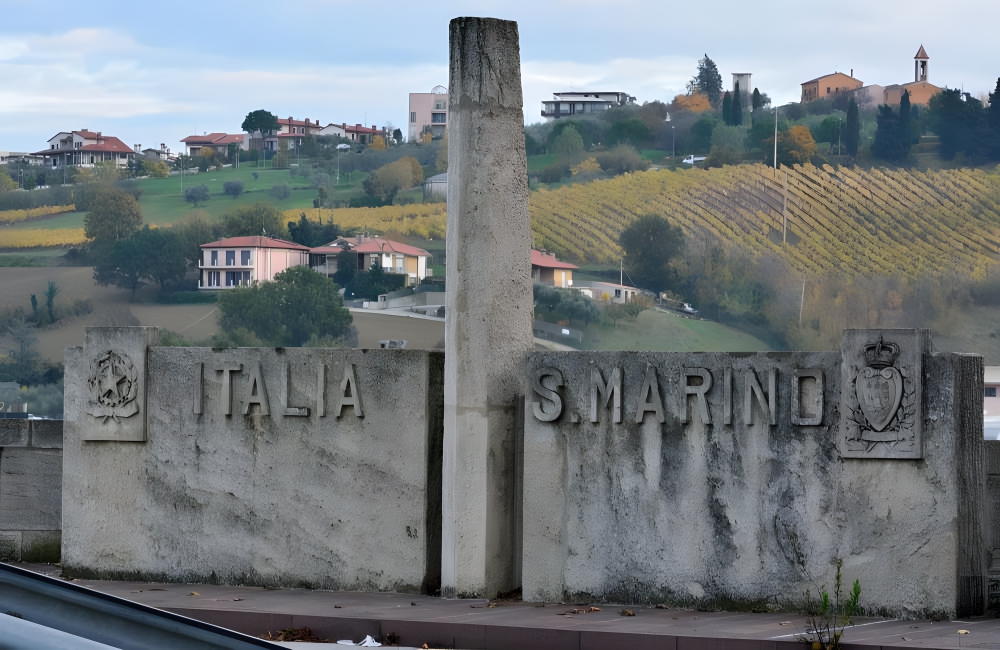
San Marino and Italy ©Nina Alizada/Shutterstock
Despite its diminutive size, San Marino maintains its distinct governance, culture, and customs. The ease of movement between San Marino and Italy, facilitated by their shared Schengen Area membership, highlights a seamless blend of independence and interdependence, making this border uniquely emblematic of peaceful coexistence.