
16. Air Force One
Entered Service: 1990
Retired: N/A
Cost: $660 million*
Air Force One is the traffic control call signal for the USAF aircraft, which carries the president. The idea of having a plane specifically designed to carry the president came about in the early forties when the USAF became concerned about the safety of carrying the president using commercial airlines.
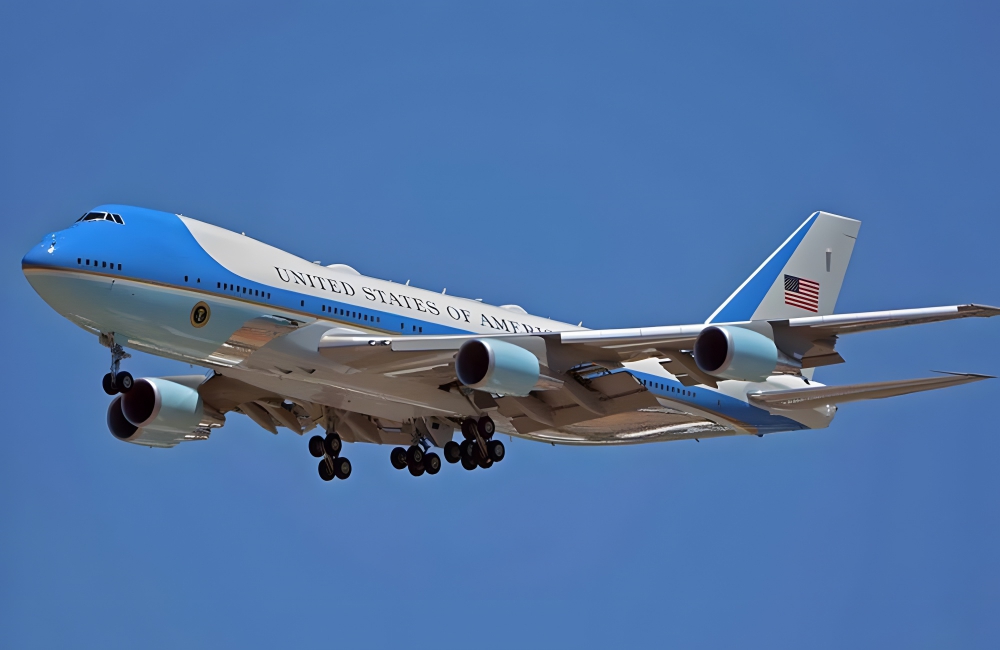
Air Force One @Air Force One / Facebook.com
The first Air Force One was the C-54 Skymaster. Now, the chosen Air Force One plane is the Boeing 747-8 aircraft. In 2017, Boeing announced that it was going to convert two abandoned Transaero planes (stored in the Mojave Desert) into Air Force One aircrafts, retrofitting them to meet the required security levels.
17. Su-30
Entered Service: 1989
Retired: N/A
Cost: $37.5 million*
Another Moscow creation is the Su-30, developed by the Sukhoi Aviation Corporation. This multi-role fighter can fly in all weather, and it is designed for air-to-surface and air-to-air deep interdiction missions. The Su-30 was originally an internal development project until the Russian Defense Ministry caught on in 1996.
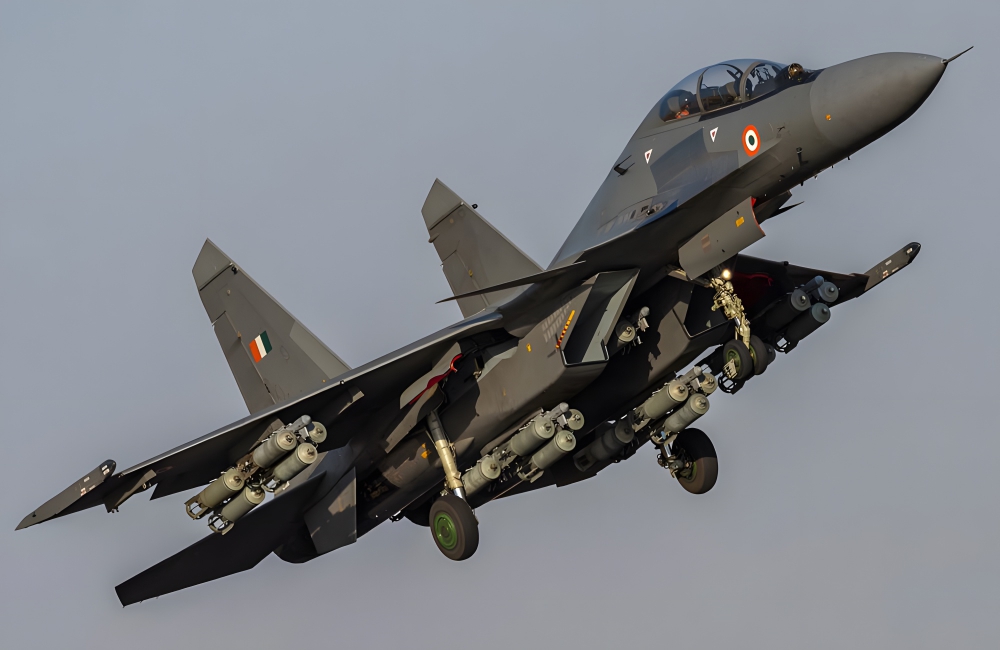
Su-30 @LegalKant / Twitter.com
The RDF insisted that AFLT make Su-30 planes for military use. In addition to serving the Soviet Union (and later the Russian Air Force), the Su-30 is in use with the Algerian Air Force, Vietnam People’s Air Force, and the Venezuelan Airforce. Its variants include the MK1, MKK, and MKM Su-30s.
18. Saab JAS 39 Gripen
Entered Service: 1988
Retired: N/A
Cost: $45-$55 million*
Made by Saab, a Swedish company, the Saab JAS 39 Gripen is a single-engine, lightweight multi-role fighter aircraft. The Gripen (in English, Griffin) has a canard configuration and delta wing with relaxed stability. The flight controls are all fly-by-wire. The engine of the Gripen is a Volvo RM12.
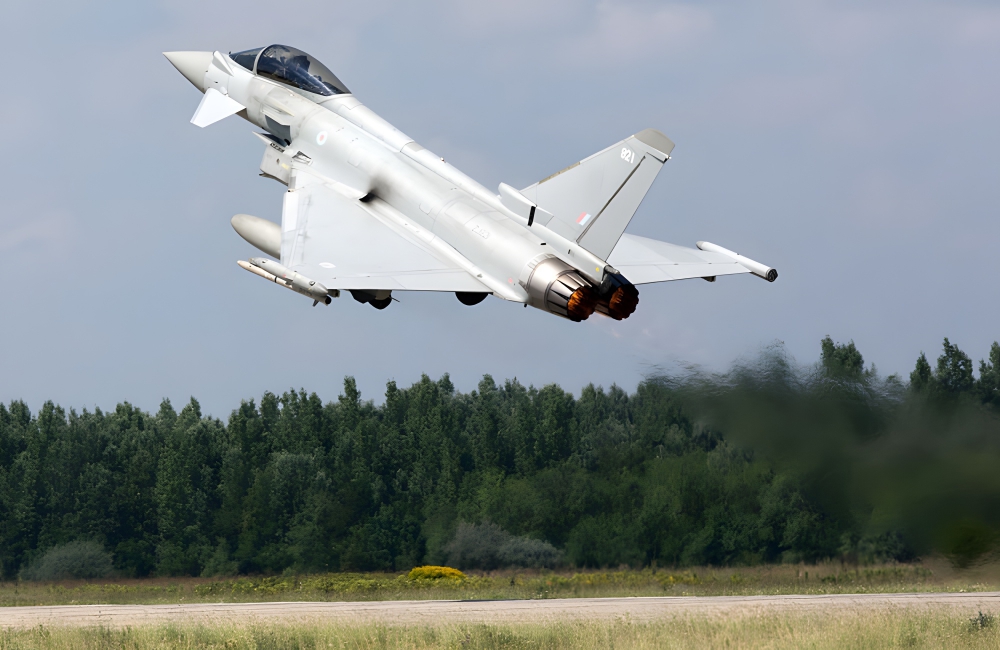
Saab JAS 39 Gripen @RoyalAirForce / Twitter.com
Later on, these SAABF planes would be modified to meet NATO interoperability regulations. The Gripen was first designed in the late seventies, when the Swedish government wanted to create an aircraft that could fight, attack, and perform reconnaissance missions. The Gripen had its first flight in 1988, and it was introduced to the SAF in 1996.
19. Northrop Grumman E-2D Advanced Hawkeye
Entered Service: 1960
Retired: N/A
Cost: $232 million*
The E-2 Hawkeye is an all-weather tactical AEW (Airborne Early Warning) carrier-capable aircraft. The twin-turbo craft was designed in the late fifties, and the US Navy was the first military branch to receive it. The E-2 Hawkeye replaced the E-1 Tracer, which has become obsolete nowadays.
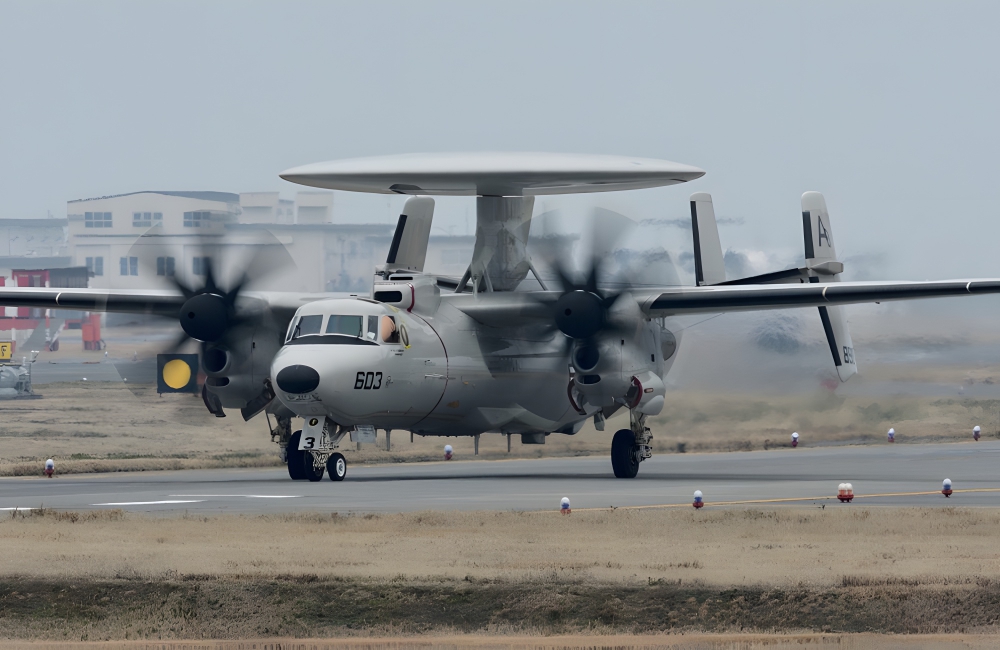
Northrop Grumman E-2D Advanced Hawkeye ©viper-zero / Shutterstock
Over time, the Northrop Grumman Corp plane has received several much-needed updates, such as E-2B and E-2C technology, which has boosted the radar and radio communications. The E-2D Hawkeye had its first flight in 2007. It has been nicknamed “Hummer” because of the noise from the turboprop engines. The US, along with seven other countries, uses the E-2.
20. Panavia Tornado
Entered Service: 1979
Retired: 2019 (RAF)
Cost: $59.6 million*
The U.K., Germany, and Italy teamed up to create the Panavia Tornado, which is a fleet of twin-engine multi-role, variable-sweep combat aircraft. The three countries developed and manufactured the Tornado fleet together. There are three types of Panavia Tornado planes: the IDS (interdictor strike), the ECR (electronic combat/reconnaissance), and the ADV (interceptor aircraft).
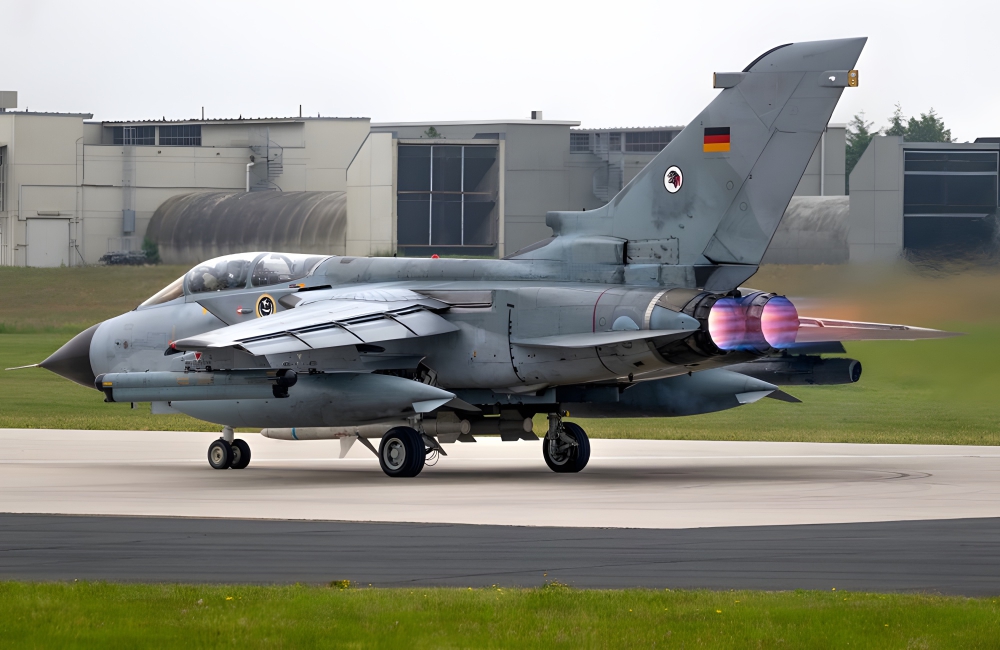
Panavia Tornado ©VanderWolf Images / Shutterstock
Airbus SE is the primary shareholder of Panavia, along with BAE Systems. The Tornado had its first flight in 1974, and it was formally introduced in 1979. The Tornado was retired in 2019 by the Royal Air Force. It is still in use by the RSAF, IAF, and GAF.
21. F-14 Tomcat
Entered Service: 1970
Retired: 2006 (USAF)
Cost: $63.9 million*
Created by Northrop Grumman, The F-14 Tomcat is a supersonic, two-seat, twin-engine, variable-sweep, twin-tail fighter jet. It was the first-ever U.S. fighter jet to have twin tails. Originally, Northrop Grumman developed the project for the U.S. Navy and its Naval Fighter Experimental Program.
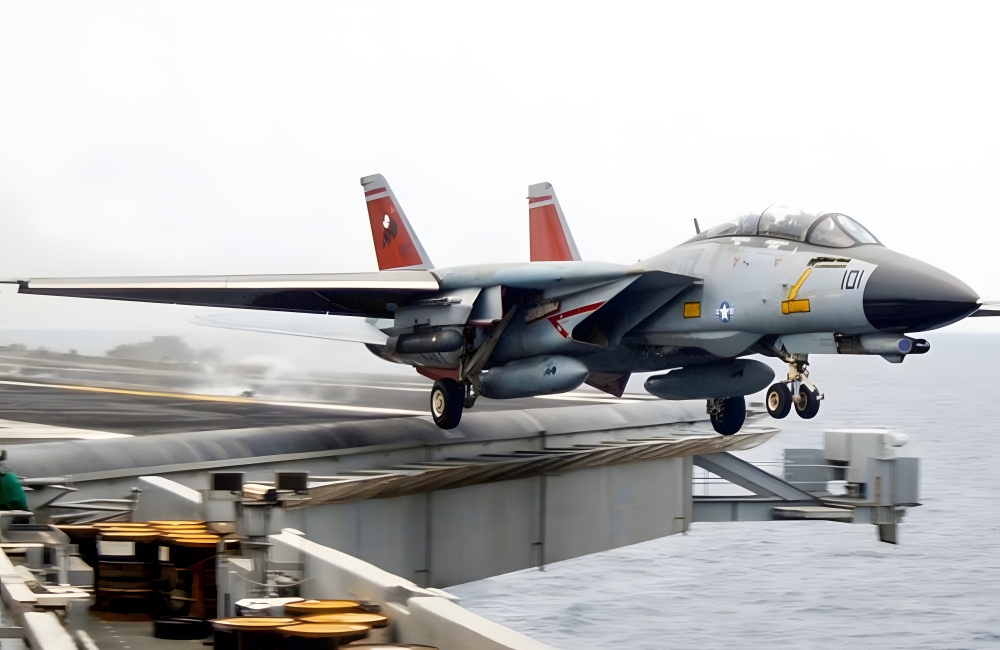
F-14 Tomcat @blueboy7862 / Twitter.com
The Program’s prior jet, the F-111B, was a total disaster, so Northrop Grumman was hoping for a win with this one. The Tomcat had its first flight in 1970. It was introduced in 1974, and it was retired by the U.S. Navy in 2006. The Tomcat is still in service with the Iranian Air Force.
22. EA-18G Growler
Entered Service: 2006
Retired: N/A
Cost: $74.8 million*
The Boeing EA-18G Growler is a carrier-based aircraft that specializes in electronic warfare. It was designed as the replacement for the EA-6B Prowlers, a Northrop Grumman creation. The Growler had its first flight on August 15, 2006, and it was introduced on September 22, 2009.
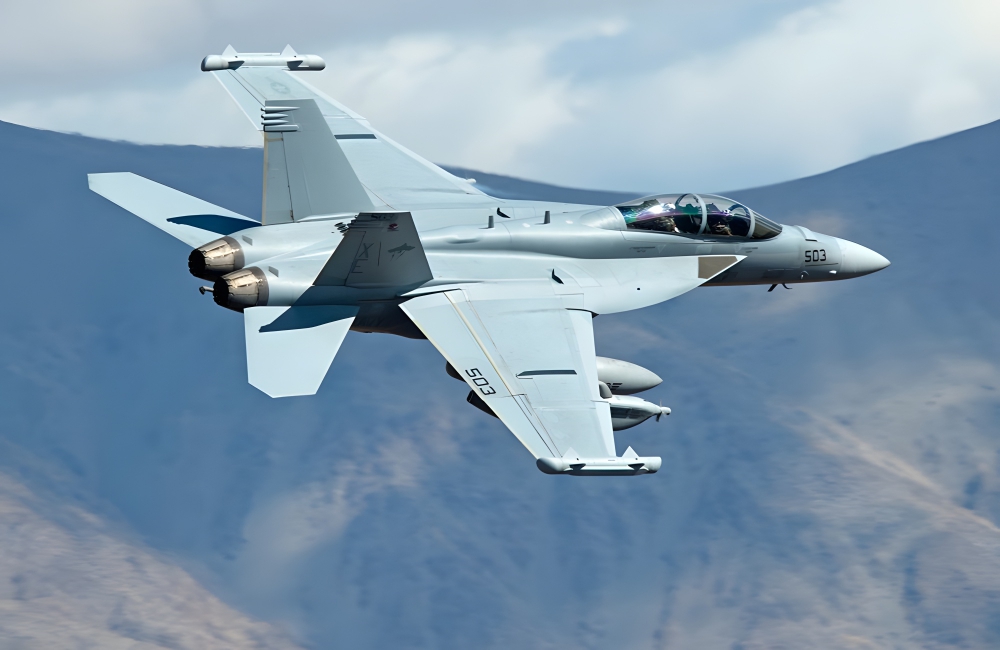
EA-18G Growler ©Peter R Foster IDMA / Shutterstock
The Boeing Co Growler, in addition to its service with the U.S. Navy, also serves the Royal Australian Air Force. Australia bought twelve Growlers in 2017. The Growler has over 90% in common with the Super Hornet, sharing the same airframe, weapons systems, and AESA Radar. New gadgets include the wideband receivers and jamming pods.
23. Su-27 Flanker
Entered Service: 1977
Retired: N/A
Cost: $41.2 million*
Designed by Sukhoi to compete with the U.S. fourth-gen fighters like the F-15 Eagle and F-14 Tomcat, the Su-27 is a twin-engine fighter jet that is supermaneuverable. The jet is designed for air superiority, and its other variants can perform pretty much any aerial warfare operation.
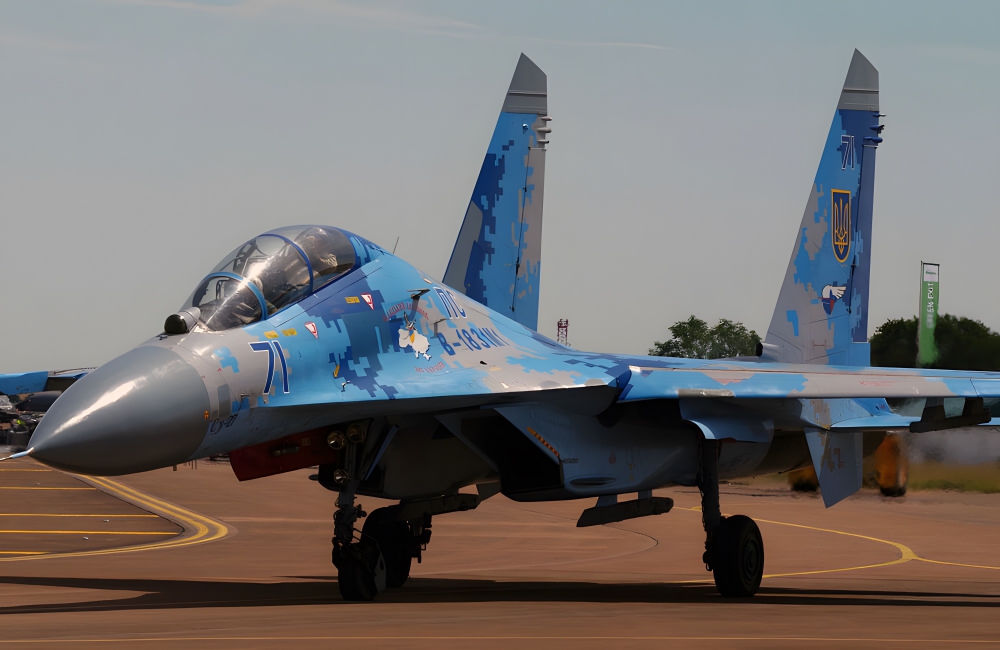
Su-27 Flanker @milairpix / Twitter.com
The Soviet Union requested the Su-27 in 1977. Its introduction came eight years later. The Su-27 was given the NATO reporting name Flanker. The Flanker has had multiple variants, such as the 30, 33, 34, 35, 37, and J-11. The Shenyang J-11 is a licensed Chinese-built version of the Su-27.
24. McDonnell Douglas F-15E Strike Eagle
Entered Service: 1989
Retired: N/A
Cost: $138 million*
The F-15E Strike Eagle was derived from the F-15 Eagle, which was also made by Boeing’s McDonnell Douglas. The difference is in the name, as the Strike Eagle is a multi-role strike fighter that can fly in all weather. The Strike Eagle was introduced in 1989, three years after its first flight.
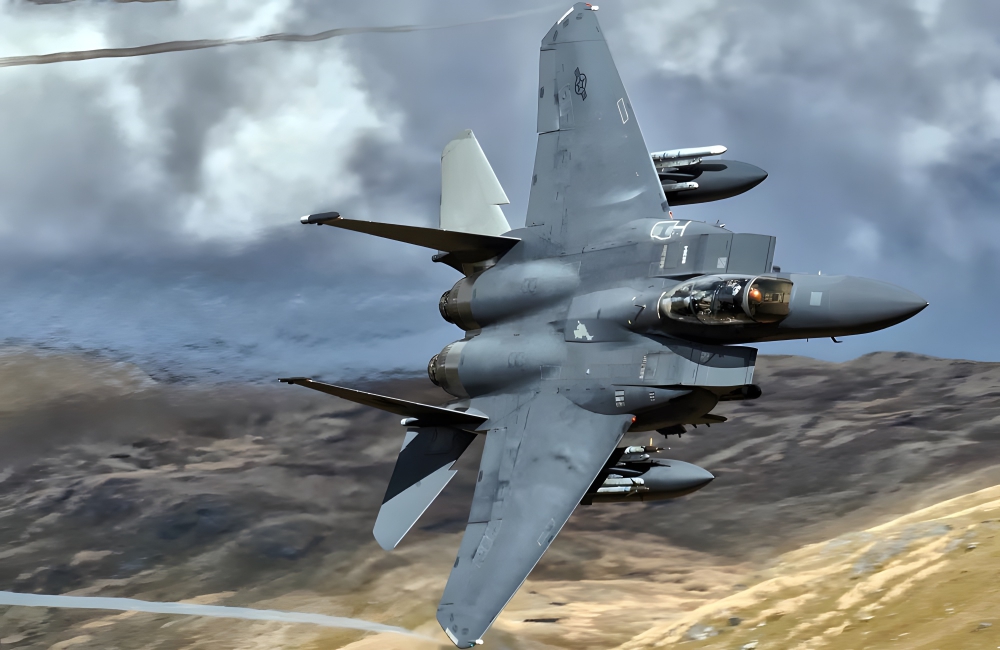
McDonnell Douglas F-15E Strike Eagle @lozza_1965 / Twitter.com
The Boeing aircraft is distinguishable from its predecessor by its conformal fuel tanks and darker aircraft camouflage. The Strike Eagle was designed for high-speed, long-range interdiction without having to rely on electronic warfare or escort aircraft. So far, Boeing has built 513 Strike Eagles. The current cost is over $100 million more than the initial flyaway price of $31.1 million.
25. F-35 Lightning II
Entered Service: 2015
Retired: N/A
Cost: $115.5 million*
The Lockheed Martin F-35 Lightning II is a single-engine, all-weather, single-seat multi-role stealth combat aircraft. It is descended from the 2001 X-35, which beat out the X-32 by Boeing to win the JSF (Joint Strike Fighter) contract. The Lightning II performs both strike and air superiority missions.
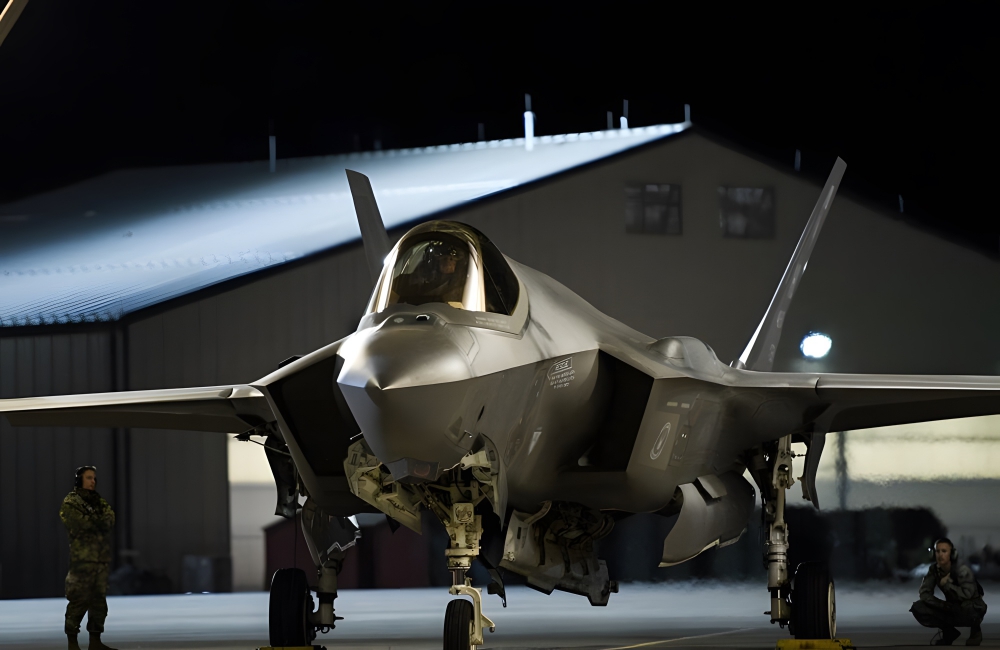
F-35 Lightning II @defense_news / Twitter.com
The Lockheed Martin aircraft is funded by the U.S., NATO, and its allies. In addition to being used by the USAF, the Lightning II was introduced to the Marines in 2015 and the Navy in 2019. The Lightning II is also operated by the Royal Air Force. Overall, the program is expected to run until 2077.
26. E-2D Hawkeye
Entered Service: 1960
Retired: N/A
Cost: $232 million*
Described by manufacturer Northrop Grumman as a “game changer” for the Navy, the E-2 Hawkeye is a twin-turbo aircraft that was designed to replace the E-1 Tracer. The E-2D is an airborne early warning aircraft. It is carrier-capable and can fly in all weather. This impressive aircraft has been in production since 1960, the year of its first flight.
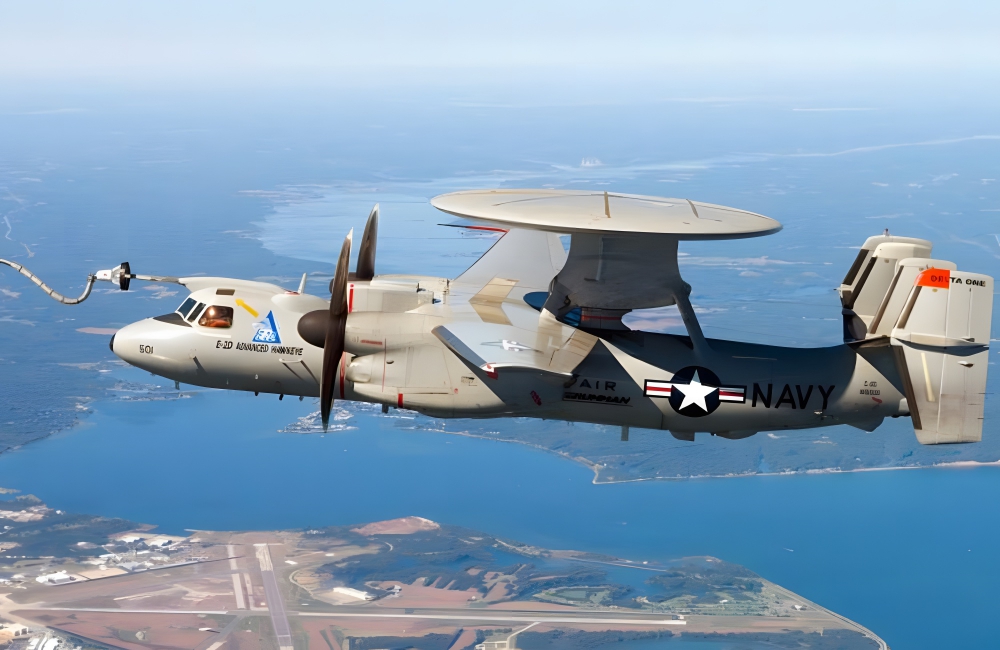
E-2D Hawkeye @northropgrumman / Twitter.com
This Northrop Grumman plane is primarily used by the Navy. Later, the E-2 would be developed into the Grumman C-2 Greyhound. So far, 313 E-2 Hawkeye planes have been built. The E-2 has been nicknamed “Super Fudd” and “Hummer,” the latter for its distinctive engine sounds.
27. AF X-37B Orbital Test Vehicle
Entered Service: 2019
Retired: N/A
Cost: Classified
This one is a little more mysterious, as the activities of the AF X-37B Orbital Test Vehicle have been kept pretty under wraps (and that includes its cost). In 2006, the Air Force announced that it wanted to build a variation on the Boeing X-37A. Boeing was the contractor to build this test vehicle.
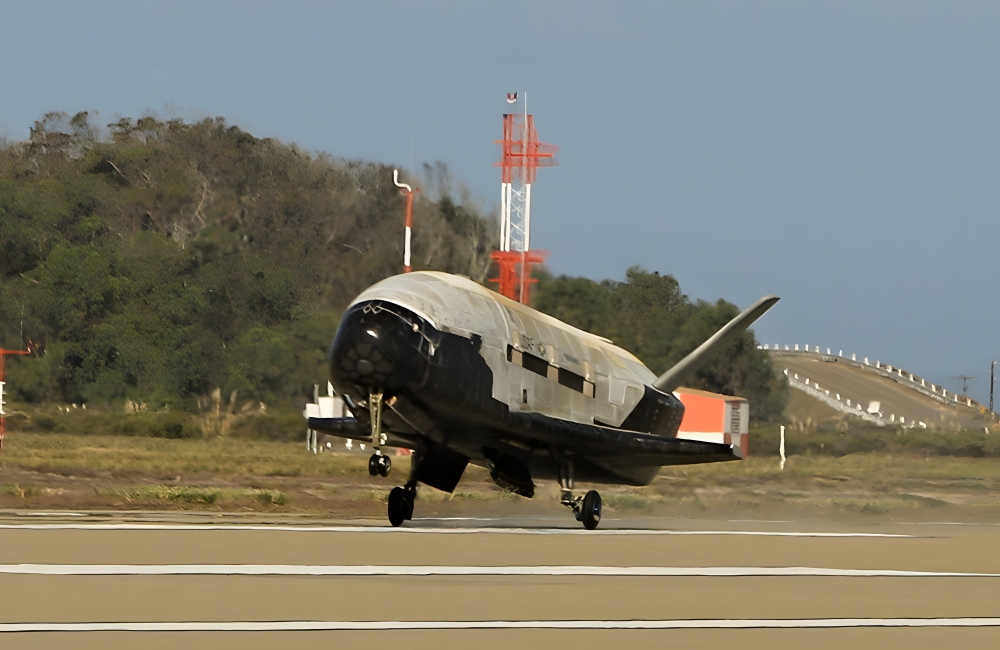
AF X-37B Orbital Test Vehicle @Vandenberg Space Force Base / Youtube.com
The X-37B Orbital Test Vehicle is used to “demonstrate technologies” that could later be developed into a “reliable, reusable, [and] uncrewed” space platform. Basically, the OTV is a way to put the military into space without actually sending troops up there—from what has been gathered about the enigmatic program.
28. Eurofighter Typhoon
Entered Service: 2003
Retired: N/A
Cost: $164.34 million*
The Eurofighter Typhoon is a canard-delta wing, twin-engine, multi-role fighter that is currently in use by the RAF, GAF, IAF, and SAF. It has been produced since 1994, and, so far, 570 have been built. The manufacturer is Eurofighter Jagdflugzeug GmbH, which is basically the European version of Boeing.
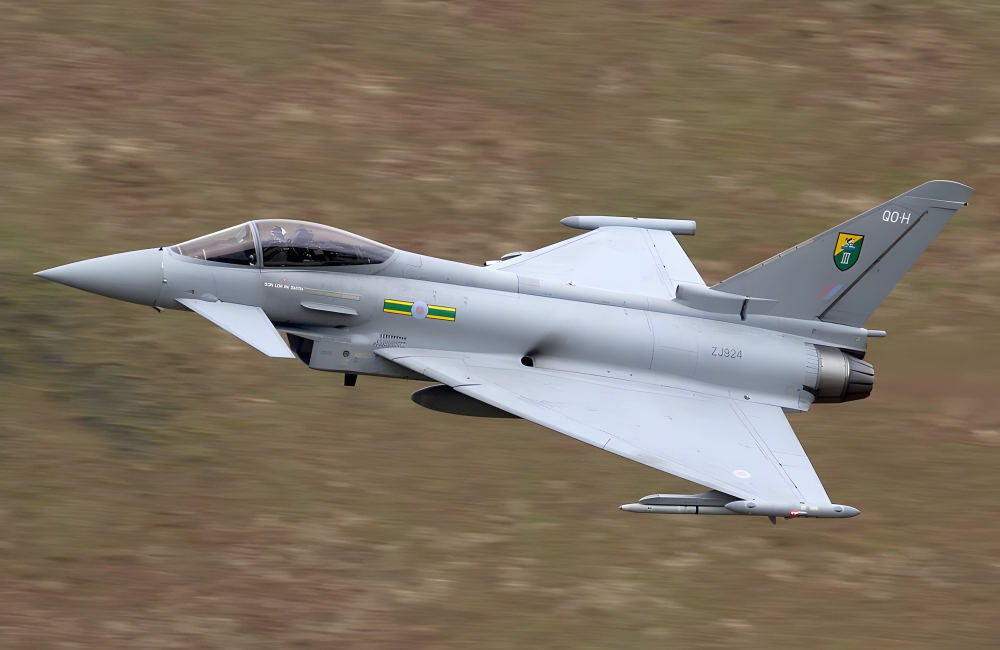
Eurofighter Typhoon @mahmouedgamal44 / Twitter.com
The Typhoon started development after the Cold War. Though it is most frequently used by Western Europe, Saudi Arabia, Oman, Kuwait, and Qatar have put in orders that will bring the manufacturing total up to 623. The Typhoon is designed as a supremely efficient dogfighter (close range fighter) in combat.
29. A-10 Thunderbolt II
Entered Service: 1977
Retired: N/A
Cost: $46.3 million*
The Fairchild Republic A-10 Thunderbolt is a twin-turbo, straight wing jet that was produced from 1972 until 1984. The Thunderbolt is used by the USAF, and it is often nicknamed the “Warthog” (or just “Hog”). It is designed for CAS of ground troops, and it can also attack armored vehicles and tanks.
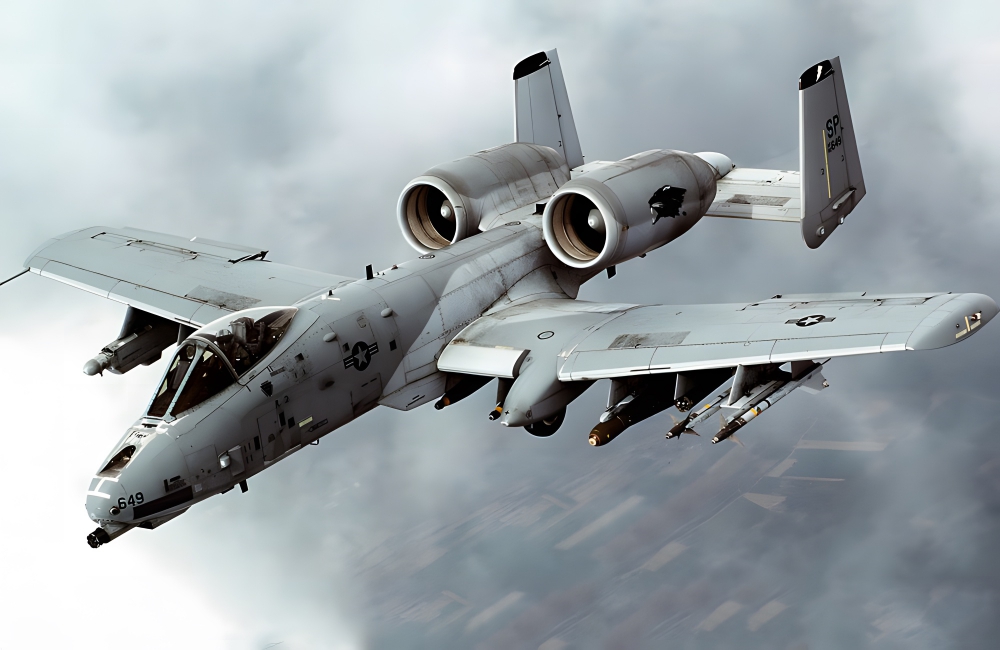
A-10 Thunderbolt II @voynichrm / Twitter.com
Though its original maker would later be bought by NCS Multistage Holdings, its planes have left their mark even after the company is long-gone. The Warthog can provide quick-action support to ground troops in the event of an enemy attack. Each unit cost $18.8 million in the seventies, which is about $46.3 million today.
30. B-52 Stratofortress
Entered Service: 1955
Retired: N/A
Cost: $14.43 million*
The B-52 Stratofortress had its first flight in 1952, and it was introduced to the USAF and NASA in the mid-fifties. So far, 744 have been built. The B-52 was originally designed as a straight-wing aircraft with six engines, but it now has swept wings and eight turbo-jet engines. The B-52 was built during the Cold War.
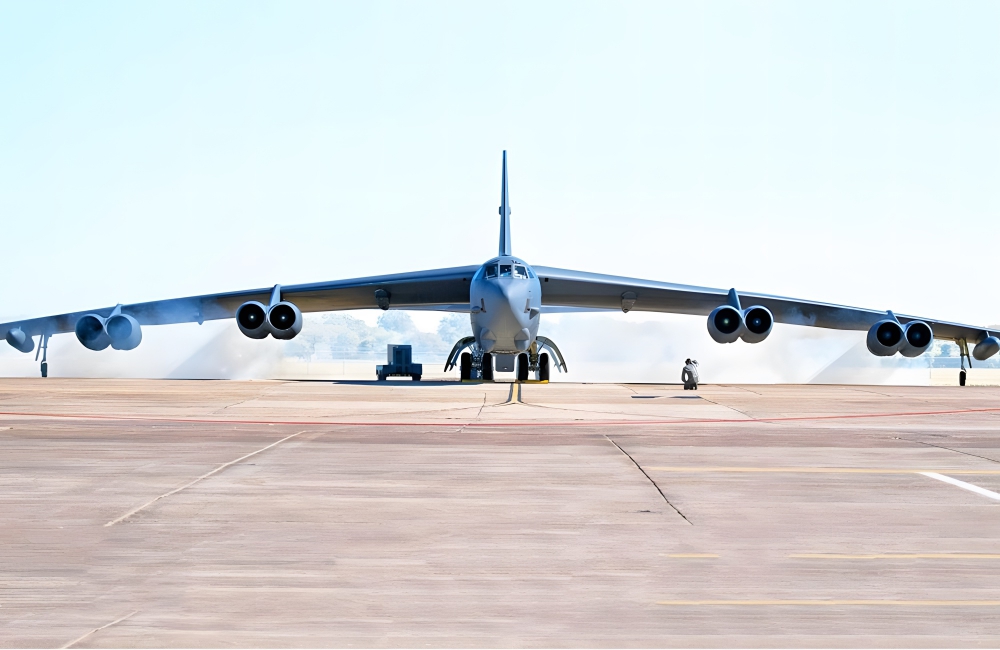
B-52 Stratofortress @MOTORIZADO / Youtube.com
Boeing originally created the B-52 to carry nuclear arms on deterrence missions during the Cold War. The B-52 has only ever dropped conventional munitions (not nukes) in combat so far. The “Stratofortess” nickname is rarely used—the official Air Force nickname for the B-52 is actually the “B.U.F.F.”