
31. F-35A Lightning II
Entered Service: 2015
Retired: N/A
Cost: $77-$101 million*
The F-35 Lightning II is a group of single-engine, single-eat, all-weather multirole combat planes that perform both strike mission and air superiority. The Lightning II also provides intelligence, reconnaissance, surveillance, and electronic warfare. Lockheed Martin is the primary contractor on the F-35.
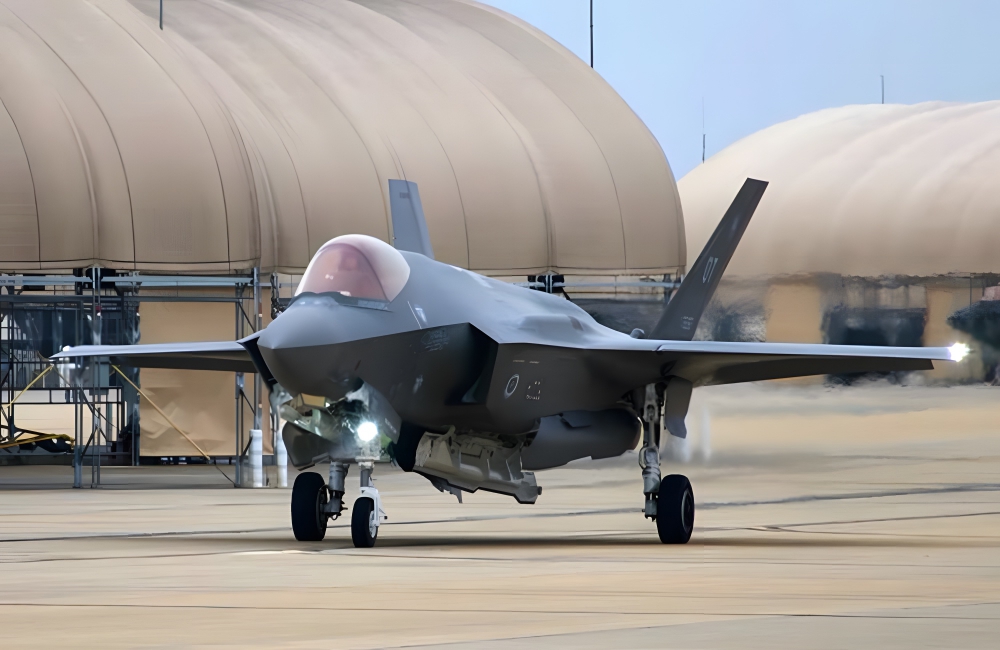
F-35A Lightning II @Defence_blog / Twitter.com
Lockheed is joined by BAE Systems and Northrop Grumman in the program, which is projected to cost $1.196 trillion throughout 2077. The aircraft is a descendant of the X-35. The project is partially funded by NATO and close allies to the US, including the UK, Australia, Canada, Denmark, the Netherlands, Norway, and Italy. There are three major Lightning variants: the F-35A, 35B, and 35C.
32. B-1B Lancer
Entered Service: 1974
Retired: N/A
Cost: $283.1 million*
The Rockwell B-1 Lancer has been in production since 1973, and it ceased production in 1988, though the Lancer is still very much in service by the US Air Force. The Lancer is a heavy bomber. It is often nicknamed the “Bone,” and it is one of the USAF’s three main strategic bombers as of this year (followed by the BUFF and Spirit).
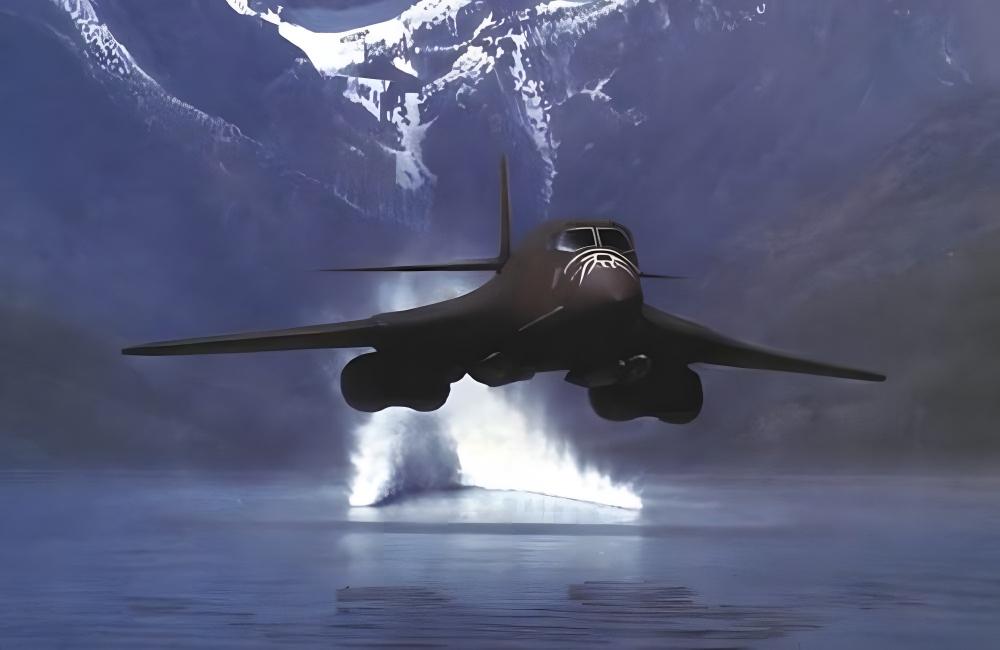
B-1B Lancer @jkannela / Pinterest
The engines in the Lancer are all made by General Electric. Rockwell International entered and won the design competition for the Lancer with its speedy, heavy-payload designs. Rockwell would later be bought by Boeing.
33. AC-130J Ghostrider
Entered Service: 2017
Retired: N/A
Cost: $132.4 million*
The AC-130J Ghostrider is one impressive gunship. The entire AC-130 family has been around since the sixties, and it is primarily used by the U.S. military. The AC-130J Ghostrider was based on the MC-130J, and it was designed by Lockheed Martin as a replacement for the AC-130H.
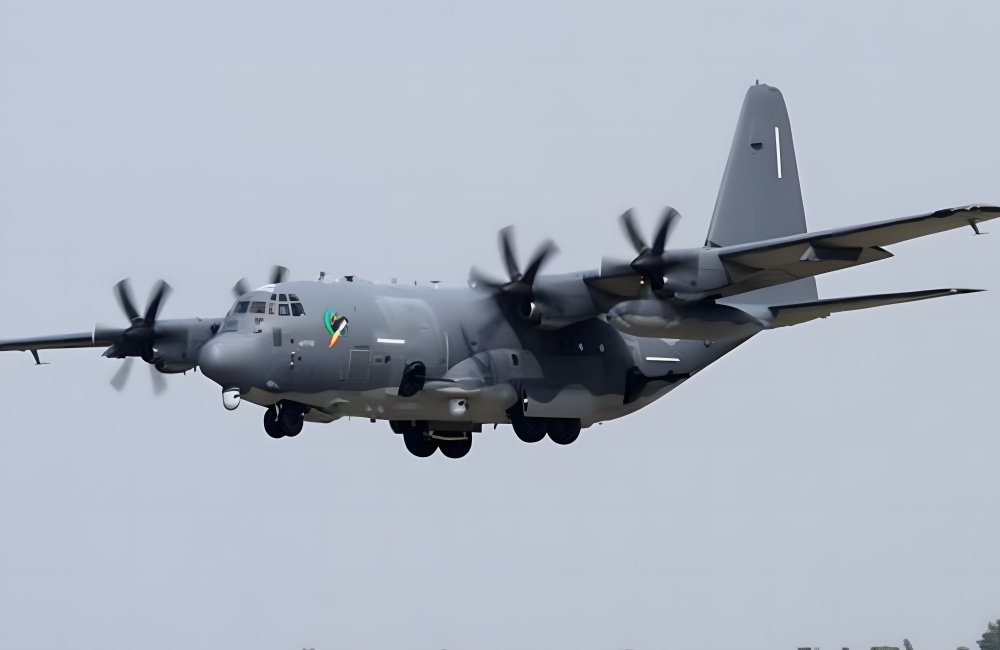
AC-130J Ghostrider @ox0657/Pinterest
The 130J developed operational capability in 2017 after six had been delivered. The gunship is heavily-armed and used for ground attacks. It is a long-endurance version of the C-130 Hercules fixed-wing transport aircraft. It has tons of ground attack weapons onboard, which have sensors, fire-control, navigation, and other sophisticated systems. The AC-130J is unique because it relies on visual targeting.
34. E-3 Sentry
Entered Service: 1972
Retired: N/A
Cost: $270 million*
The Boeing E-3 Sentry, which has often been called the AWACS, is an early warning and control aircraft that was developed from the Boeing 707. This aircraft provides communications, control, command, and surveillance in all weathers. Boeing sold it to the USAF, but it is also used by the RAF, FF, RSAF, and NATO.
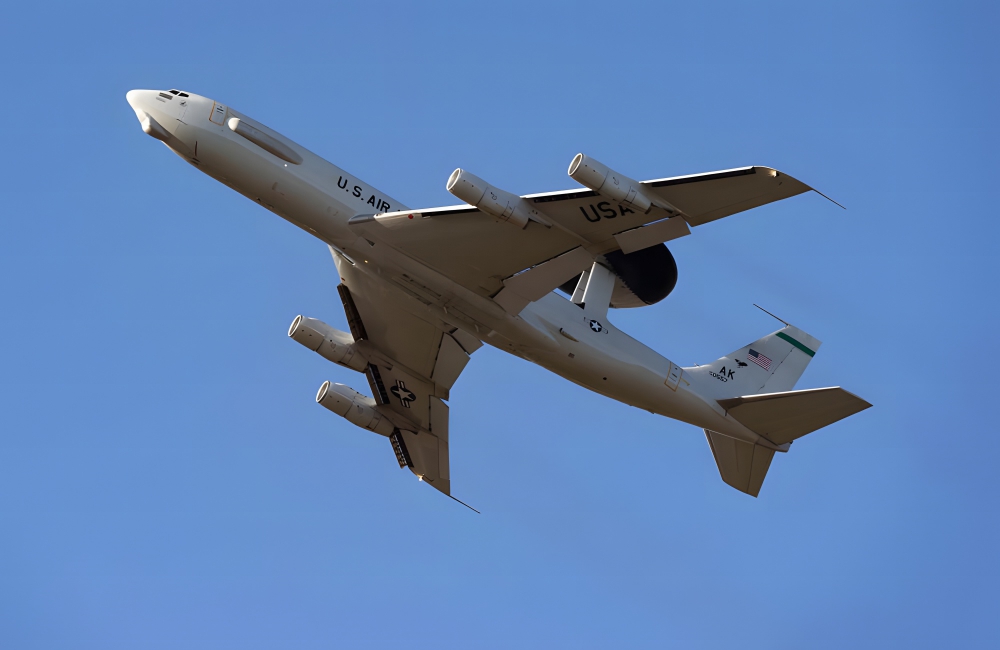
E-3 Sentry @cybermodeler / Twitter.com
The Sentry is unique because of its rotating radar dome, which is located right above the plane’s fuselage. Production took place from 1977 until 1992, and 68 have been built. Each unit costs $270 million. It is still operational, though production may have ceased decades ago.
35. C-130 Hercules
Entered Service: 1954
Retired: N/A
Cost: $11.9 million*
The C-130 Hercules is a four-engine military turboprop transport aircraft. It had its first flight in the 1950s, and it has been produced steadily ever since. As of 2015, more than 2,500 Hercules planes have been built. The C-130 originally was used for cargo transport, medevac, and troop transport.
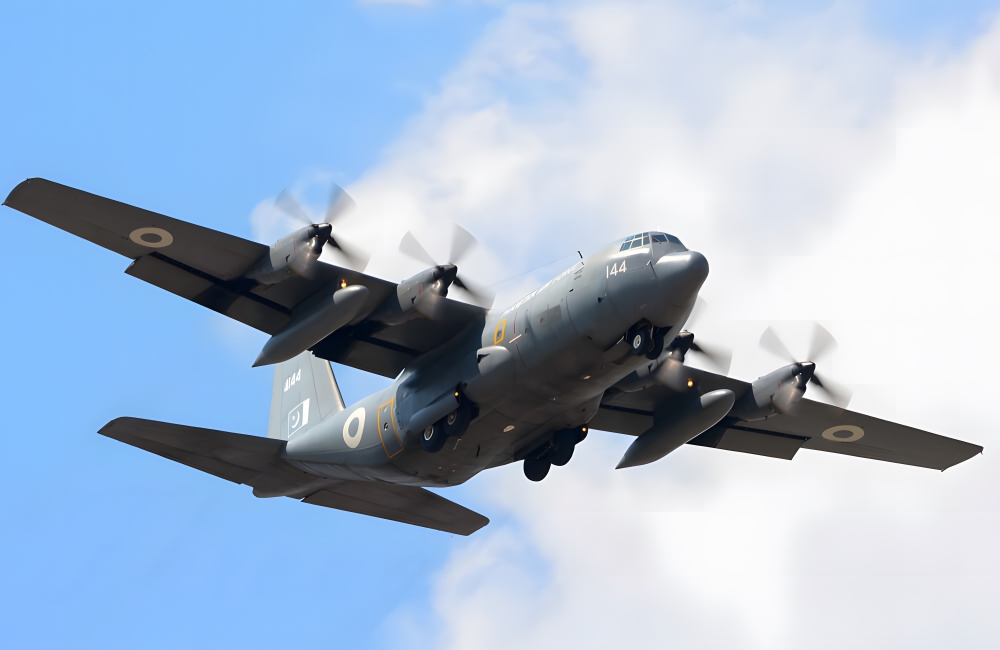
C-130 Hercules @RehanWaheed15 / Twitter.com
However, over the years, Lockheed Martin has made it more versatile. It has been used as a gunship (the AC-130 family is derived from the Hercules), as well as a search and rescue, airborne assault, scientific research support, refueling, firefighting, maritime patrol, aerial refueling, and tactical airlifter. There are over forty variants of the C-130 Hercules.
36. T-38 Talon
Entered Service: 1959
Retired: N/A
Cost: $756,000*
Not only is the Northrop T-38 Talon the first-ever supersonic trainer in the world, it is also the most-produced plane of its kind, with 1,146 built from 1961 until 1972. The USAF uses the most Talons, followed by the Navy, NASA, and the Turkish Air Force. NATO pilots often fly these Northrop Grumman planes in training exercises with USAF troops.
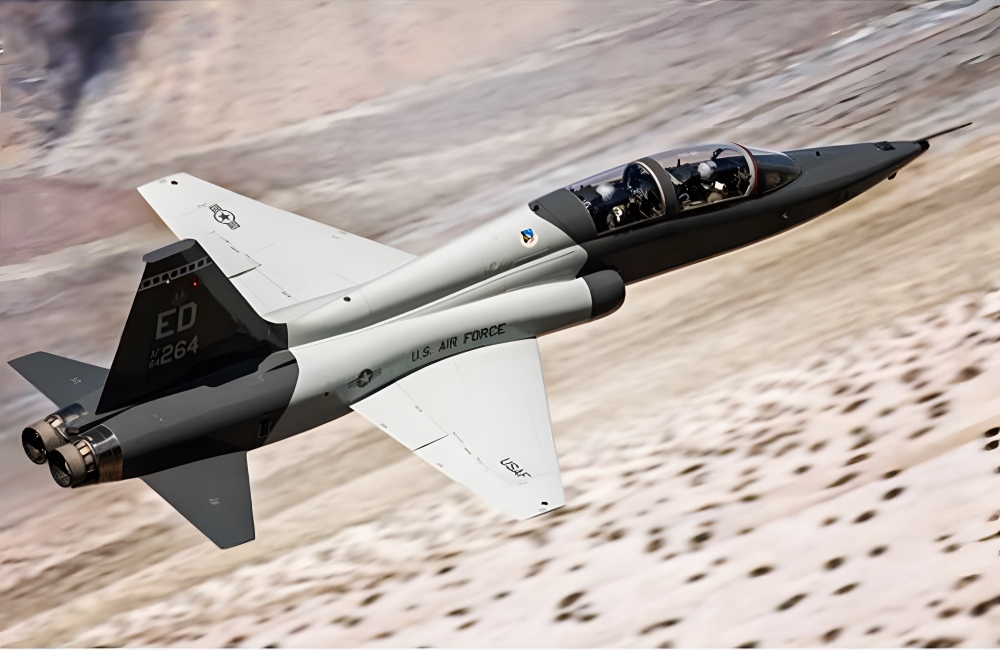
T-38 Talon @robmac2568 / Twitter.com
The T-38 Talon was developed from the N-156, and the F-5 is considered a variant of the Talon. The two-seat, supersonic, twinjet jet trainer has been in service with its original operator, the USAF, for more than fifty years.
37. KC-10 Extender
Entered Service: 1980
Retired: N/A
Cost: $88.4 million*
The KC-10 Extender is an aerial refueling tanker that is primarily used by the US Air Force, though the Royal Netherlands Air Force also operates a few. The plane had its first flight in 1980, and it entered service shortly thereafter. Basically, the Boeing KC-10 Extender is a military version of the DC-10 three-engined airliner.
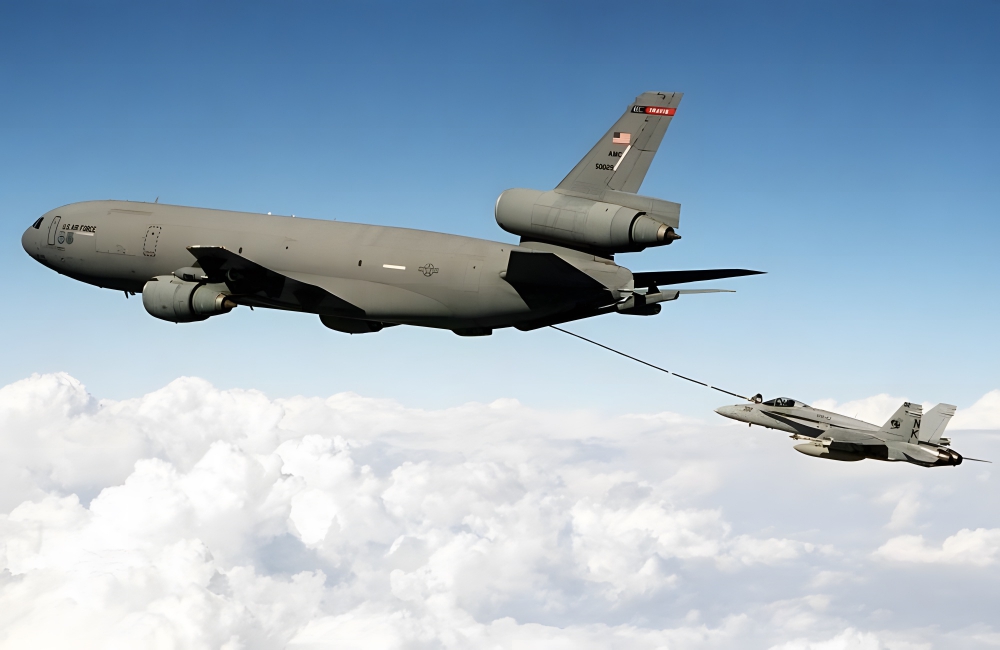
KC-10 Extender @HouseofPK / Pinterest
The Extender incorporates military technology for aerial refueling and transport, and, so far, 60 have been made for the USAF. The Extender has played a key role for the US, particularly in the Middle East in the late sixties and early nineties.
38. MC-130H Combat Talon II
Entered Service: 1980s
Retired: N/A
Cost: $160 million*
In 1991, the first fully-operational Combat Talon II was received. Three others were delivered that summer, and the formal ceremony introducing the MC-130H Combat Talon II was held in the fall of that year. The Lockheed Martin MC-130H Combat Talon II had a lot of new electronics to its name.
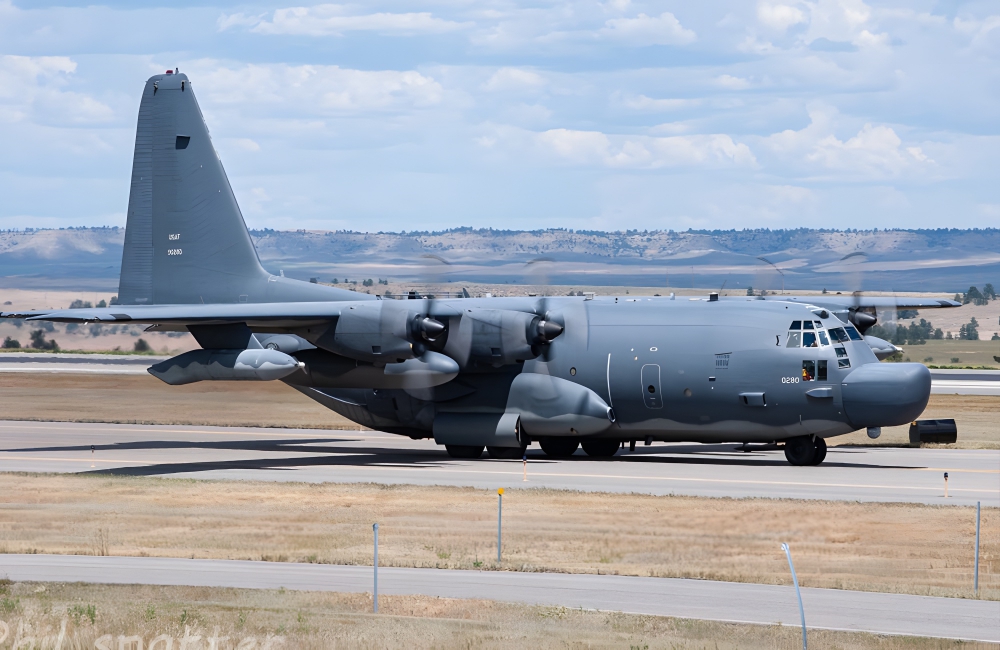
MC-130H Combat Talon II @BIL_spotter / Twitter.com
The new tech included GPS navigation, radar specifically designed to navigate in poor weather conditions, an upgraded electronics suite, and NVG (night vision goggles) capacity. The Talon II was best-suited for high-level daytime VMC to an easily-ID’d dropzone, which was a departure from its predecessor, the MC-130E Combat Talon I.
39. WC-130 Hercules
Entered Service: 1954
Retired: N/A
Cost: $13 million*
The WC-130 is a medium-range, high-wing aircraft that the US Air Forces primarily uses for weather reconnaissance missions. The WC-130 is a modified variation on the C-130 Hercules, but the WC-130 has a few upgrades to it, including specialized weather instruments like a dropsonde receiver/deployment system.
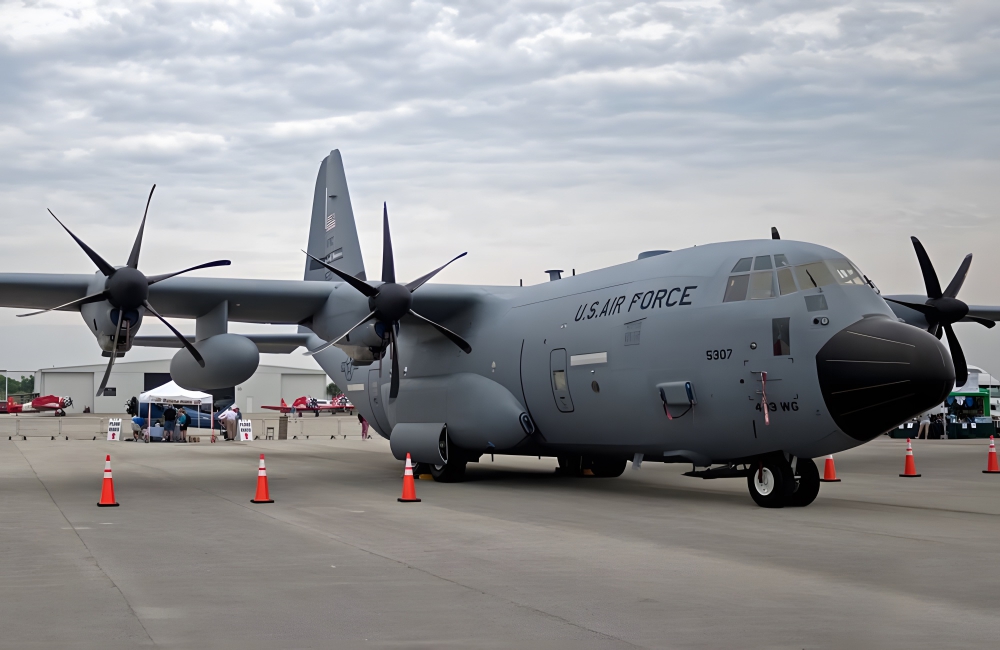
WC-130 Hercules @actionaviationphotography / Twitter.com
The Lockheed Martin plane requires a meteorologist as its crew. It is used to penetrate tropical cyclones and blizzards in order to obtain data about the storms’ movement, intensity, and size. The Air Weather Service received the first WC-130 in 1962 after the Soviet Union began testing atmospheric weapons. So far, fifty have been built.
40. KC-135 Stratotanker
Entered Service: 1956
Retired: N/A
Cost: $39.6 million*
The Stratotanker is a refueling aircraft. The KC-135 was developed from the 367-80 prototype. The KC-135 wasn’t the only aircraft to come from the 367-80; the Boeing 707 airliner was also developed from that prototype. The KC-135 Stratotanker entered the USAF’s service in 1957.
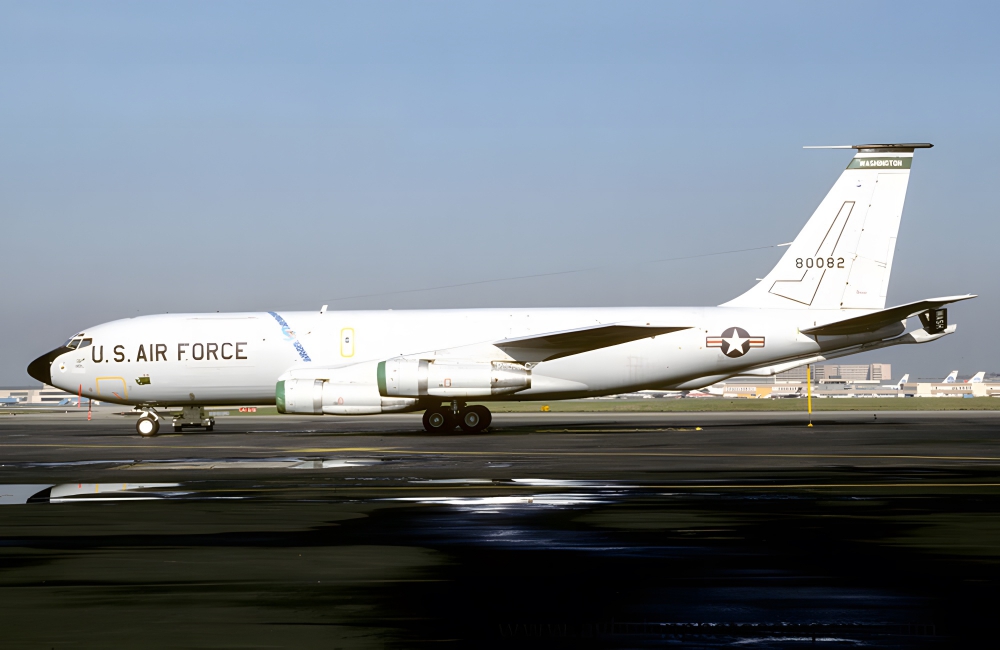
KC-135 Stratotanker @AviationPhotoCo / Twitter.com
The Boeing plane is one of just six fixed-wing aircraft to be used in the military for fifty continuous years with its original operator. Maintenance costs on the Stratotanker (along with the KC-10, its supplement), have risen, though studies have shown that Stratotanker will (for the most part) be able to fly until at least 2030.
41. WC-135W Constant Phoenix
Entered Service: 1993
Retired: N/A
Cost: $208 million*
This aircraft was inspired by the C-135 Stratolifer, and it has been in use by the USAF since 1965. The WC-135 Constant Phoenix, which is often nicknamed the “sniffer” or “weather bird” by program workers/international media, has a special purpose. It is used to detect (“sniff out”) and identify nuclear explosions.
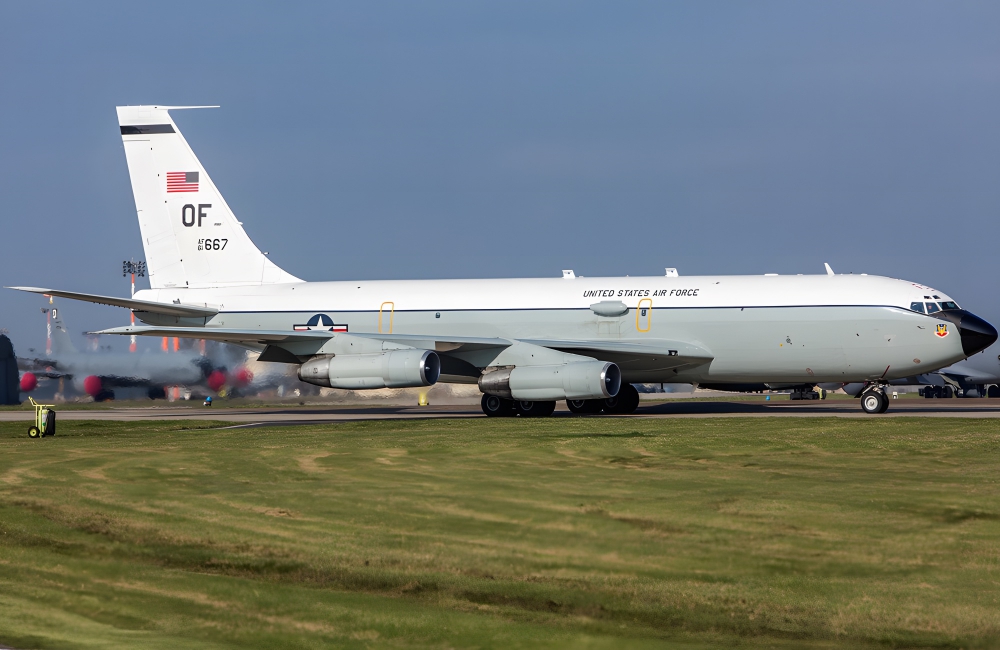
WC-135W Constant Phoenix @CivMilAir / Twitter.com
The Boeing WC-135 isn’t very numerous—only ten have been built, and just two are in active service today. The WC-135 has a variant, the OC-135B Open Skies, which is used far more often. Most of the other ten WC-135s were placed into storage in the early nineties, after Cold War tensions dwindled.
42. C-32
Entered Service: 1998
Retired: N/A
Cost: $73.5-$80 million*
The C-32 was developed from the Boeing 757 at a cost of $73.5 to $80 million. The C-32 is a military transport plane, and it has been used for high-profile US leaders, such as the Vice President, Secretary of State, and the First Lady. When the Boeing Co C-32 is carrying the VP, it uses the nickname “Air Force Two.”
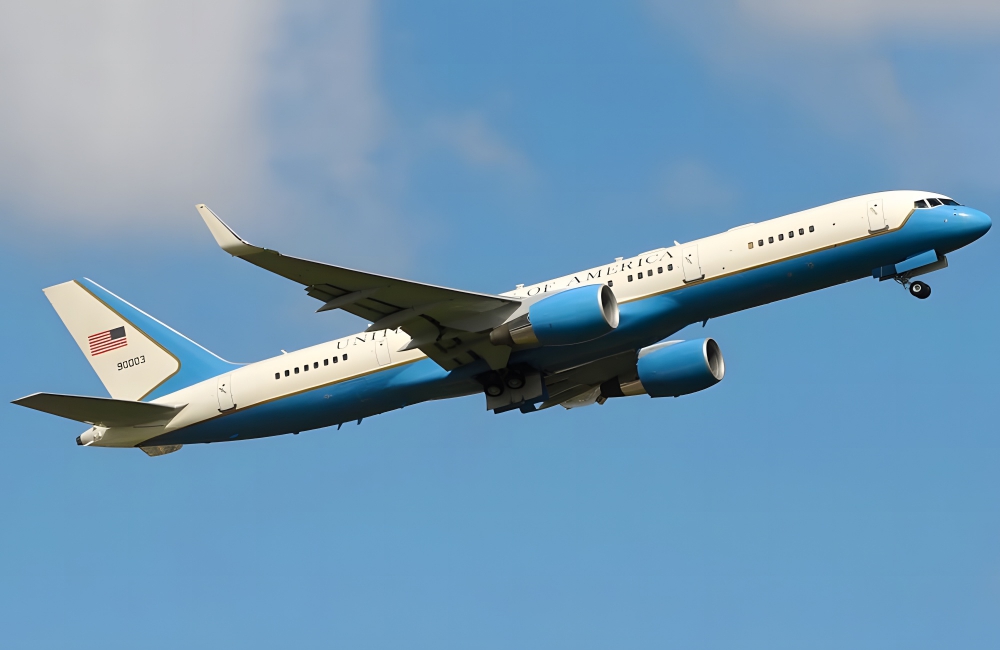
C-32 @Dj’s Aviation / Youtube.com
On certain, rare occasions, some U.S. Cabinet members and Congressional leaders are allowed to fly on the C-32. Since it has debuted, the C-32 also has been used as Air Force One when the 747 jumbo jet is unable to be used.
43. U-2 Dragon Lady
Entered Service: 1957
Retired: N/A
Cost: $9.1 million*
The U-2, which is popularly nicknamed “Dragon Lady,” is a single-engine, reconnaissance aircraft that is able to fly at very high altitudes. It is used by the USAF, and it was previously flown by the CIA. The Dragon Lady provides intelligence gathering in any weather, day or not. It is also used by NASA.
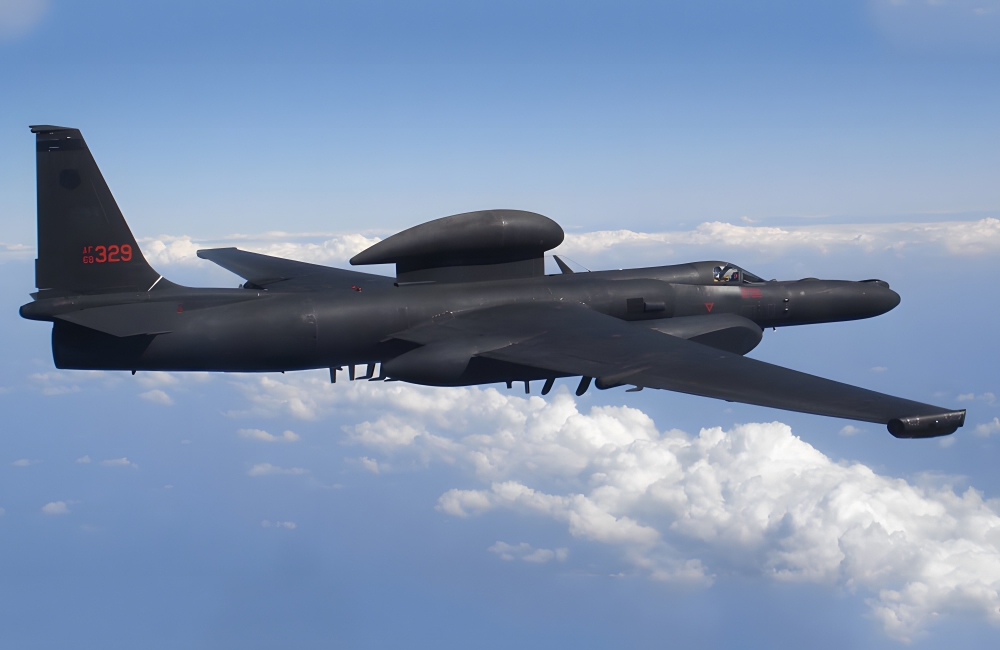
U-2 Dragon Lady @marklanebiz / Twitter.com
Lockheed Martin submitted its original design for the Dragon Lady in 1953. It was introduced shortly after, and it flew during the Cold War over Vietnam, Cuba, China, and the Soviet Union. The Dragon Lady costs an equivalent of $9.1 million per unit today, over 1,000% what it did in 1955.
44. TG-16A Glider
Entered Service: 2011
Retired: N/A
Cost: $4.8 million*
DG Flugzeugbau, a German company, builds this glider. The glider is a member of the two-seater class. The TG-16A is the designation granted to the DG-1000 by the US Air Force. The TG-16A was selected to replace the Blanik TG-10. The TG-16A Glider is a soaring trainer for cadets attending the USAF Academy.
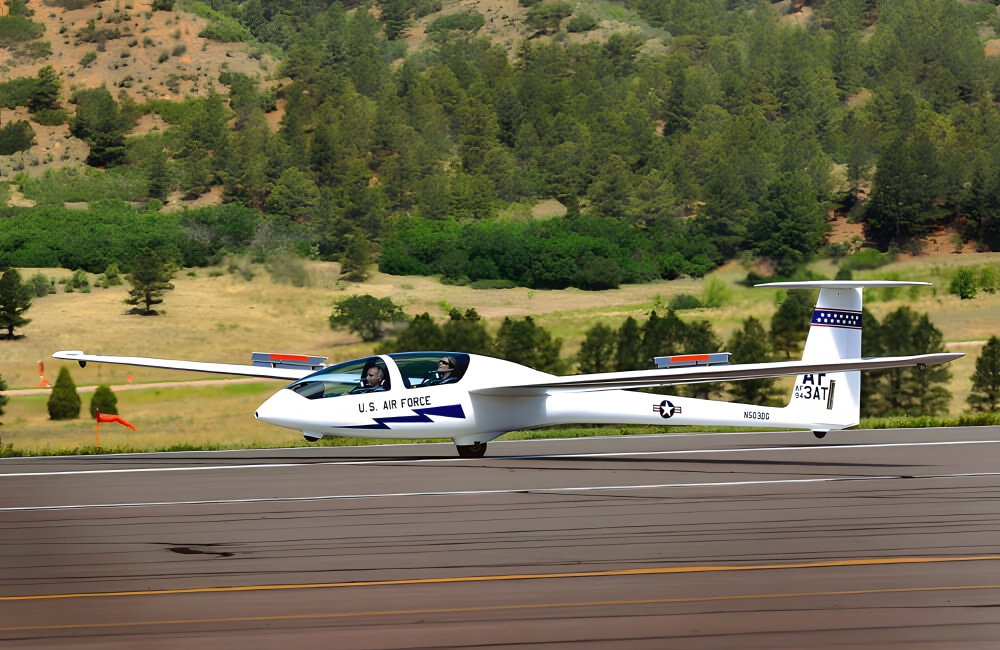
TG-16A Glider @kadonkey / Twitter.com
It is unclear whether American companies like Boeing, Northrop Grumman, or Lockheed Martin submitted proposals for a soaring trainer. Regardless, the TG-16A became part of the Air Force Academy in 2011. It is also the main competition plane for the US Air Force Academy Aerobatic Demonstration Team.
45. T-6A Texan
Entered Service: 1998
Retired: N/A
Cost: $6 million*
The Beechcraft T-6 Texan was built as a trainer aircraft, and the Texan was derived from the Pilatus PC-9. It has gone on to replace the Cessna T-37B Tweet, as well as the T-34C Turbo Mentor. The T-6A is currently used by the USAF for basic pilot training. It is also used for CSO (Combat Systems Officer) Training.
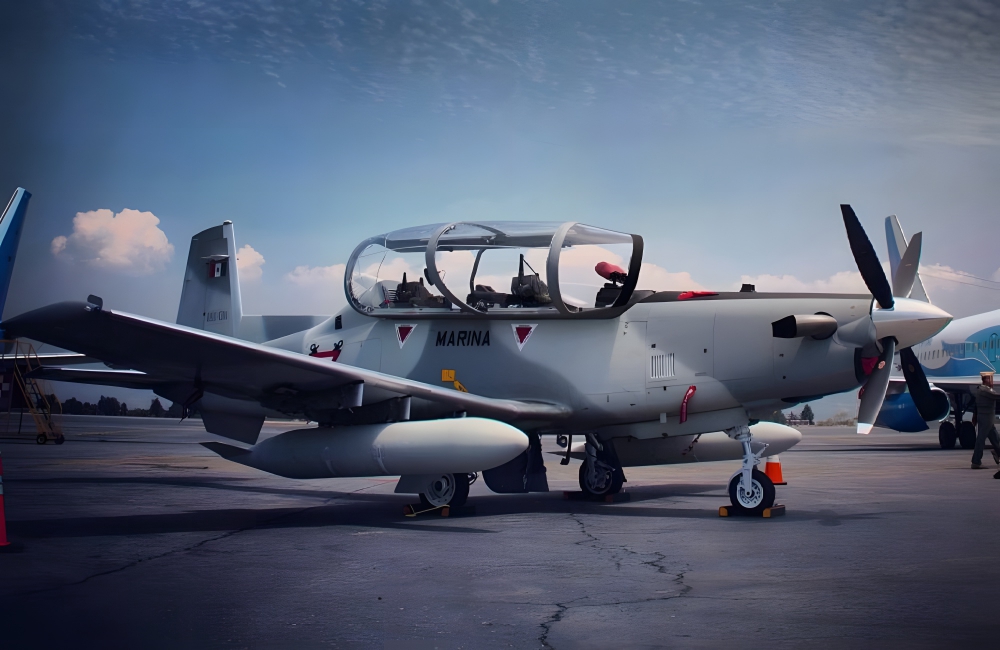
T-6A Texan @julioguerraflor / Pinterest
Made by Raytheon Technologies, which is a subsidiary of Textron Aviation, the T-6 Texan also trains NFOs, Navy and Marine pilots, and pilots from the Greek and Israeli Air Force. The Israeli Air Force has nicknamed the Texan “Efroni.”