
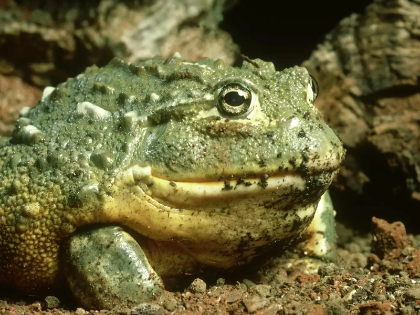
12. Couch’s Spadefoot Toad
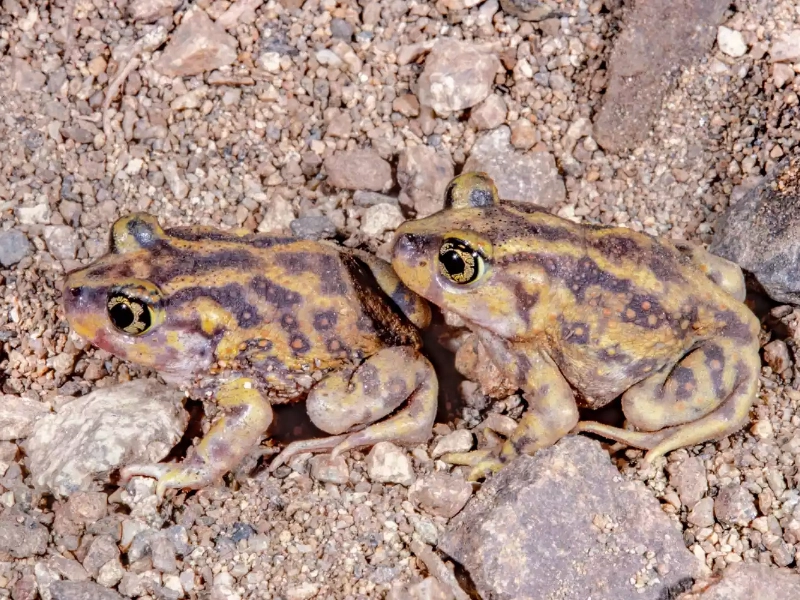
Renowned amphibian Couch’s spadefoot toad (*Scaphiopus couchii*) has evolved remarkably to fit the arid conditions of the deserts in North America. Unique life cycle and behavioural adaptations of this little toad help it to thrive in an environment marked by extended periods of drought and limited water availability. Especially remarkable for their capacity to enter a state of estivation—a kind of slumber allowing them to survive difficult circumstances—are Couch’s spadefoot toads.
Couch’s spadefoot toads spend most of their time underground during the dry months, where they enter an eight to ten month aestivation. When environmental conditions are bad, this dormancy is a vital adaptation that helps them to save moisture and energy. Deeply buried, they provide a protective refuge shielding them from the intense heat and desert desiccation. Fascinatingly, if the conditions stay especially dry, these toads can spend even more than 20 months in their tunnels.
Couch’s spadefoot toads emerge from their burrows to seize the freshly created ponds and transient water supplies as the rainy season starts. The toads have to act fast to reproduce before the ponds dry out, hence this timing is absolutely important. Females can deposit eggs in the water within the first two days after emergence; the tadpoles can hatch in 15 to 36 hours. In the desert, where water bodies could evaporate rapidly, survival depends on this fast life cycle. The tadpoles change astonishingly quickly to become adult toads in as little as nine days, therefore enabling them to take advantage of the limited water supplies.
Once they come out of aestivation, Couch’s spadefoot toads eat insects mostly, which they consume ravenously. Their amazing eating behaviour maximises their food intake during the brief window of time when the conditions are favourable. Building up energy reserves necessary to last through the next period of hibernation depends on this adaptability.
Physical changes that improve Couch’s spadefoot toads’ survival in desert habitats also abound. Their spade-like hind feet are particularly suited for digging, which lets them burrow quickly into the earth. This adaption helps them estive as well as evade any predators.
All all, Couch’s spadefoot toad is a remarkable illustration of desert life adaption. Its unusual life cycle, aestivation behaviour, and feeding tactics draw attention to how resilient this species is in one of the toughest habitats on Earth. Understanding the special adaptations of Couch’s spadefoot toads will be essential for their preservation and the protection of the fragile equilibrium in their habitats as long-lasting effects of habitat loss and climate change affect ecosystems.
 zi ang