
4. Cleaner Wrasses and Their “Clients”: The Reef’s Cleaning Stations
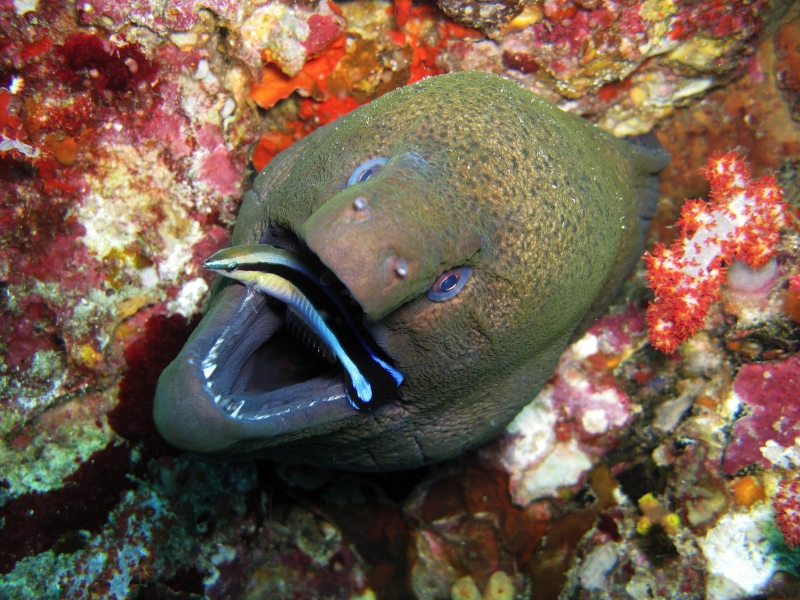
By their symbiotic interactions with a great range of marine life, cleaner wrasses are essential for preserving the health of coral reef ecosystems. Larger fish, even sea turtles and sharks, come to have parasites, dead skin, and other trash expelled from their bodies at “cleaning stations” set up by these little, vibrant fish on the reef. The relationship is mutualistic since the cleaner wrasses eat while their “clients” get a comprehensive cleaning that increases their health and lowers their risk of infection. The degree of trust involved in this connection intrigues me especially. Many of the fish that attend cleaning stations are predators who might readily consume the cleaner wrasses, but instead let these small fish swim into their mouths and gills free from damage. Some predatory fish will even wait in queue for their turn at well-known cleaning stations because of this learnt habit. This symbiosis not only helps the individual animals involved but also contributes to the general health of the reef ecosystem by controlling parasite populations and so preventing the spread of diseases. The cleaner wrasses have unique colouration and perform a “dance” to advertise their services. They have also been observed to remember and preferably service “repeat customers.” These wrasses’ produced cleaning stations become significant centres of activity on the reef, highlighting the intricate network of connections making coral reef ecosystems so intriguing and varied.
5. Boxer Crabs and Their Anemone Pom-Poms: Nature’s Tiny Cheerleaders
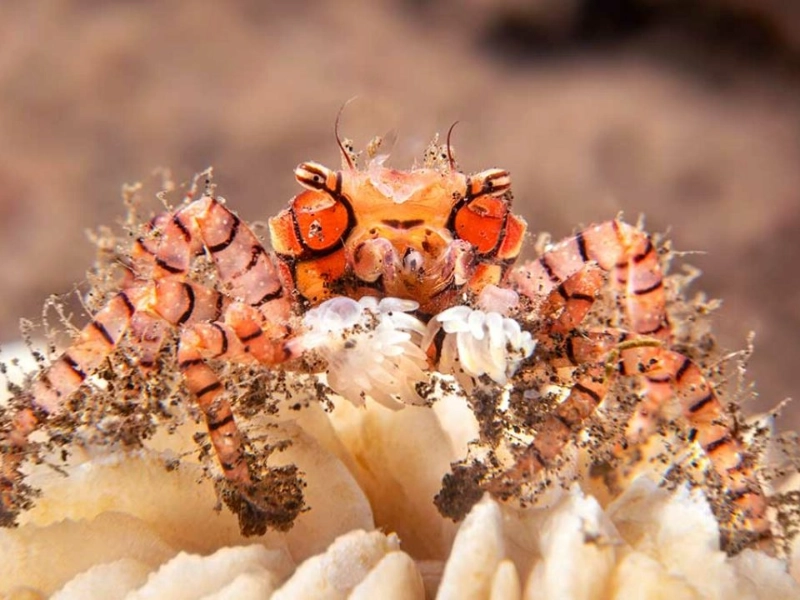
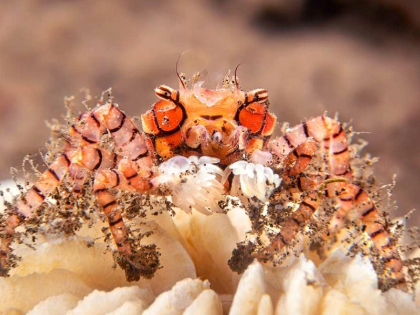
Few interactions in the complex realm of coral reef symbiosis are as aesthetically arresting or functionally distinctive as that between boxer crabs and their microscopic anemone “pom-poms.” Boxer crabs, sometimes known as pom-pom crabs, carry a small sea anemone in each of their claws and wield them like a pair of boxing gloves or cheerleader’s pom-poms. The anemones as well as the crab gain from this uncommon alliance. For the boxer crab, the anemones have several uses. Mostly they serve as a defence strategy; the crab waves the anemones at possible predators when threatened, deterring with their stinging cells. The anemones also help the crab find food. Little particles and organisms caught as they brush against the tentacles of the anemones are subsequently eaten by the crab. The anemones get movement and access to food supplies they wouldn’t normally come across in return. The way this relationship is sustained adds even more intrigue. Losing one of its anemones, a boxer crab will actually divide the remaining one in half so that each portion can rebuild into a whole anemone. This guarantees always a pair for the crab. The crabs depend so much on this relationship that, should it be required, they will even steal anemones from other boxer crabs. This symbiosis highlights the amazing adaptation of marine life as well as the sometimes surprising forms that mutually beneficial interactions can produce in the varied surroundings of a coral reef. It is a perfect illustration of how evolution may produce extremely specialised and reliant interactions between species, hence supporting the intricate network of life in reef environments.
6. Hawkfish and Fire Coral: Living on the Edge
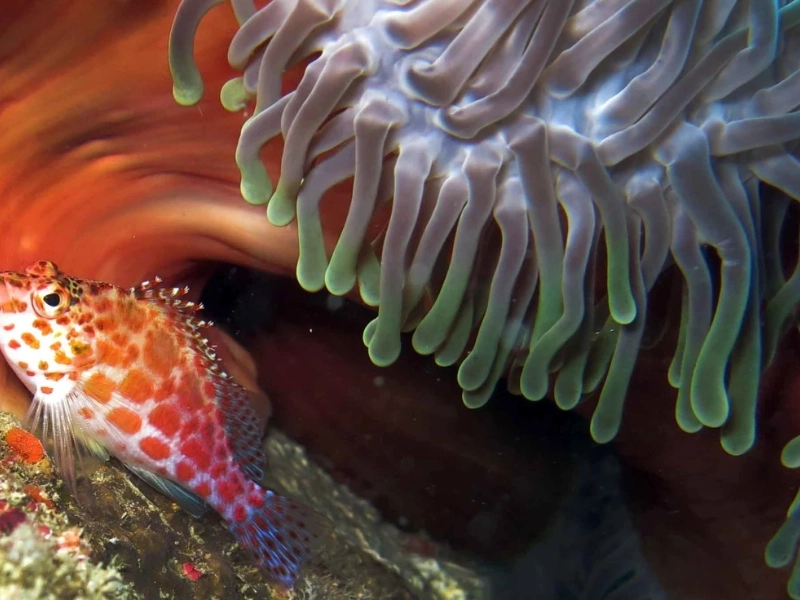
A remarkable symbiotic relationship challenging our knowledge of marine life adaptations is the one between hawkfish and fire coral. Though its name suggests otherwise, fire coral is a marine organism closely associated with jellyfish and sea anemones rather than a genuine coral. Its strong sting is well-known for causing human scarring as well as great agony. Some species of hawkfish, meantime, have developed to live in these perilous formations. Perched on the branches of fire coral, the hawkfish—with their vivid hues and unique profiles—seemingly impervious to the deadly touch. The hawkfish gains from this unusual living arrangement in various ways. Excellent camouflage provided by the fire coral’s intricate architecture lets the hawkfish hide and evade predators. The strong defence mechanism of the fire coral also discourages other fish from approaching, therefore providing the hawkfish with a safe vantage position from which to view their surroundings and identify possible prey. The hawkfish clean the fire coral in exchange, clearing trash and parasites from its surface. Acting as a first line of protection as well, they chase away butterflyfish and other coral-eating animals that might compromise their habitat. This link shows the amazing flexibility of reef fish as well as the surprising shapes symbiosis may produce in the sea. It is evidence of the evolutionary arms race in coral reef ecosystems, in which organisms constantly create fresh survival and thriving tactics in a very competitive environment.
 zi ang