
24. Water on The Moon
Year Found: 2018
Who Found It: NASA
Location: The Moon
The average human adult’s body is approximately 60% water. Therefore, when searching for a world outside of our own, that’s suitable to sustain human life, the most important thing to look for is the presence of drinkable water. Until recently, there was no proof of water existing anywhere nearby. Upon a closer look, however, it’s been close by all along.
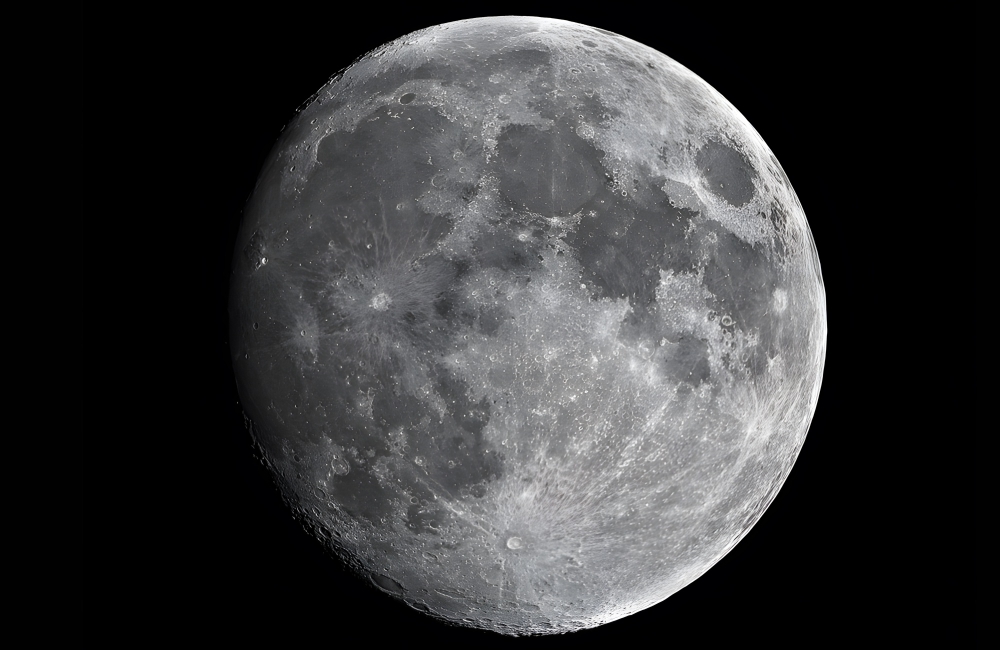
Water on the moon ©Cristian Cestaro/Shutterstock
Through the use of a Boeing 747SP jetliner that had been transformed into a Stratospheric Observatory for Infrared Astronomy (SOFIA) by NASA, hard evidence of the existence of lunar water with the familiar H20 composition was discovered (in the form of ice) at both the moon’s north and south poles.
25. Buckyballs
Year Found: 2019
Who Found It: Martin Cordiner
Location: Interstellar Medium (ISM)
Looking out at the Milky Way from a powerful telescope, it’s possible to see the colorful bands of light that make up the spirals of the galaxy. The mystery of what causes the Milky Way’s incredible light show is believed to have finally been discovered — soccer-ball-shaped Buckyballs.
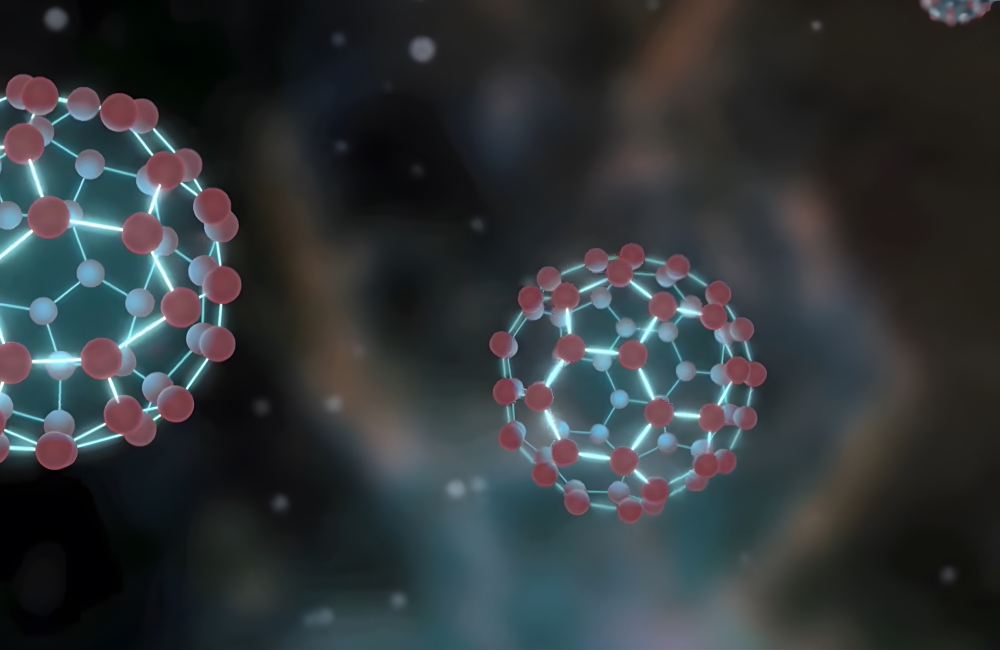
Buckyballs @NASA Video/Youtube
Although they were first discovered decades ago, it wasn’t until quite recently that evidence of their existence in the interstellar medium became apparent. Made up of 60 carbon atoms each, Buckyballs hang around in the gaps of interstellar space and are thought to be the answer to one of the greatest questions ever posed, “How did life in the universe begin?”
26. Fiery Exoplanet
Year Found: 2013
Who Found It: Researchers at MIT
Location: Orbiting Kepler-78
In 2013, researchers from the Massachusetts Institute of Technology discovered an Earth-sized planet in a far-off star system that was in orbit around a star similar to our sun. This probably sounds great to those who are looking for a habitable planet to which to relocate; however, the planet they had found couldn’t be further from being able to sustain life.
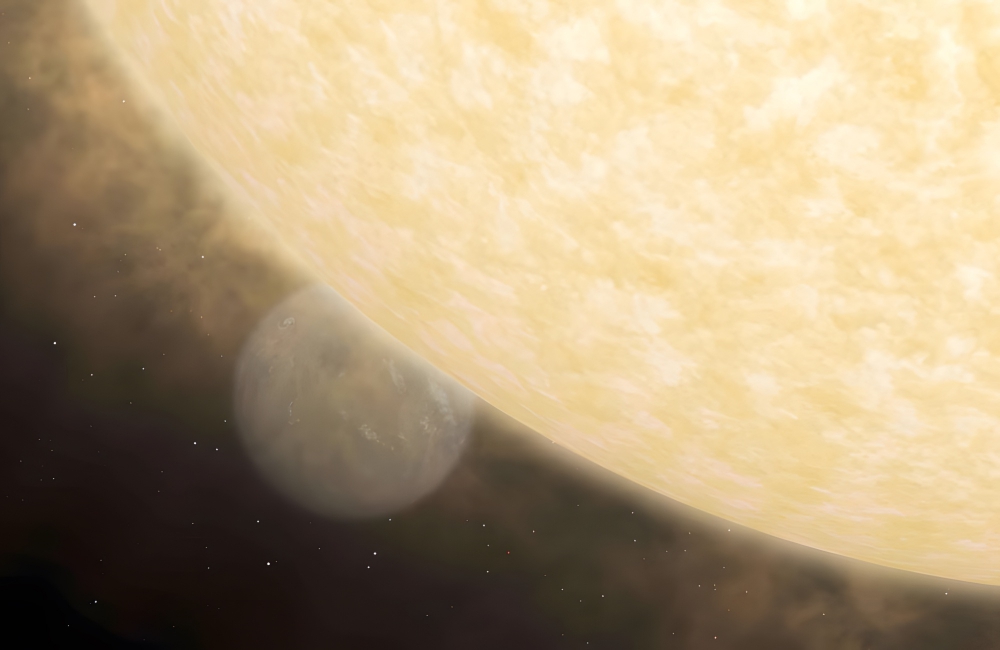
Fiery exoplanet @nasa/PInterest
If you thought that Mercury was hot — being the closest planet to the sun and all — Kepler-78b is 40 times closer to its star and therefore about 40 times hotter as well. The fact that the planet can exist at all in that extreme heat is a scientific mystery of its own.
27. A Blackhole
Year Found: 1971
Who Found It: Multiple Independent Researchers
Location: 6,197 Light-Years Away
Not planets, not sound, nor stars, nor light, nothing can escape the strength of a blackhole’s gravitational pull. The first black hole to be discovered was found in 1971 when a sounding rocket was launched into space carrying X-ray instruments. It was given the name Cygnus X-1.
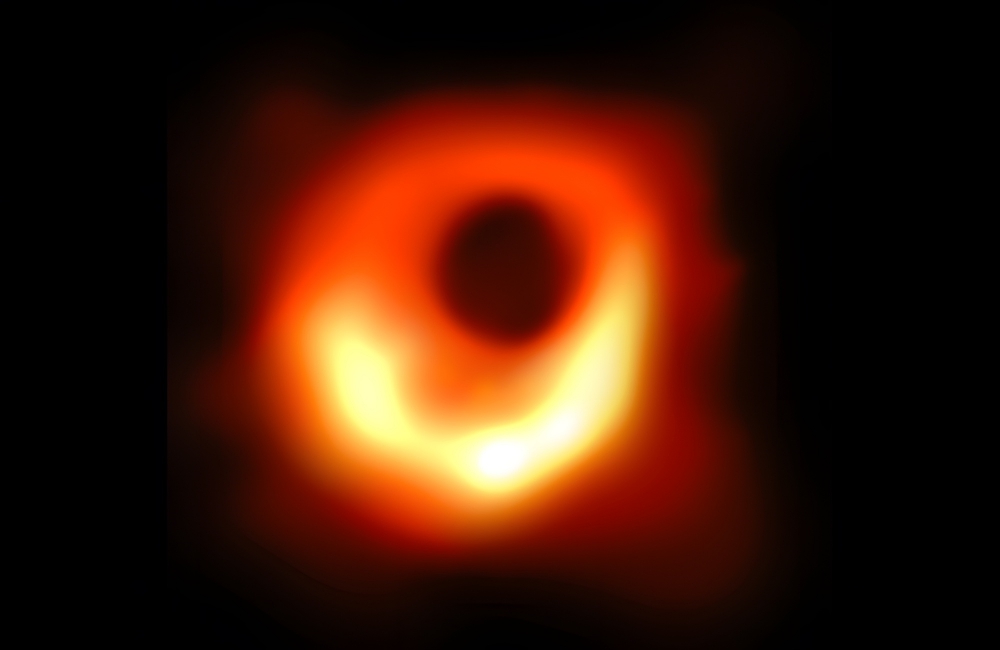
A Blackhole ©Benny Marty/Shutterstock
Humankind hasn’t even begun to scratch the surface of uncovering the mysteries of black holes. There are quite a few theories about them, however. No one knows for sure what happens to something once it gets sucked in, but some of the more optimistic researchers choose to believe that they might act as wormholes to other parts of the universe.
28. Interstellar Object in the Solar System
Year Found: 2017
Who Found It: Karen Meech
Location: Solar System
An interstellar object is something that is foreign to the galaxy in which it currently resides. Until recently, there had been no known sightings of anything from outside the Milky Way paying our galaxy a visit. Then, in 2017, a team of researchers in Hawaii spotted a football field-sized object hurtling through space.
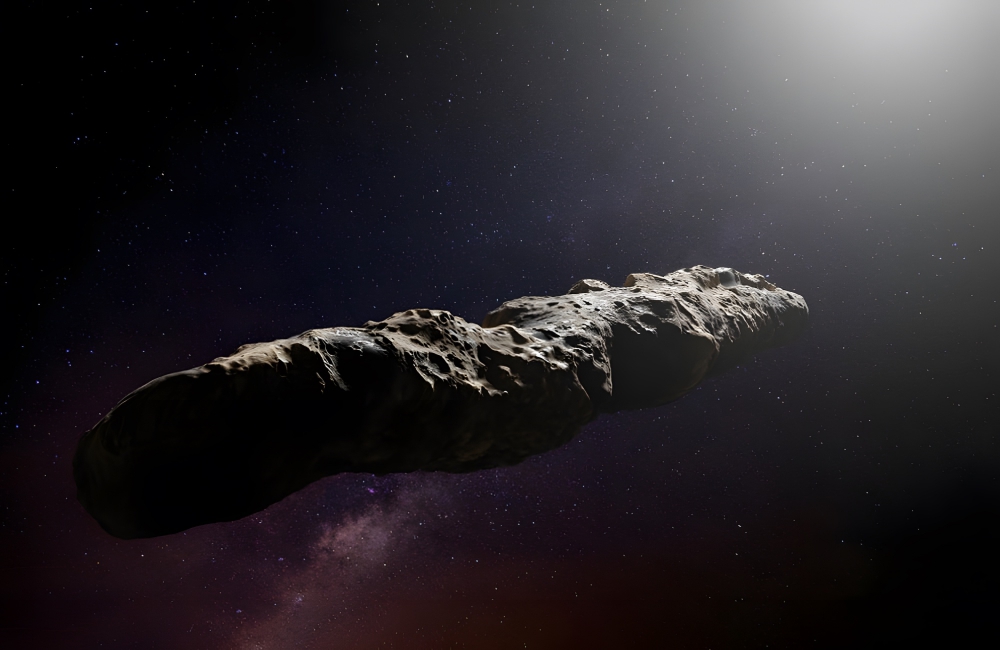
Interstella Object in the Solar System ©Dotted Yeti/Shutterstock
Its trajectory and spontaneous bursts were all the proof that the team needed in order to determine that the object was not part of the Sun’s orbit. Already on its way towards Neptune, there’s no way to know what the object is, but some astronomers believe it might have been an alien spacecraft sent to scout far-off worlds.
29. Ice Cliffs on Mars
Year Found: 2018
Who Found It: Colin Dundas and Colleagues
Location: Mars
As far as the future of humankind is concerned, well, there is no future off of Earth if a viable water source is not found elsewhere in the galaxy. Over the years, there have been discoveries on our moon and one of Saturn’s (Titan) that have produced promising results. Not as promising, however, as what Colin Dundas and his team found in 2018.
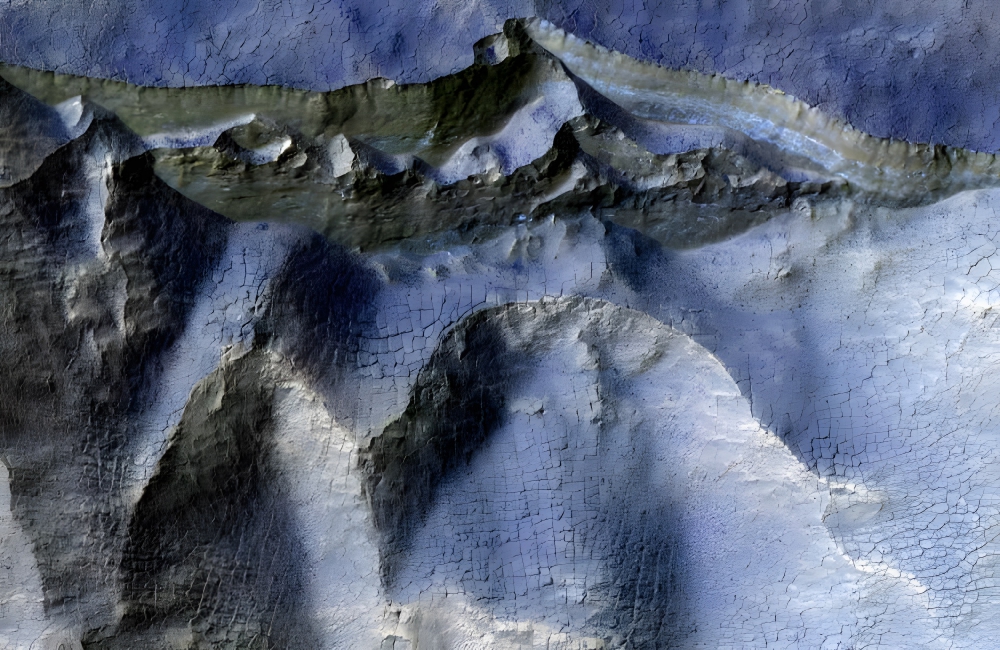
Ice Cliffs on Mars @nasa/Pinterest
Dundas and his team unearthed one of Mars’ secrets that might be humankind’s answer to the question of long-term survival — ice cliffs on the Red Planet. But not justice cliffs. A short distance below one-third of its surface, Mars is hiding solid ice. If it’s ice as we know it, however, now, that is still yet to be determined.
30. Magnetic Turbulence
Year Found: 2018
Who Found It: NASA
Location: Magnetosheath
The Earth’s magnetic field lines continuously stretch and snap back into place. Each time they snap back, the particles that are present within the field lines are sent towards one another at supersonic speeds, and the energy they embody is called magnetic reconnection.
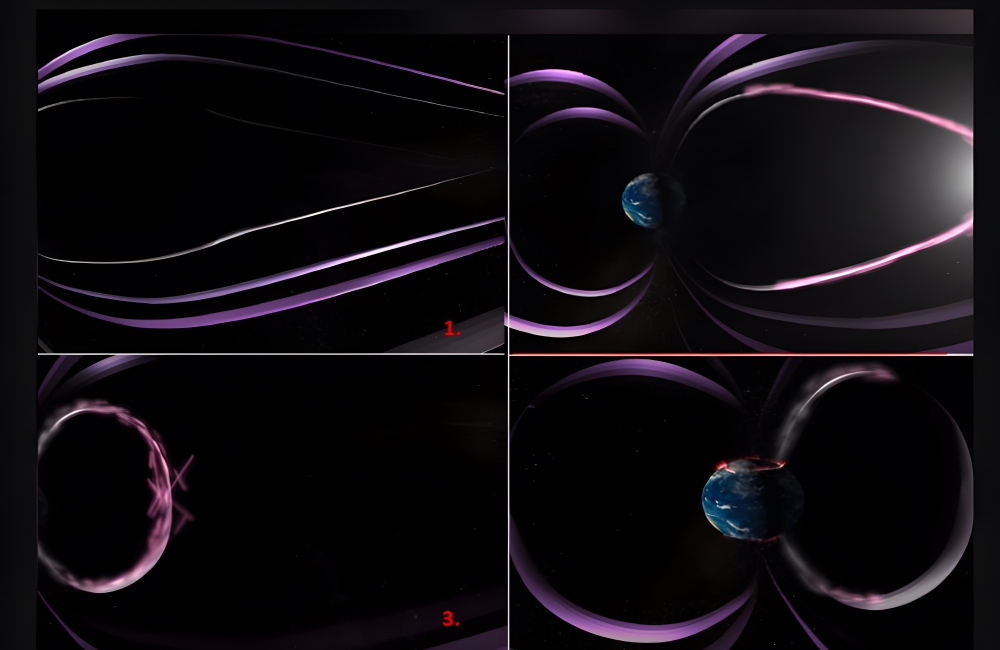
Magnetic Turbulence ©Nasa | @gdolmos/Pinterest
In 2018, using NASA’s Magnetospheric Multiscale Spacecraft (MMS), scientists found the first evidence of magnetic reconnection between the Earth’s magnetosphere and solar wind in a volatile layer known as the magnetosheath. The discovery of this “magnetic turbulence” is expected to answer many questions surrounding the effects that the process of magnetic reconnection has on Earth, as well as the manufactured objects that we’ve placed in its orbit.
31. Oil & Gas on Saturns Moon
Year Found: 2017
Who Found It: NASA
Location: Titan
NASA’s Cassini space-research mission was sent off on a 20-year mission, in 1997, towards Saturn. The mission’s goal was to survey the rings, the moons, and the surface of Saturn. The findings that Cassini returned were more than anyone could have ever hoped for.
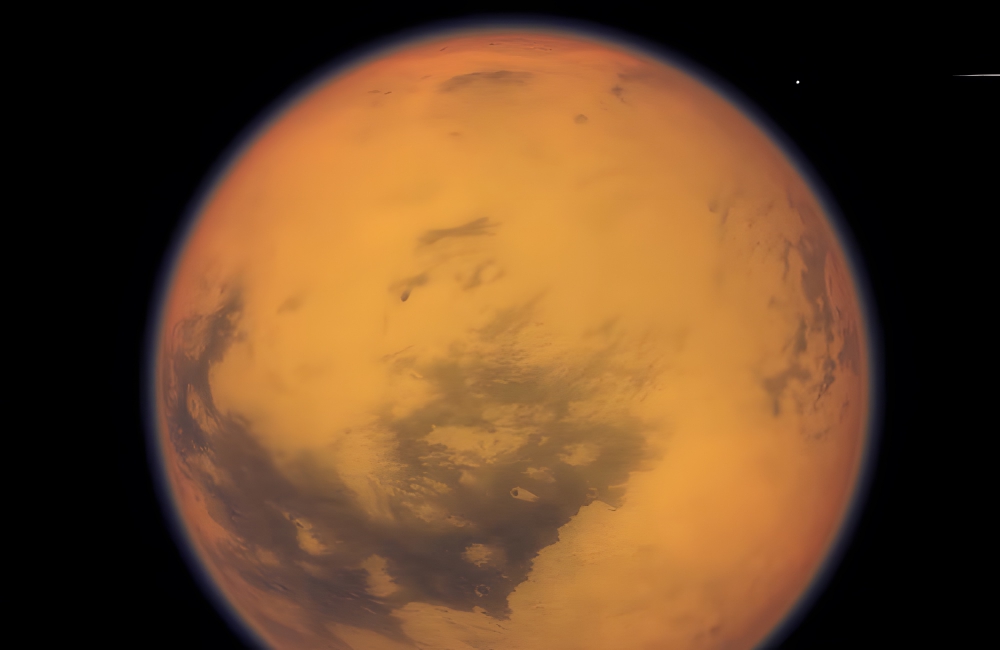
Oil & Gas on Saturns Moon ©Daniil Disa/Shutterstock
While exploring Saturn’s largest moon, Titan, the spacecraft discovered many carbon-containing compounds, including ethane and methane. When it comes to oil and gas, forget about Exxon and BP. Just one of Titan’s lakes is said to contain more liquid hydrocarbons than all of Earth’s reserves combined.
32. Monster Galaxy
Year Found: 2007
Who Found It: Min Run and Colleagues at UMass
Location: 12.4 Billion Light-Years Away
In the tireless search to figure out how galaxies are formed and how the stars that reside within them are created, Dr. Ken-ichi Tadaki and his team from the National Astronomical Observatory of Japan traveled to Chile in order to study COSMOS-AzTEC-1, otherwise known as the Monster Galaxy.
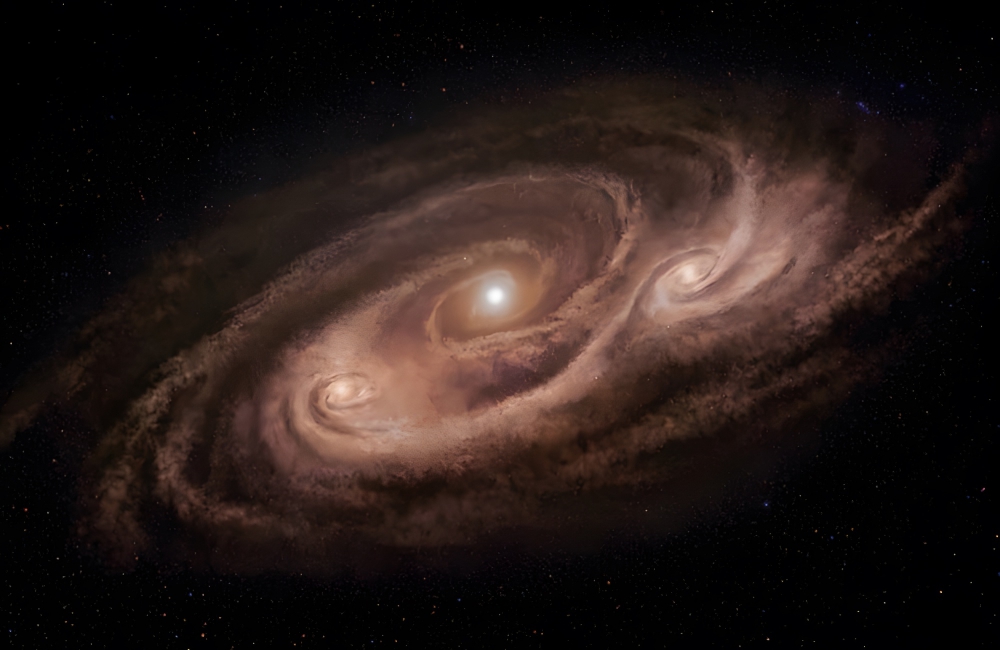
Monster Galaxy ©Gtspace/Shutterstock
Creating stars 1,000 times quicker than the Milky Way, the Monster Galaxy got its name because of its size and rapid expansion, not because of any monsters that might live there. At a rate that’s ten times faster than a typical starburst galaxy, COSMOS-AzTEC-1 is expanding at a more accelerated rate than Amazon did (compared to its rivals) in the 2000s.
33. Iron and Titanium Outside the Solar System
Year Found: 2018
Who Found It: Scott Gaudi
Location: 670 Light-Years Away
In 2016, using the Kilodegree Extremely Little Telescope to find it, researchers unveiled KELT-9b to the world. KELT-9b is a planet from outside of our solar system that is almost three times the mass of Jupiter and much hotter as well. Two years after its discovery, astronomer Scott Gaudi made a groundbreaking finding of his own.
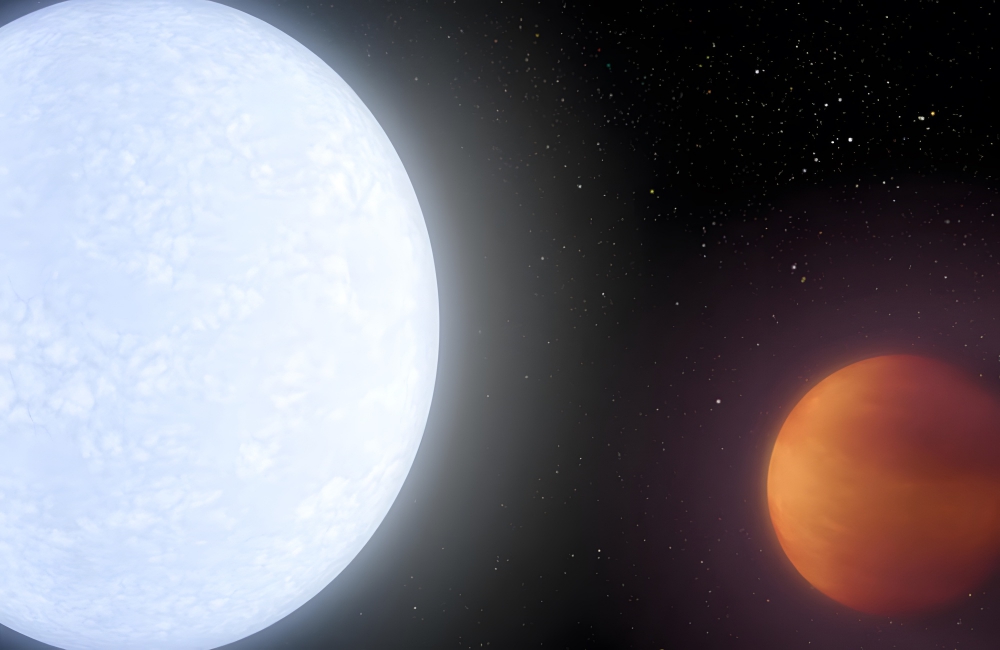
Iron and Titanium Outside the Solar System @weheartitapp/Pinterest
An in-depth study of KELT-9b, the hottest exoplanet found to date, provided evidence of the presence of iron and titanium that were very similar in composition to what’s been found in the Milky Way more intriguingly, on Earth.
34. Seven-star System
Year Found: 1873
Who Found It: Unknown
Location: Nu Scorpii
In solar systems, like the one in which the Earth resides, planets orbit around a single star (just as Earth revolves around the Sun) — those are called single-star systems. There are also multi-star systems in the universe, but they usually don’t have any planets. Alternatively, the stars in these types of systems revolve around each other.
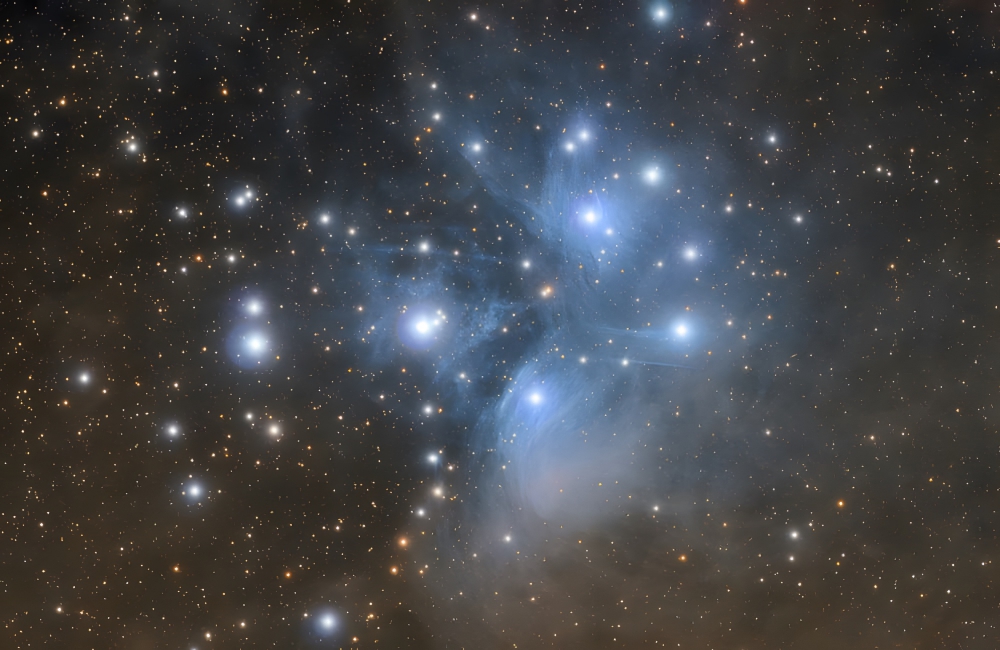
Seven-star System ©AstroStar/Shutterstock
Triple-star systems are the most common type of multi-star system found in the universe, but they are not the largest. That distinction belongs to AR Cassiopeiae and Nu Scorpii, the only two known septuple star systems.
35. Space Cloud That Smells Like Rum
Year Found: Unknown
Who Found It: Unknown
Location: 25,000 Light-Years Away
The Rosetta Orbiter Spectrometer for Ion and Neutral Analysis instrument (ROSINA) is the device that scientists use to help determine the (mostly awful) smells of the various things that are found in space but are too far away and too dangerous to sniff in person. A few years ago, ROSINA took a reading of Sagittarius B2, one of the clouds that are near the Milky Way’s galactic center, and the findings were astonishing.
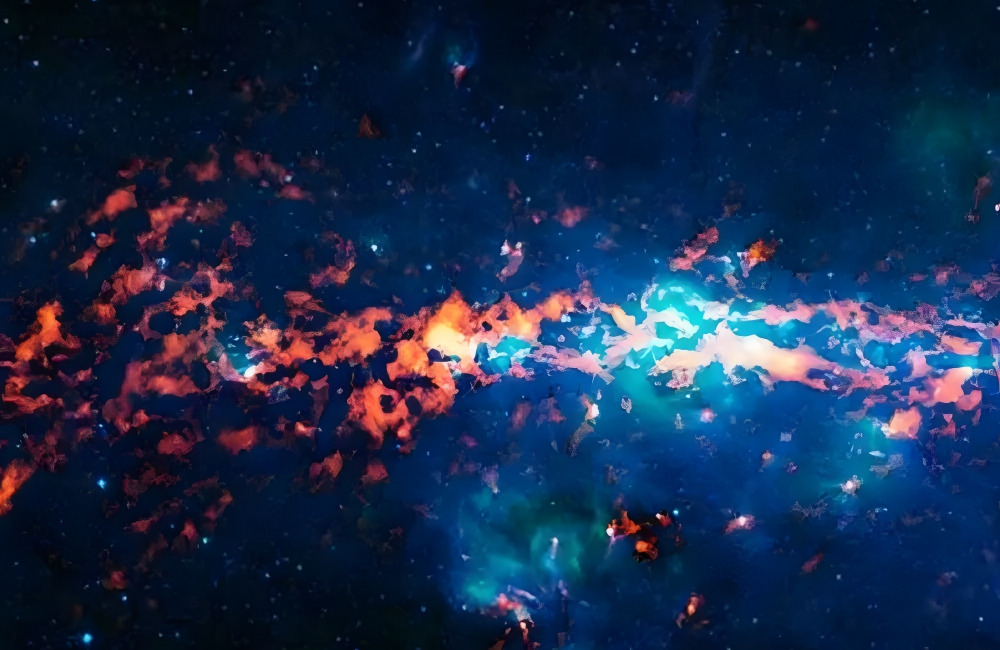
Space Cloud That Smells Like Rum @latestinspace/Twitter
Emitting aromas of raspberry and rum instead of the sulphuric scent of rotten eggs, Sagittarius B2 smells more like a bar than a gaseous cloud at the center of the galaxy.
36. Planet Made of Diamonds
Year Found: 2011
Who Found It: Mathew Bailes et al.
Location: PSR J1719-1438 b
If diamonds truly are “forever,” as the saying goes, then the pulsar planet that was discovered by Mathew Bailes et al. in 2011 will last for an eternity. Weighing in at around the same mass as Jupiter, there is no denser planet known to humankind than PSR J1719-1438 b. However, there is a very good reason why it weighs so much.
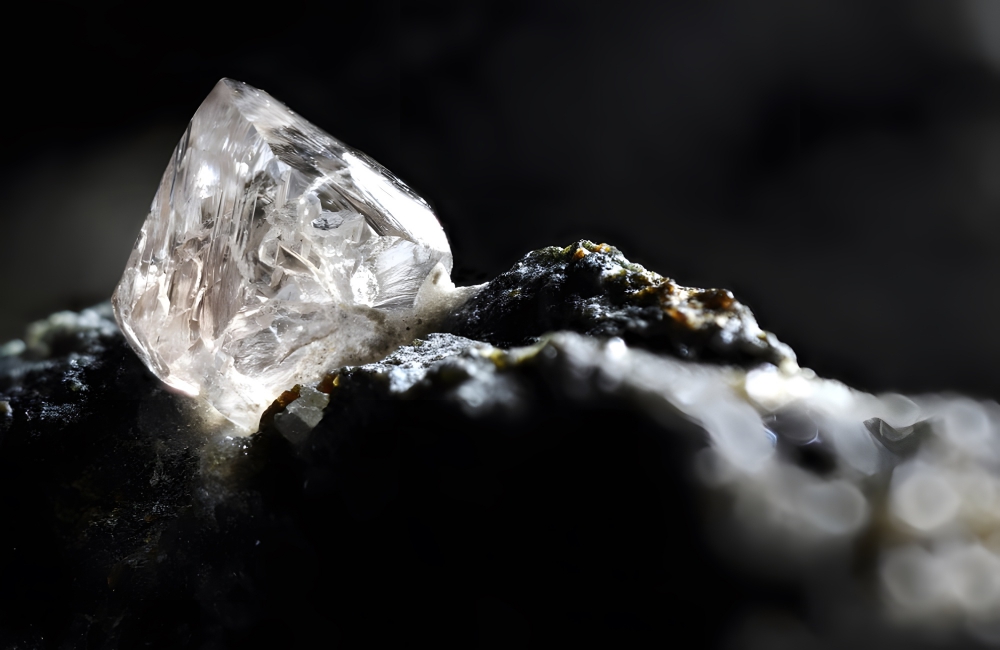
Planet Made of Diamonds ©Bjoern Wylezich/Shutterstock
Rio Tinto would have a field day if it had been able to get its hand on PSR J1719-1438. The surface of this pulsar planet is believed to be made entirely of diamonds that were created from densely packed carbon deposits a few billion years ago. Imagine that, a city-sized diamond mine with a diameter of more than 12 miles.
37. Planet Made Of Ice, That’s On Fire
Year Found: 2004
Who Found It: R. Paul Butler and Geoffrey Marcy
Location: Giles 436 b
In 2004, astronomers R. Paul Butler and Geoffrey Marcy discovered a planet that, in more than one way, was unlike any other world that had been found. Of all the known transiting-planets, Giles 436 b was the smallest that had been found until Kepler was found three years later. And it’s simultaneously frozen and on fire.
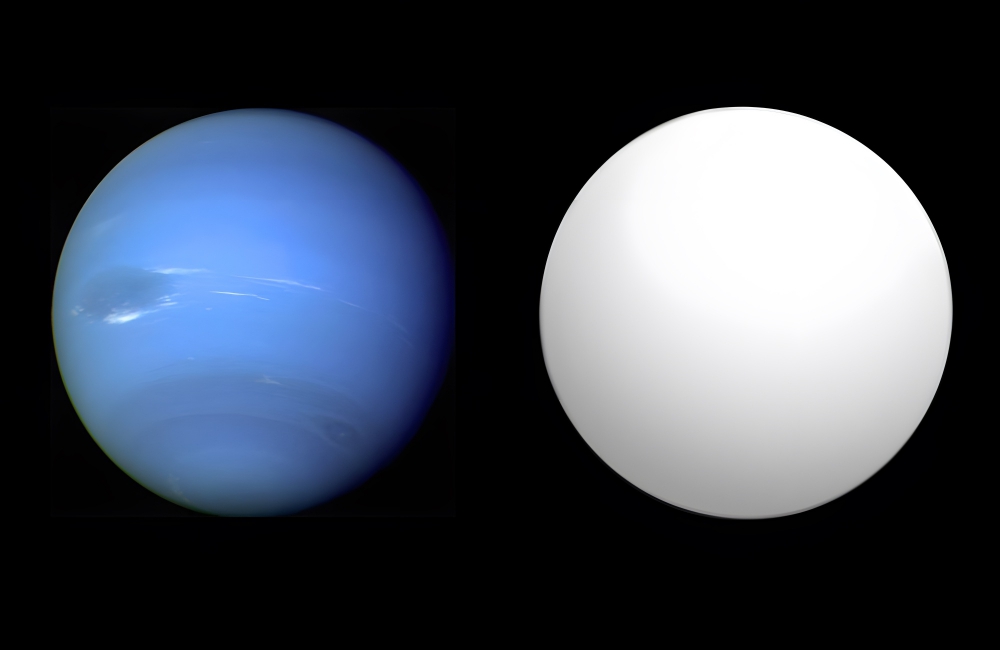
Planet Made Of Ice, That’s On Fire ©Aldaron, a.k.a. Aldaron /Wikimedia Commons
It’s believed that even water vapor (if it exists there) would be compressed by the fantastic strength of the planet core’s gravitational force. This same gravitational force causes Giles 436 b to remain frozen beneath the surface and in a constant state of inferno above it — reaching temperatures of more than 800° F.