
Not every animal can look as cuddly as a giant panda or as extravagant as a peacock, but every animal has its role to play, and every organism is important. Unattractive traits allow some species to survive in harsh environments, and studying them can help us better understand ecosystems. uncovering the reasons why creatures look a certain way might even be key to conservation efforts.
As they say, beauty is only skin deep. Let’s hope that the same can be said for ugliness. From the well-known naked mole-rat to the gremlin-looking primate called an aye-aye, here are 13 of the ugliest animals—and the adaptational reasons behind their unsightly characteristics.
1
of 13
California Condor
Steve Cukrov / Shutterstock
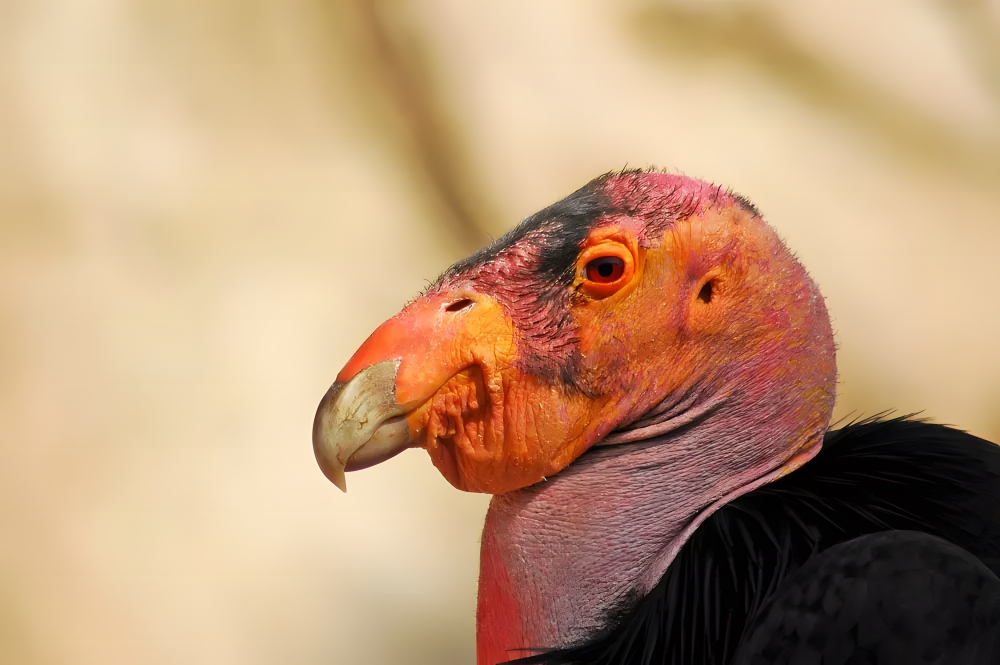
One of the world’s rarest birds and North America’s largest flying land bird, the California condor is graceful when it is gliding high above the canyons and deserts of the American West Coast.
Up close, however, this bird isn’t so photogenic. Its bald head is an adaptation for its lifestyle as a scavenger since a feathered head would become clotted with blood while the bird feeds on large carrion.
Human activities, lead poisoning, and the use of pesticides such as DDT almost decimated the California condor population in the 19th and 20th centuries. The birds neared the point of extinction in the late 1970s and only 22 of them remained by 1981.
Scientists started an intensive captive breeding program and gradually reintroduced them into the wild. Although the condor population is slowly increasing, the species is still considered Critically Endangered by the IUCN, and the total world population is estimated at about 520, including both captive and wild birds.
Proboscis Monkey
shankar s. / Flickr / CC BY 2.0
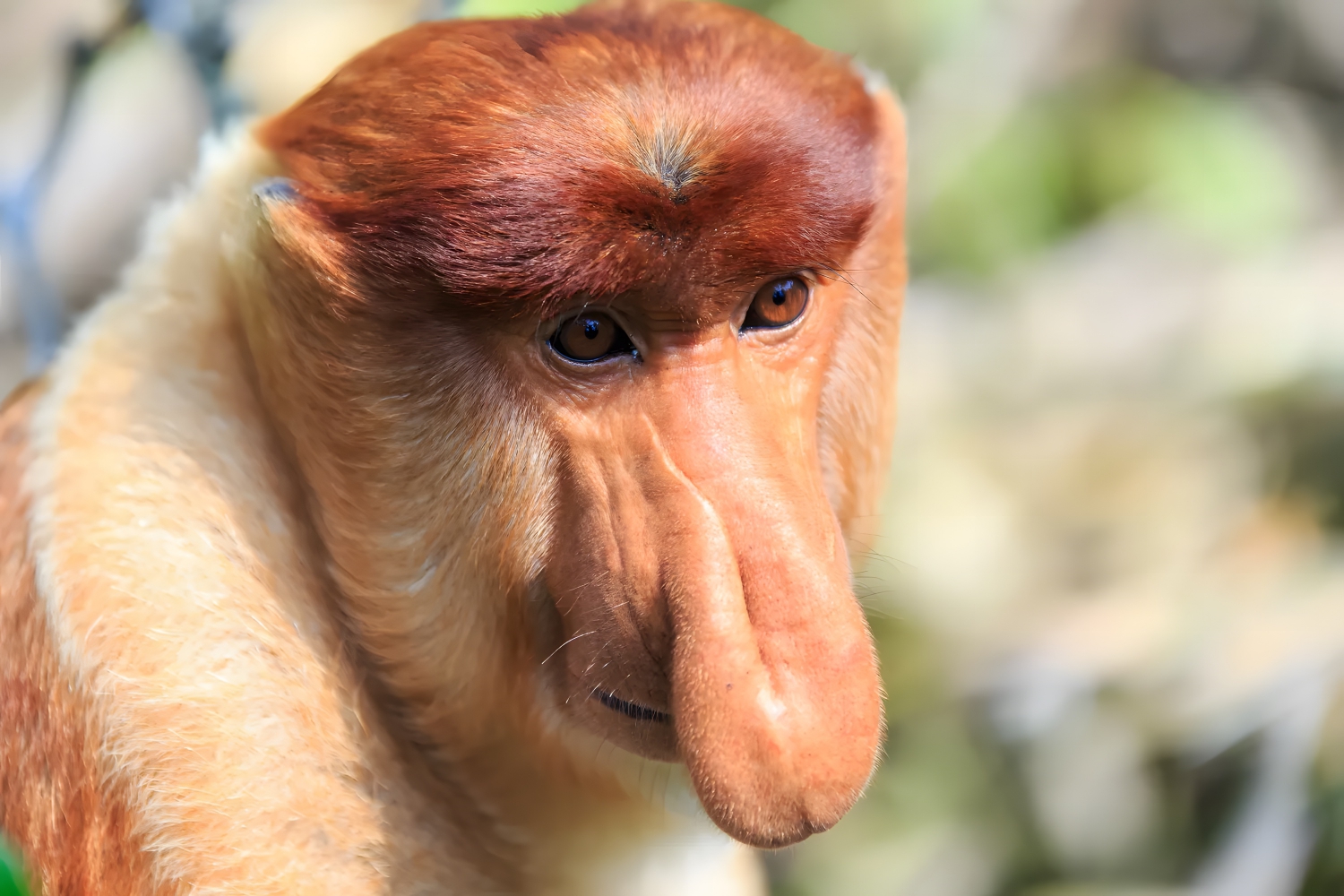
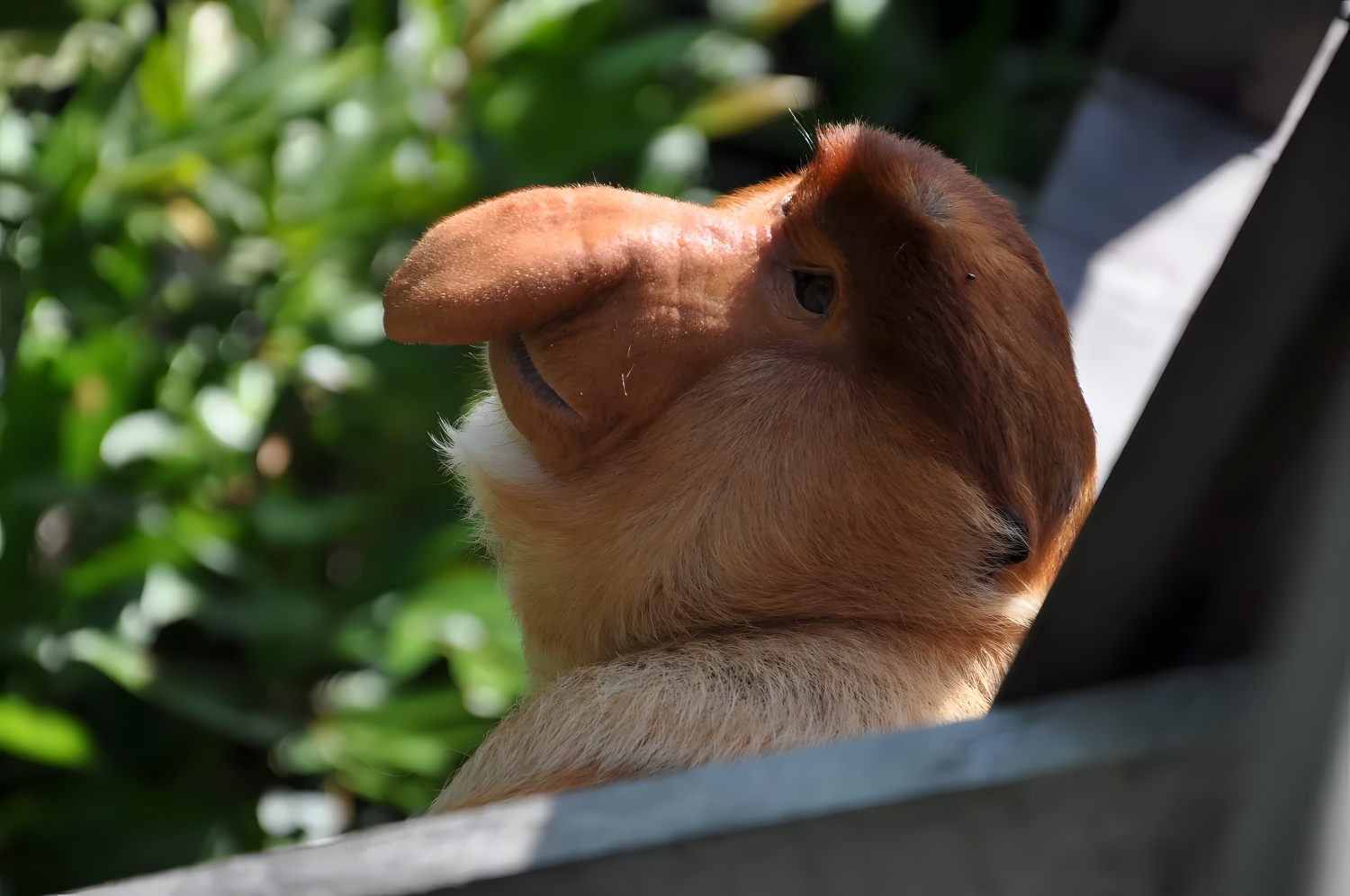
A human might run for cover with this nose, but for the proboscis monkey, the bigger the nose, the better. It turns out that nothing turns on a female proboscis monkey more than a big, bulbous nose. Scientists believe that the large nose has an effect on a male proboscis monkey’s vocalizations that both attracts females and intimidates competitor males.
These curious-looking monkeys are also amazing swimmers thanks to their webbed feet and hands. In fact, they love the water and live in trees close to rivers (they are never more than 600 meters, or 0.37 miles, from a river) and sleep in large groups called bands right on the water’s edge.
5
of 13
Warthog
Lennart Va Den Berg / EyeEm / Getty Images
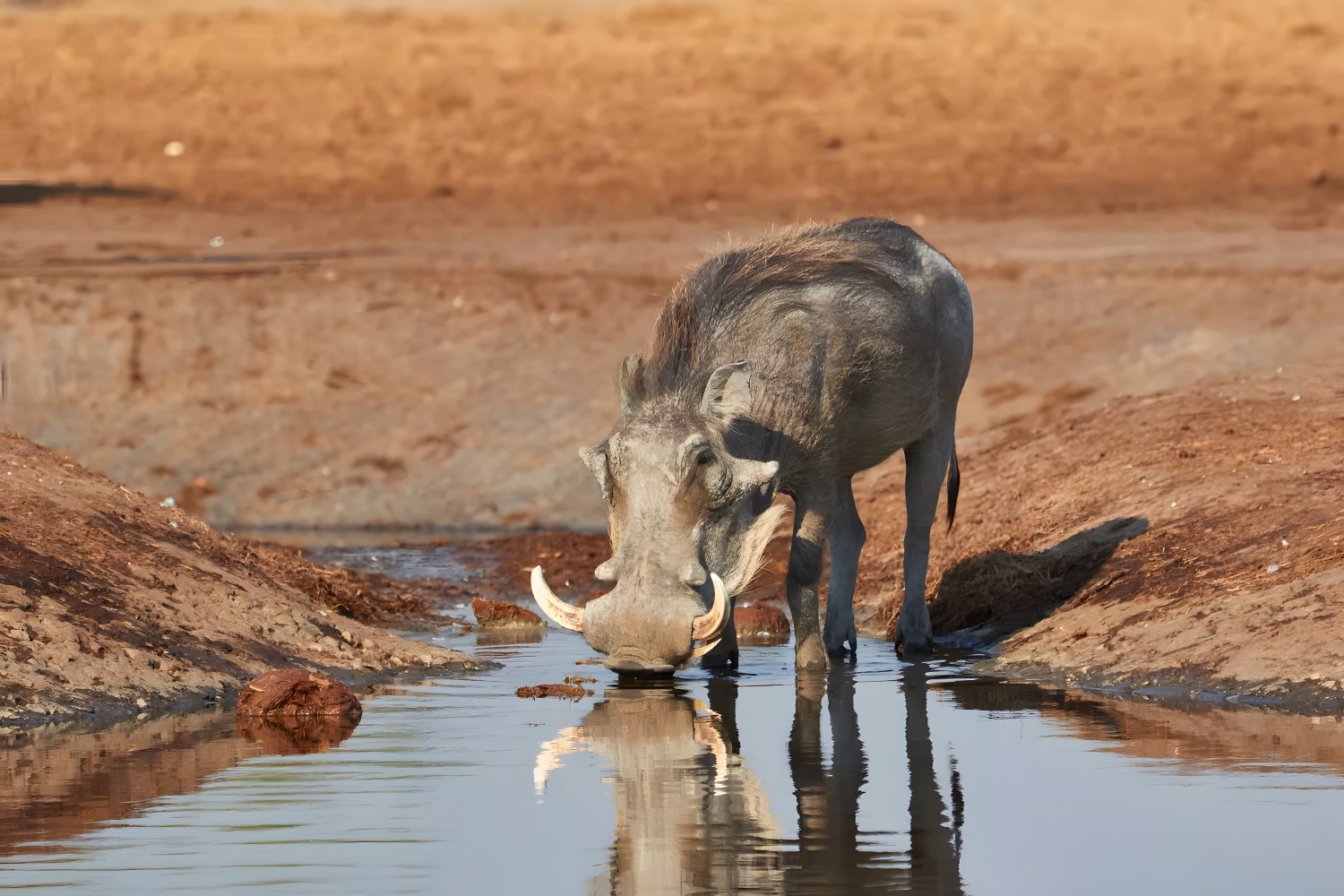
As wild members of the pig family, warthogs have the characteristic pig nose, tusks protruding from their mouths, a wart-like curvature to their faces, and a nappy mane of hair that cascades down their backside. They actually have two pairs of tusks: the upper tusks emerge from their snouts making a semi-circle, and their lower tusks are situated at the base of the other set.
Warthogs’ bodies are covered in bristles, and they’re distinguished by their disproportionately large heads and those wart-like pads that offer protection.
They don’t create an image of beauty, but these physical characteristics make warthogs well-adapted to their savanna and grassland habitats and the burrows they like to occupy.
10 Wild Warthog Facts
6
of 13
Aye-Aye
Thorsten Negro / Getty Images
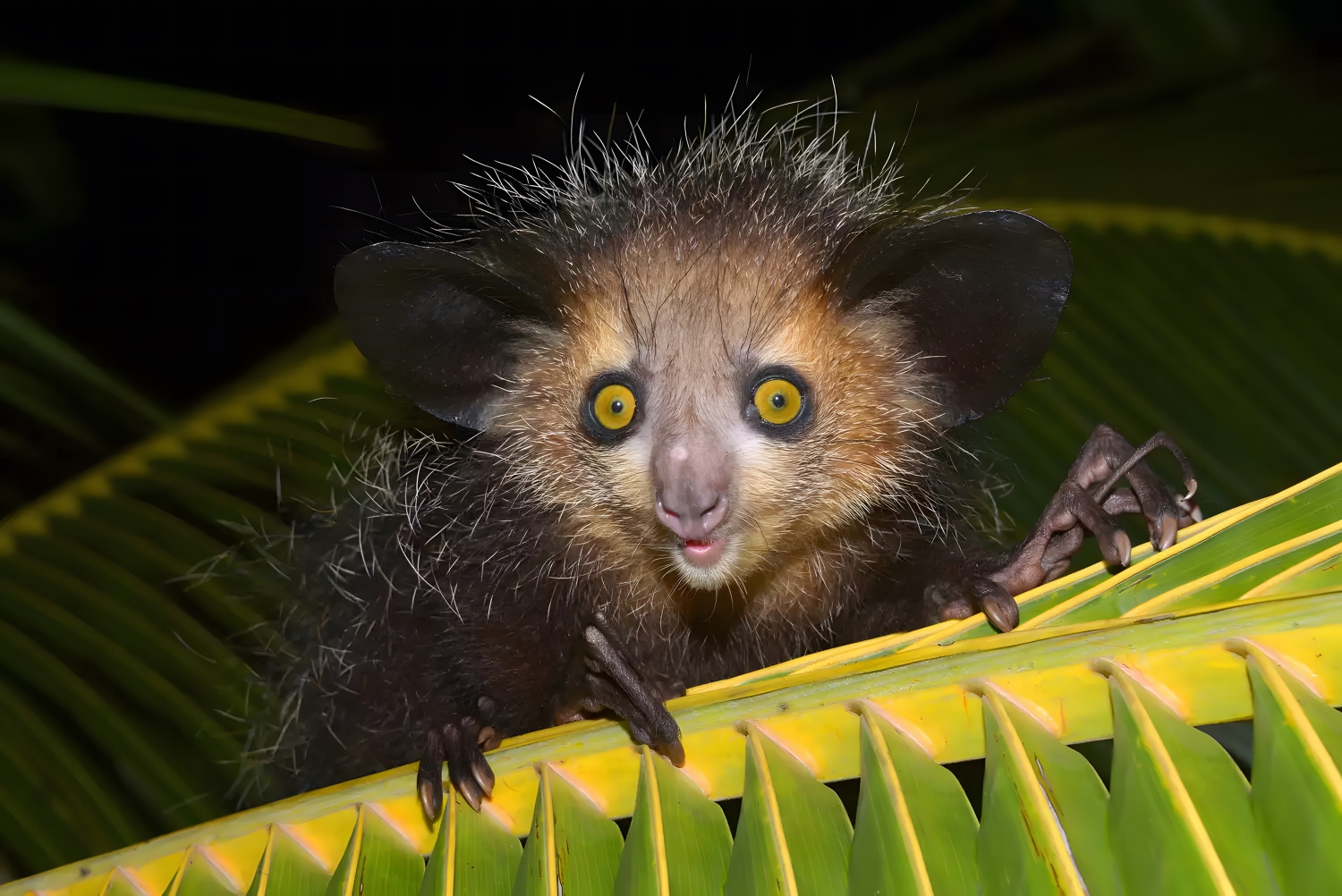
This gremlin-looking creature, called an aye-aye, is a primate found only in Madagascar.
Aye-ayes have several unusual traits, including long, bony, witch-like middle fingers that they use to pry insects and grubs from tree trunks. This allows them to fill a biological niche, much like a woodpecker might. They are also nocturnal, only coming out at night.
Additionally, aye-ayes have incisors that continually grow, which is unusual for primates, and extremely large ears.
This elusive primate uses percussive foraging to find its food. As it walks along a branch, the aye-aye taps it with its skeletal middle finger. It cups its huge ear forward, listening for the echoes coming from the tree. When it knows it is above an insect tunnel, it tears off chunks of the tree with its massive teeth so it can uncover the tunnel and feast on the insects within.
The aye-aye is considered endangered by the IUCN due to habitat loss and hunting. In fact, it’s also one of the 25 most endangered primates.
8 Things You Didn’t Know About the Creepy-Cute Aye-Aye
8
of 13
Monkfish
PEDRE / Getty Images
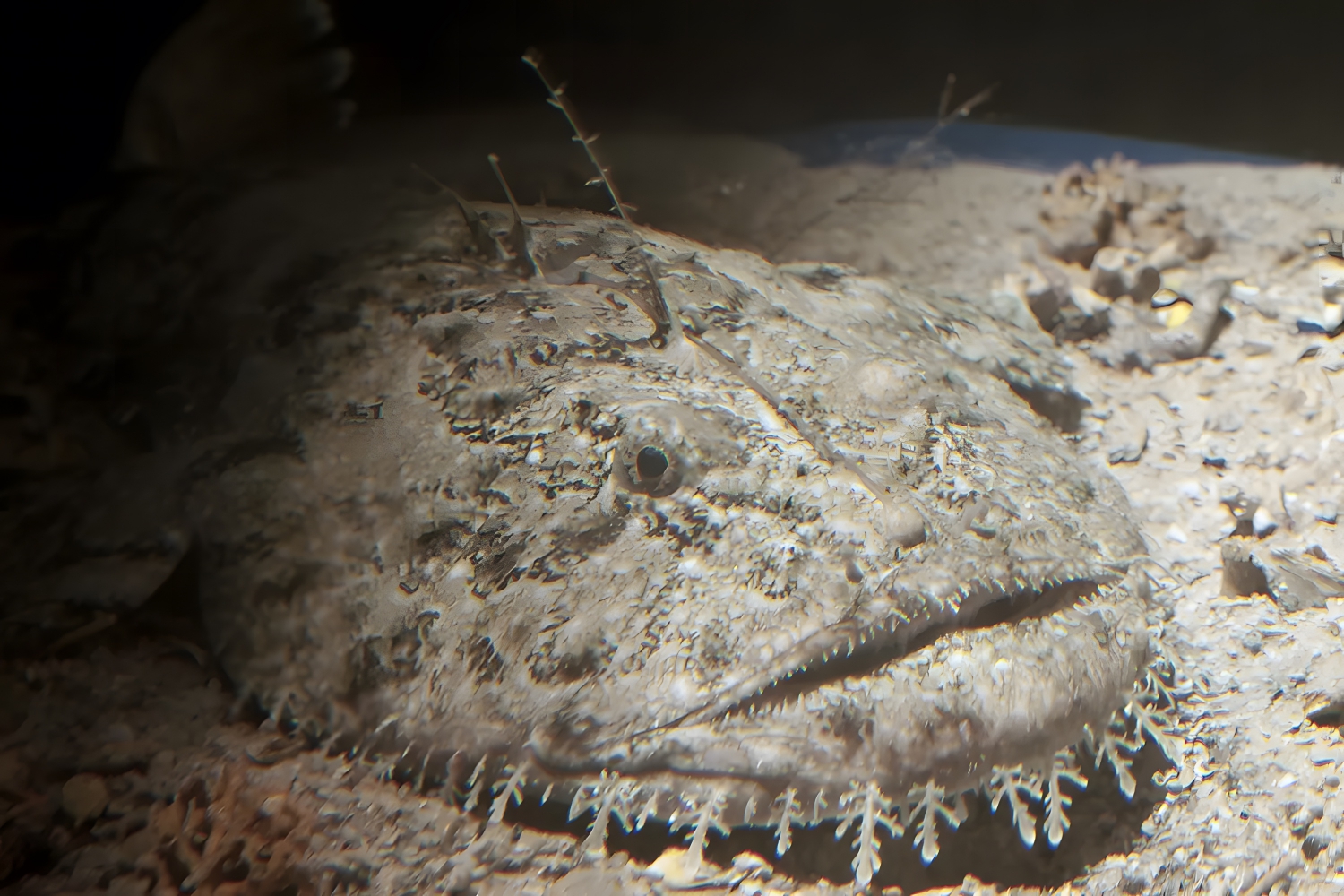
These unappetizing, freaky-looking fish are a common food delicacy, but for years, people didn’t want to eat the fish because it was so ugly. Chefs eventually realized that its looks were deceiving, and now it shows up on the menus in all sorts of fine restaurants.
With mottled skin, an unsightly overbite, and a bizarre figure, monkfish are undeniably ugly. And because of their huge heads filled with razor-like teeth, they look awfully mean as well.
9
of 13
Marabou Stork
Nadia Leskovskaya / Shutterstock
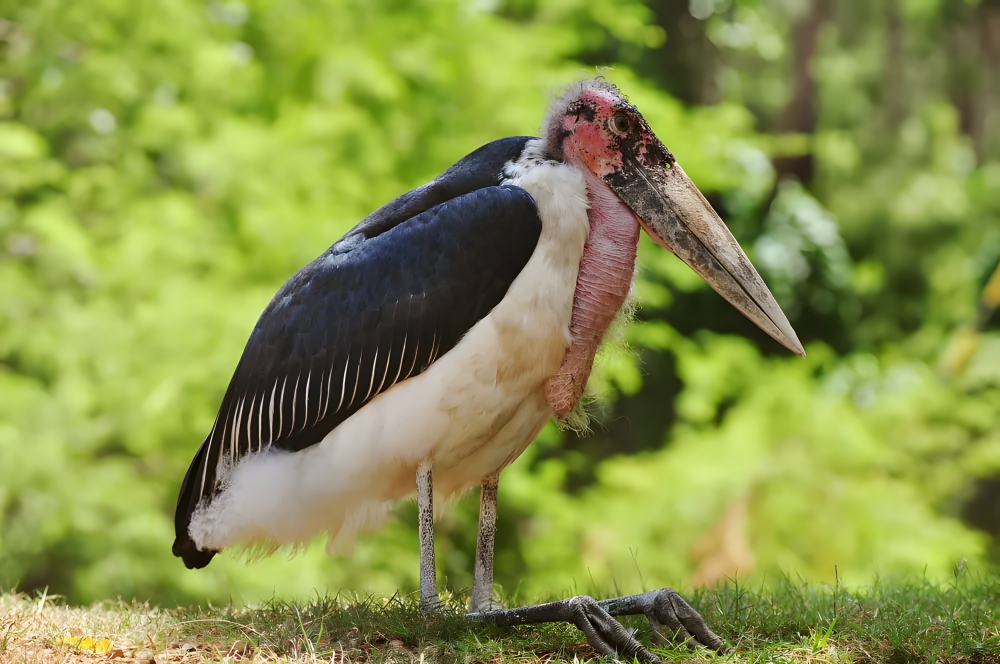
Standing over five feet tall with a wingspan of more than 10 feet, the marabou stork is a scavenger of large carrion, which is why it has a featherless head. These African birds also eat other birds and have even been known to consume flamingos.
The marabou stork does have some unattractive habits. They defecate all over their legs and feet, for instance. This gives their appendages a lovely white appearance and also helps them regulate their body temperature.
This stork species also stands out for its gular sac, a long, reddish pouch that hangs from its neck and is used to make grunts and other noises during courtship rituals—not for food storage.
Marabou storks aren’t particularly active; in fact, they are relatively lazy. They stand around much of the time and often pant excessively when they are hot.
10
of 13
Elephant Seal
Chase Dekker / Getty Images
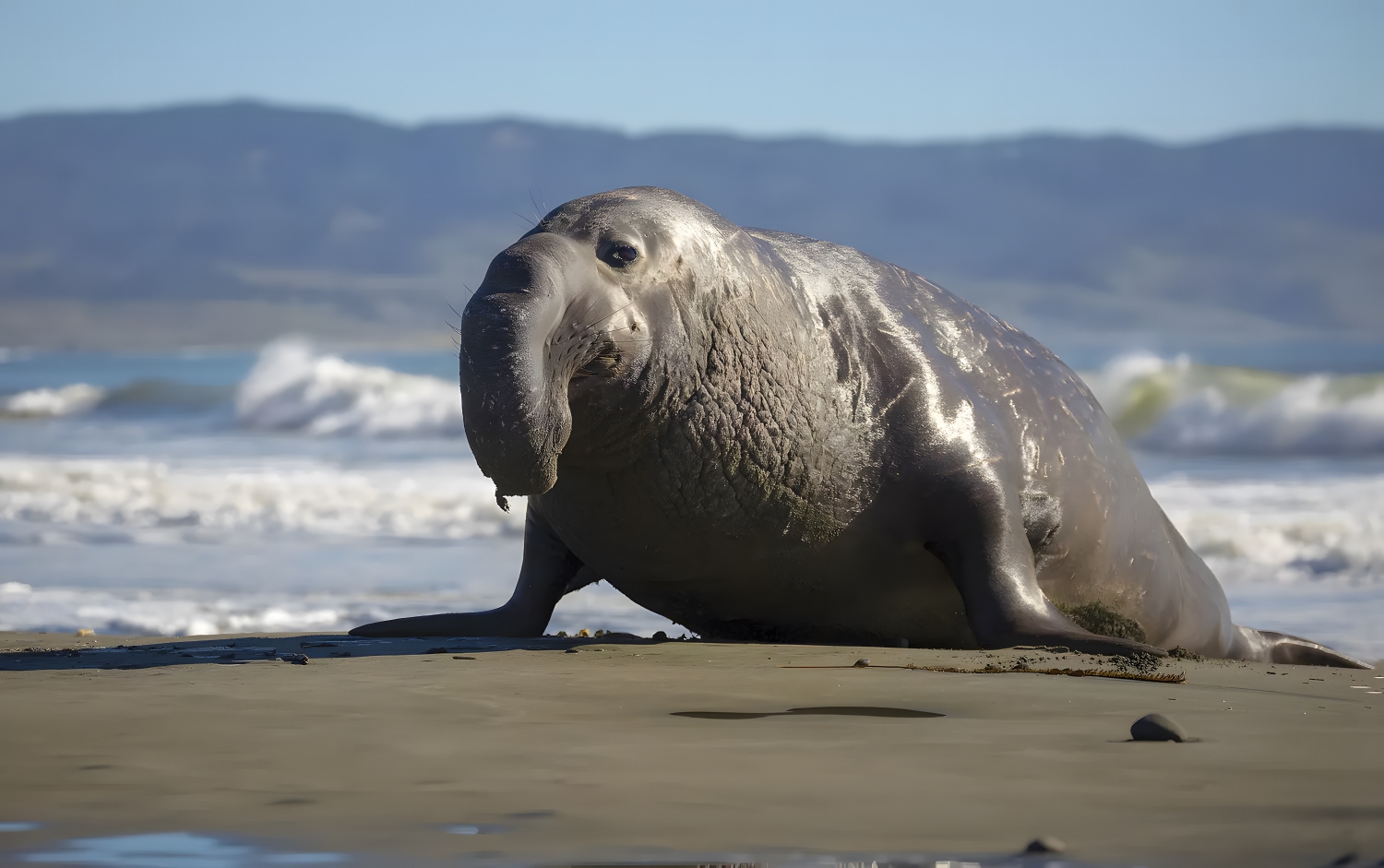
Baby elephant seals and female elephant seals are pleasant-looking. Males, however, begin developing a large nose when they reach sexual maturity, somewhere around three to five years.
The huge schnoz is fully developed by seven to nine years old, giving the seal the look of its namesake elephant with a massive, floppy trunk.
Much like the proboscis monkey, an elephant seal’s large nose plays a role in mating, as it helps generate roars that fend off other males.
11
of 13
Red-Lipped Batfish
Rein Ketelaars / Flickr / CC BY-SA 2.0
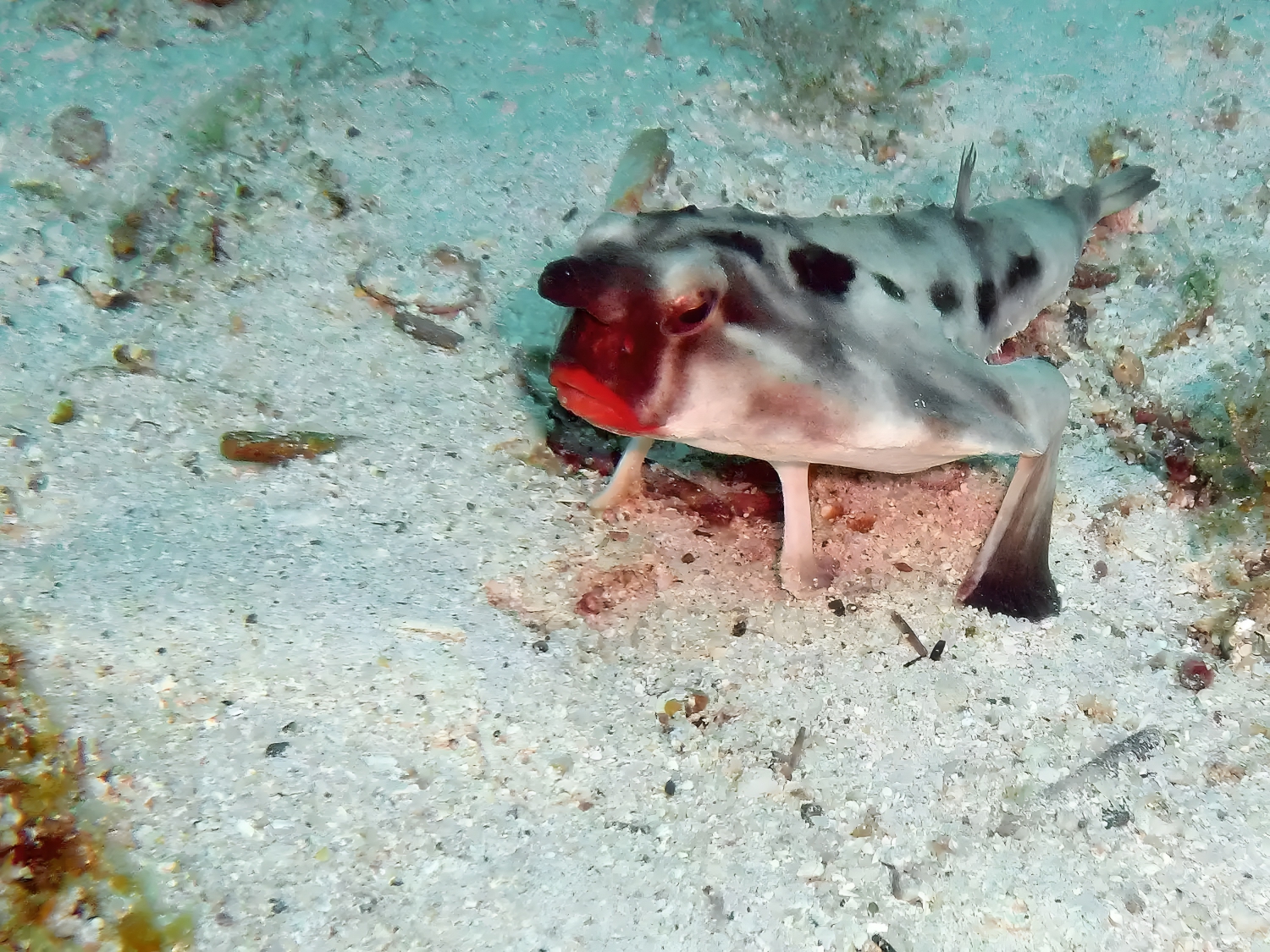
The red-lipped batfish gives the impression that it tried to compensate for an unusual body by caking on lipstick. Further research needs to be done to understand the function of the bright red lips, but some scientists think it relates to attracting mates. These odd fish are mostly found around the Galapagos Islands and near Peru.
Interestingly, red-lipped batfish are not the most graceful swimmers—they are better suited for “walking” along the ocean floor. When they reach adulthood, they use their dorsal fin as a fishing lure to attract prey instead of for swimming.
13
of 13
Hyena
Stig Nygaard / Flickr / CC BY 2.0
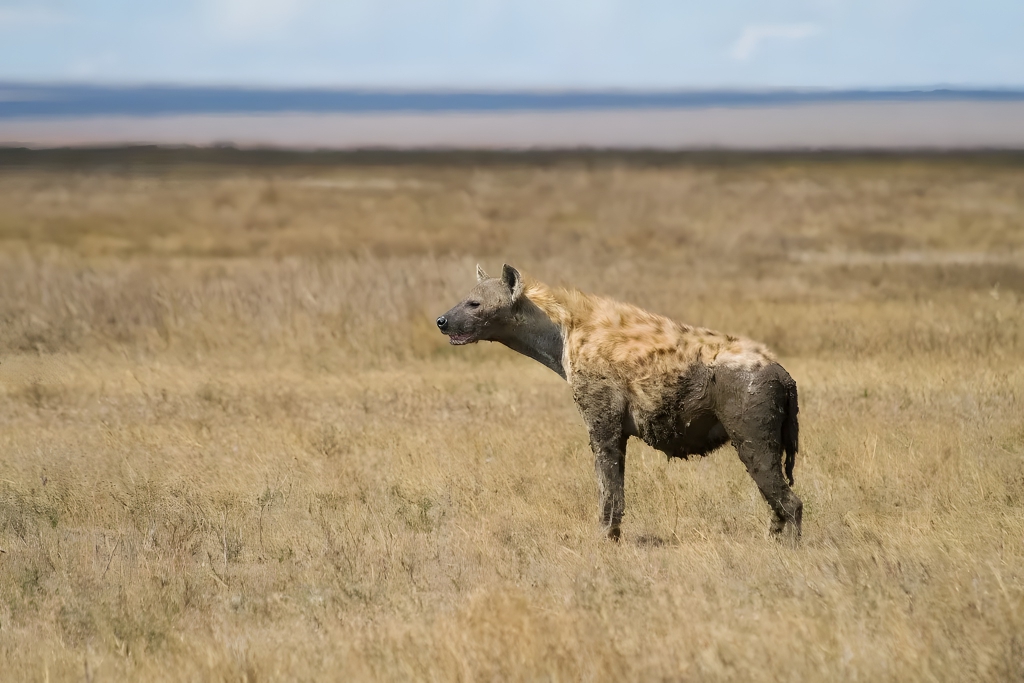
With a hunching, bear-like gait, these beasts of the savannah aren’t the prettiest animals on the planet, but at least they have a sense of humor. Occasionally referred to as “laughing hyenas,” these animals have calls that are often described as haunting and witch-like.
Although known for being scavengers, hyenas reportedly kill 60% to 95% of what they eat. Though they look like wild dogs, they are more closely related to civets, mongooses, and meerkats.