
81. The Giant Void
Year Found: 1981
Who Found It: Robert Kirshner, et al.
Location: Canes Venatici
The Giant Void is a space mystery that continues to puzzle scientists to this day. The Giant Void isn’t full of matter or dark matter, nor is it a hole in space. It’s just…nothing. Light can pass through the Giant Void, though scientists believe this light contains dark energy.
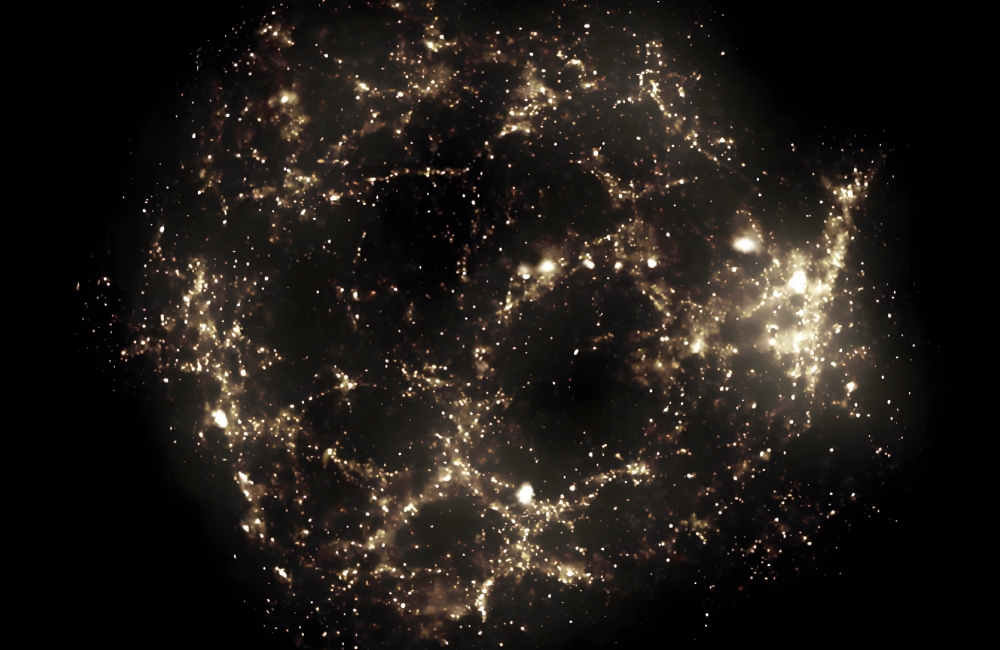
The Giant Void ©Pablo Carlos Budassi/Wikimedia
The Giant Void is far from the only void in space, though it is one of the largest that we have discovered so far. It has an estimated diameter of approximately 1.3 billion light years, taking up a large portion of the Canes Venatici. Fittingly, the Giant Void is often referred to as “The Great Nothing.”
82. Dark Energy
Year Found: 1998
Who Found It: Adam Riess, Saul Permutter, Brian Schmidt
Location: Everywhere
The normal, non-dark matter that we know and love makes up just five percent of the universe. The majority of the universe is made up of dark matter and, increasingly, dark energy. Dark energy comprises two-thirds of our space surroundings. It was discovered in the late 1990s, and it has mystified scientists ever since.
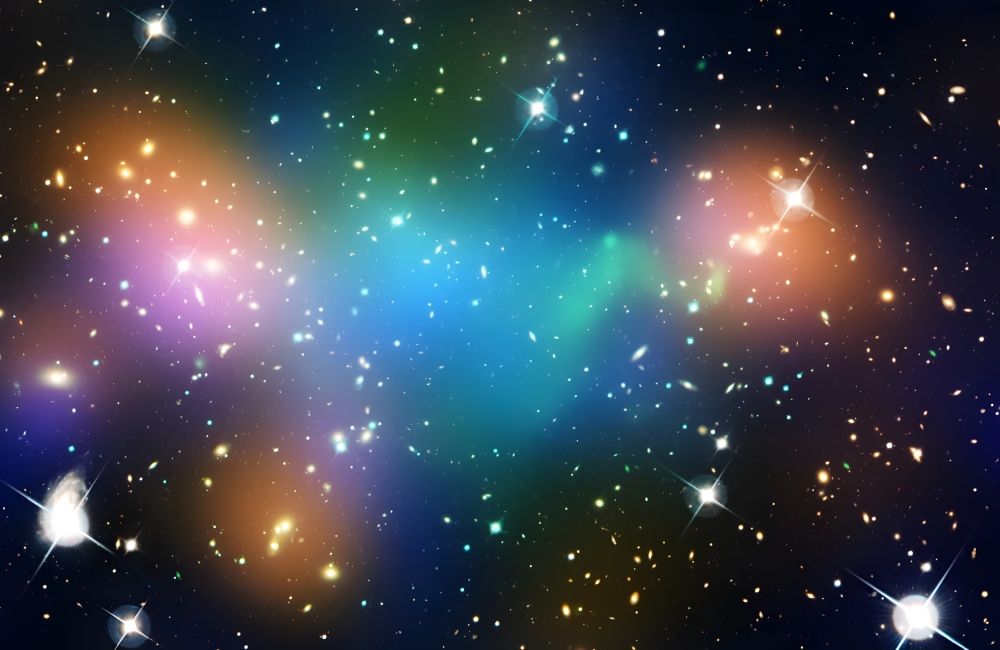
Dark Energy ©PeopleImages.com – Yuri A/Shutterstock
It is thought that dark energy is the culprit behind the universe’s increasing expansion (by contrast, dark matter slows this expansion). Supernovae observations made up the first evidence for dark energy. Further evidence arrived in 2002 after a survey of 250,000 galaxies and observations of gravitational lensing.
83. New Moon Around Jupiter
Year Found: 2021
Who Found It: Kai Ly
Location: Carme Group of Jovian Moons
Amateur astronomer Kai Ly was looking through a data set from 2003 when he discovered a new moon around Jupiter. The data set, which had been collected from the Canada-France-Hawaii Telescope on Mauna Kea, showed that the moon was bound to Jupiter’s gravitational field.
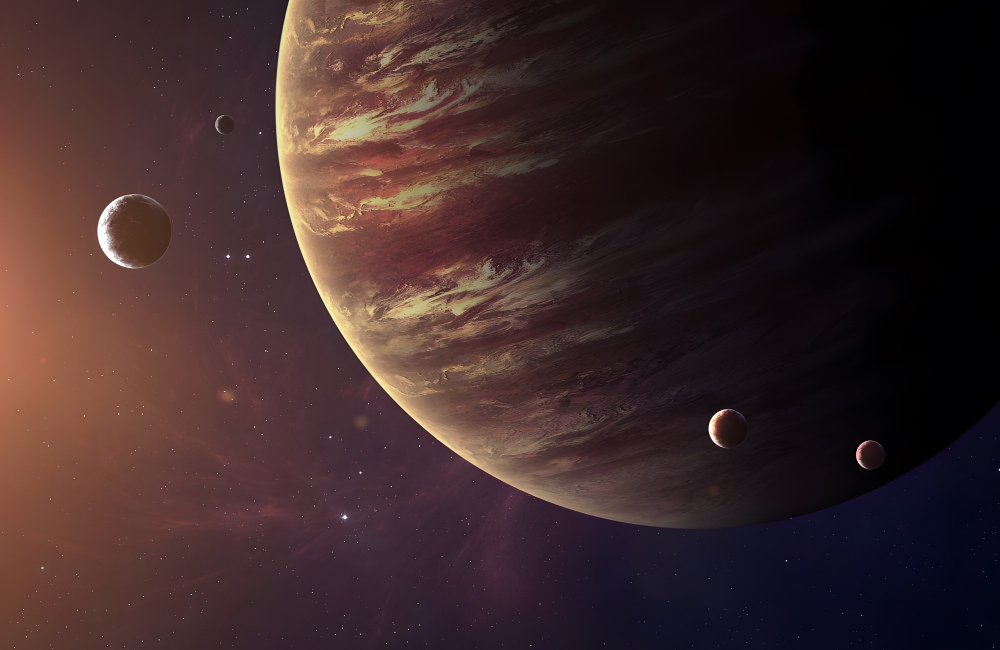
New Moon Around Jupiter ©Vadim Sadovski/Shutterstock
Jupiter is gigantic, and it has seventy-nine moons (along with a lot of other objects that have gotten sucked into its gravitational field). The new moon has been named EJc0061, and it is located within the Carme Group of the Jovian Moons. This new moon orbits opposite Jupiter’s rotation at a very extreme tilt.
84. The Unicorn
Year Found: 2021
Who Found It: The Ohio State University
Location: Monoceros
This tiny black hole candidate is called The Unicorn. As you can see from this image, it is tugging on the red giant star that has found itself its reluctant companion. The Unicorn is just 1,500 light years away from Earth, making it the closest black hole to us that we have found so far.
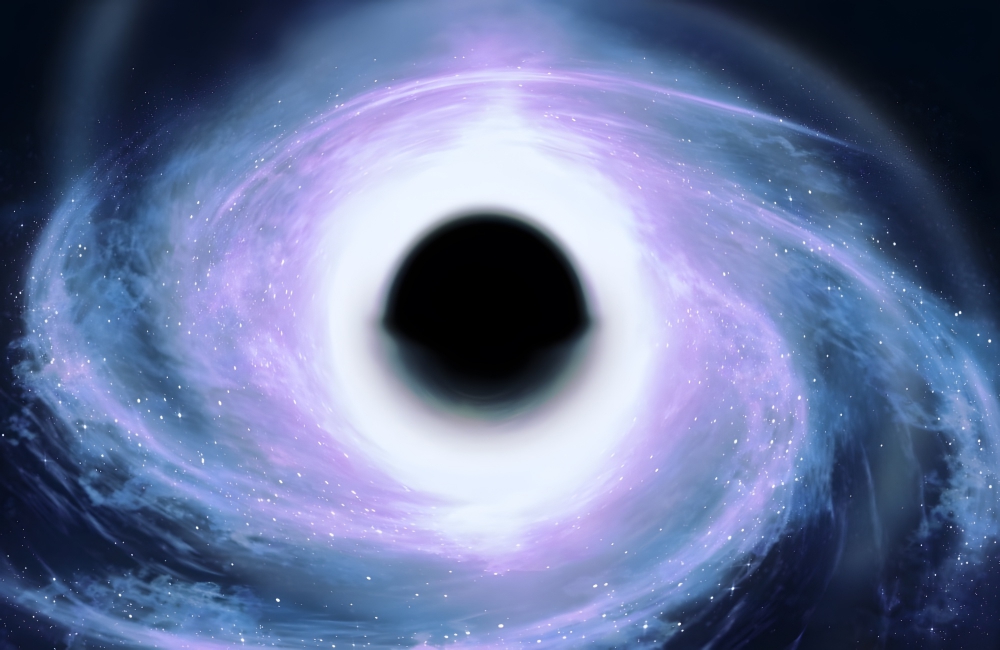
The Unicorn ©New vision/Shutterstock
The behavior of the nearby red giant was what alerted scientists to The Unicorn. This little black hole is super light, at just three solar masses. Its location in Monoceros, a constellation, as well as its rarity, are what inspired its unique, mythical name.
85. Minimoon
Year Found: 2020
Who Found It: Hawaii’s Institute for Astronomy
Location: Orbiting Earth
“Minimoons” refer to tiny objects that orbit Earth. It’s often hard to tell minimoons from ordinary space junk, and they require detailed and consistent observation to even deem them minimoons in the first place. Recently, in 2020, a second minimoon was discovered by Hawaii’s Institute for Astronomy.
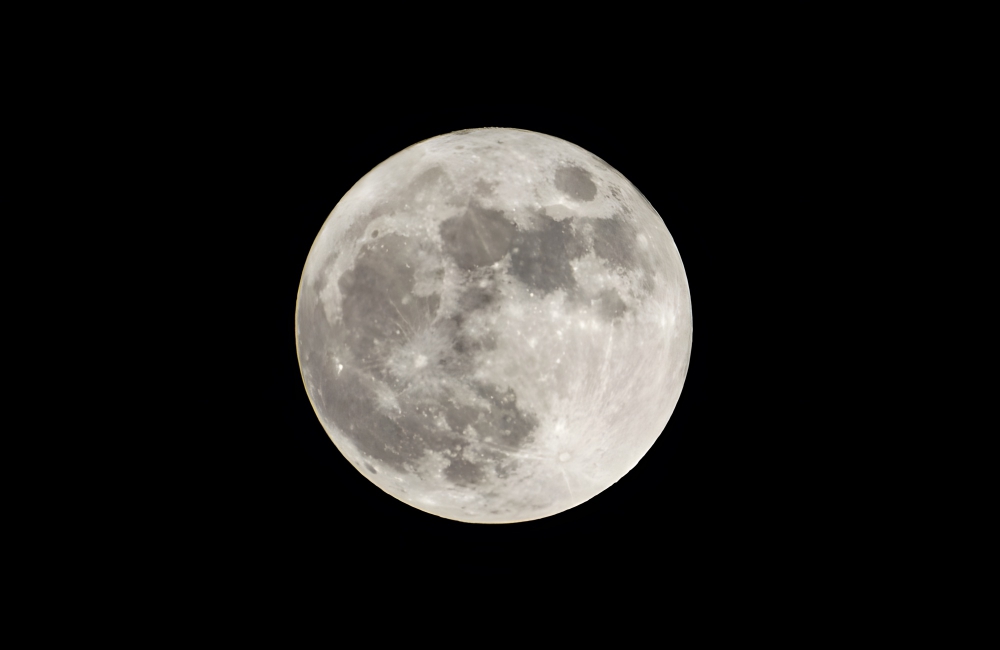
Minimoon ©Fernando Astasio Avila/Shutterstock
A group of astronomers at the IfA observed CD3, a natural object that is the size of a refrigerator, rotating around Earth. CD3 is the remains of a large asteroid that orbits the Sun between Jupiter and Mars. This little object might not seem like much, but if it breaks free of Earth’s orbit and smacks into us, we’ll feel it.
86. Baby Exoplanet
Year Found: 2021
Who Found It: Subaru Telescope
Location: 417 Light Years From Earth
Astronomers, using the Subaru Telescope in Mauna Kea, have managed to capture an image of a baby exoplanet that is, comparatively, a young world. This uncommon occurrence is named 2M0437b. It is super-close to Earth at just 417 light years away, and it is one of the youngest exoplanets discovered so far.
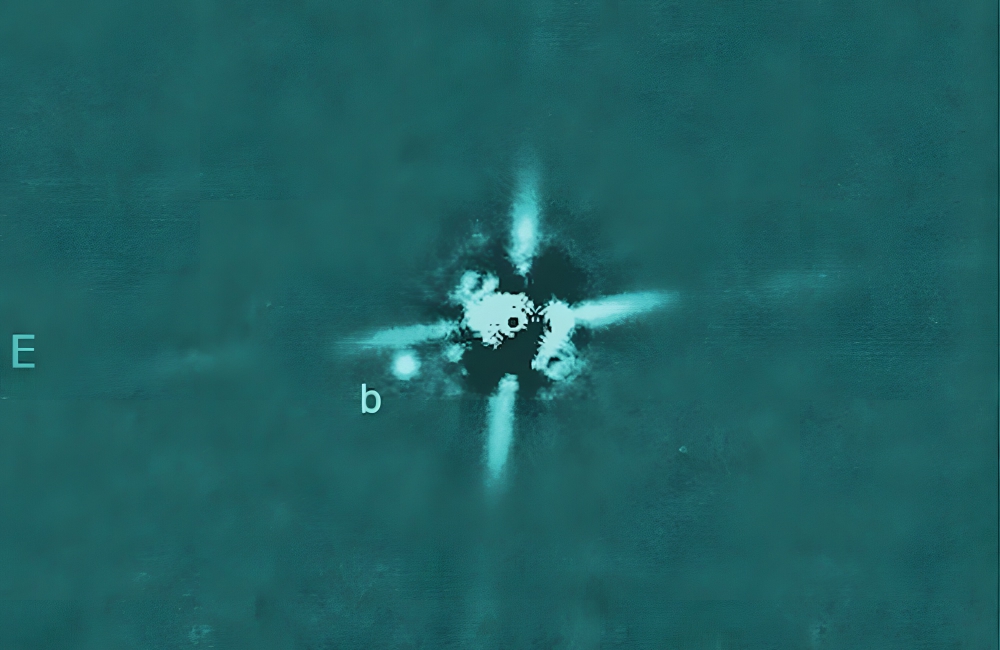
Baby Exoplanet @spacedotcom/Pinterest
It is only a few million years old, which means its surface is as scorching-hot as lava. Scientists first spotted 2M0437b in 2018, but it took them three years to confirm its existence, as its parent star moves extremely slowly across the sky.
87. Planet Making Ring Outside Solar System
Year Found: 2021
Who Found It: ALMA
Location: Circling Exoplanet PDS 70C
Scientists using the Atacama Large Array caught an alien world in a very young development stage recently. Researchers in 2021 found the first known moon-creating disc around a planet outside our solar system. The primordial ring, which is full of materials, swims around in space, circling an exoplanet known as PDS 70C.
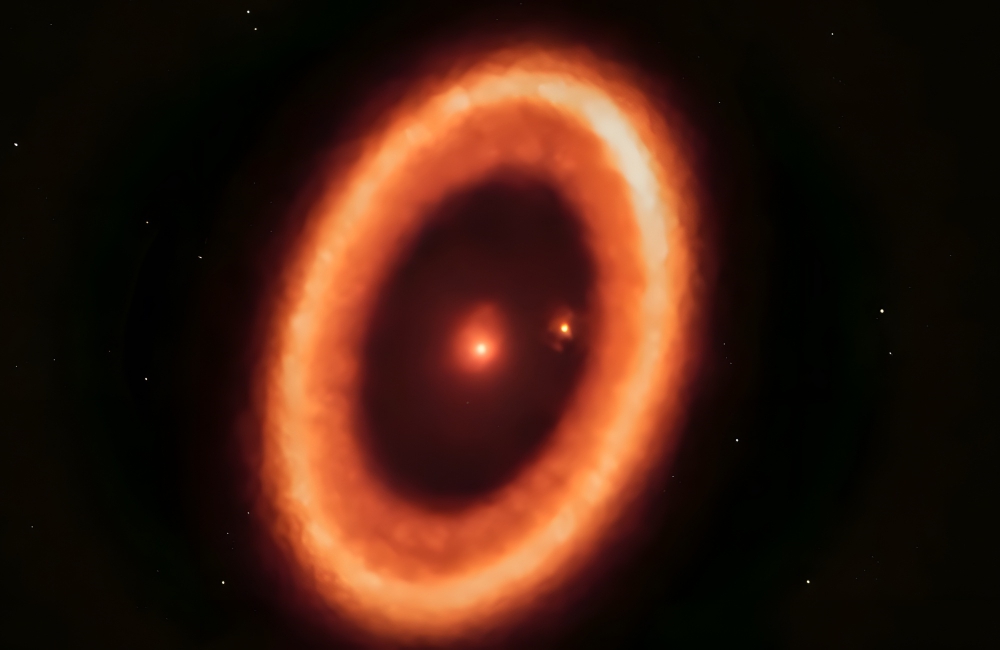
Planet Making Ring Outside Solar System ©MR.Somchat Parkaythong/Shutterstock
This disk is located four-hundred light years away, and it is five-hundred times the size of Saturn’s rings. Scientists believe this ring has enough material to form three bodies the size of our moon. Finding this ring was a huge win for astronomers seeking to learn more about how protoplanetary disks shape moons and planets in a system’s infant years.
88. Water Clouds
Year Found: 2014
Who Found It: Kevin Luhman, Penn State University
Location: 7.3 Light Years From Earth
In 2014, Penn State astronomers discovered water ice clouds on an object that was just 7.3 light years away from Earth. That’s under two times the distance of Alpha Centauri, which is the sun’s closest star system. These ice clouds are the first ones to be sighted beyond our solar system.
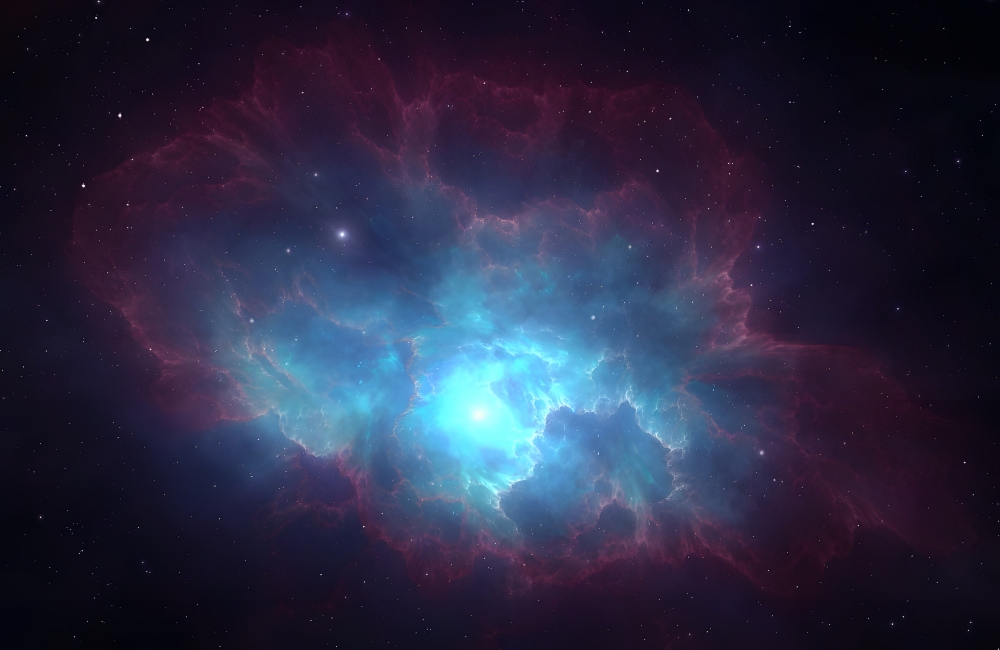
Water Clouds ©pixelparticle/Shutterstock
The clouds surround a brown dwarf star (a failed star with so little mass, it cannot sustain nuclear reactions) the size of Jupiter. This discovery is important because it gives insight into the way cool giant planets orbit other suns. The brown dwarf that these water clouds shroud is a little colder than Earth’s average temperature, yet still warmer than that of Jupiter.
89. Clusters of Quasars
Year Found: 2015
Who Found It: Max Planck Institute for Astronomy
Location: The Jackpot Nebula
When a giant black hole feeds on a matter source (a galaxy or even a single star, for example), it can become a quasi-stellar-radio source, also known as a quasar. Quasars emit characteristic radiation across the universe, and they are relatively isolated and rare.
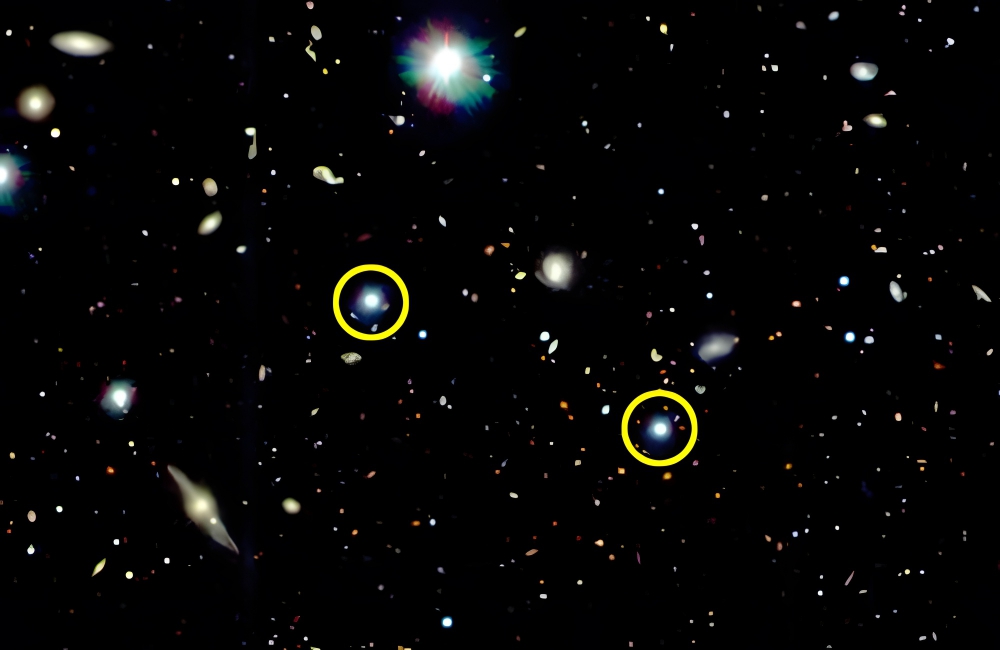
Clusters of Quasars @catalinamarie1/Pinterest
Or so we thought. Shock rippled through the astronomer community when a quadruple quasar, found within a single nebula, was announced. This was ultra-rare, and many scientists didn’t even believe it was possible. Quasars are normally well-separated objects, so the appearance of this cluster of active, supermassive black holes was absolutely stunning.
90. KIC 846285
Year Found: 2015
Who Found It: Planet Hunters Project
Location: 1,470 Light Years Away
Also known as “WTF Star,” KIC 8462852 is located 1,470 light years away from Earth. It was discovered in 2015 by the Planet Hunters Project. Citizen scientists working for the project noticed unusual light fluctuations in KIC, including a 22% dimming in brightness.
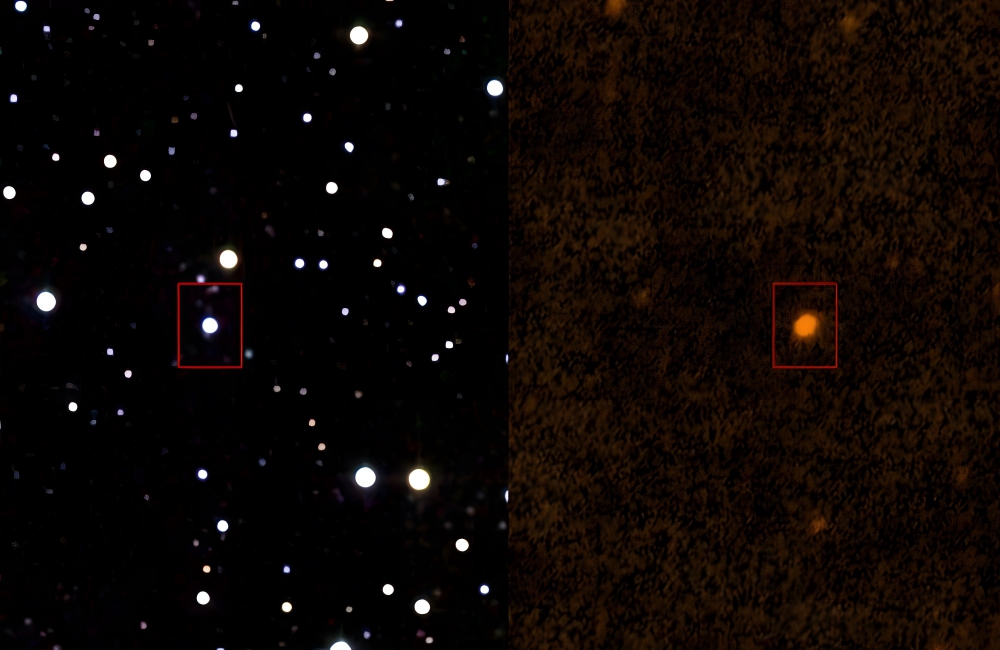
KIC 846285 ©IPAC/NASA/Wikimedia
No one can seem to explain why this star keeps dimming. Explanations range from an uneven circle of dust to a highly eccentric orbit, but nothing has been confirmed yet. This star is far from the only one to have irregular dimmings, but it is the only F-type main sequence star to fluctuate the way it does.
91. Highly Electric Hyperion
Year Found: 1848
Who Found It: William Cranch Bond, George Phillips Bond, William Lassel
Location: Orbiting Saturn
One of the strangest-looking moons in the solar system is Hyperion. This pumice-stone-looking, irregular rock is pockmarked with numerous craters. It is also charged with a particle beam composed of static electricity. This means that Hyperion sends electricity flowing out into space, something that was confirmed when the Cassini spacecraft from NASA visited Saturn from 2004 to 2017.
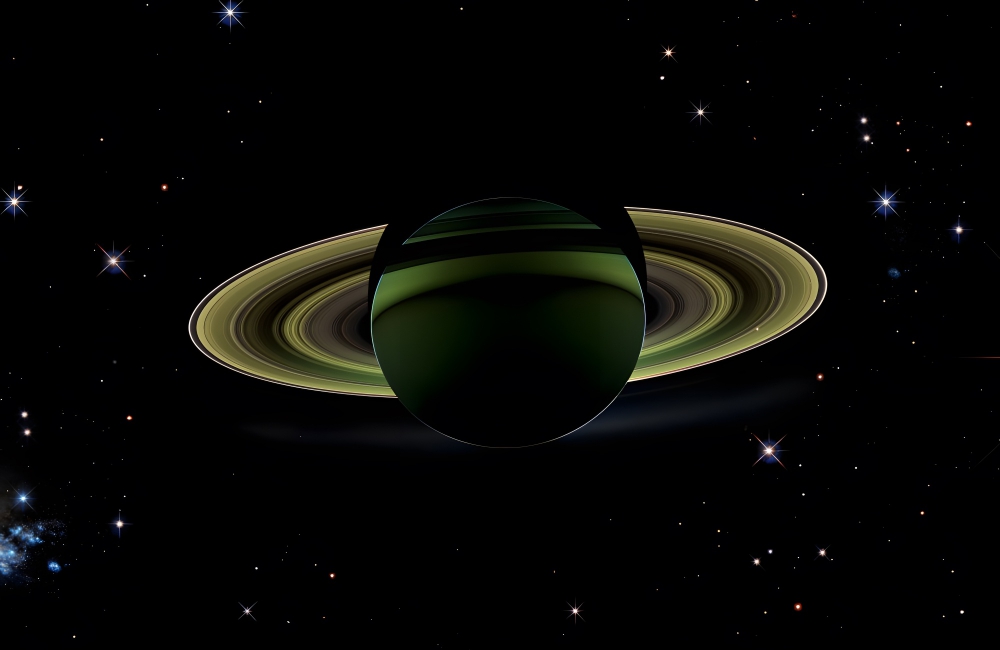
Highly Electric Hyperion ©elRoce/Shutterstock
Its electrical output, sponge-like appearance, and irregular shape have been drawing attention from the astronomical community since Hyperion was discovered in 1848. The moon was the first non-circular moon discovered, and it baffled the scientists who found it in the mid-nineteenth century.
92. Infrared Stream
Year Found: 2018
Who Found It: Penn State University
Location: 800 Light Years Away
Neutron stars are dense objects that form when a regular star dies. Normally, neutron stars emit radio waves or high-energy X-rays and other radiation. But, in September of 2018, scientists with Penn State University discovered a neutron star behaving in a very strange way.
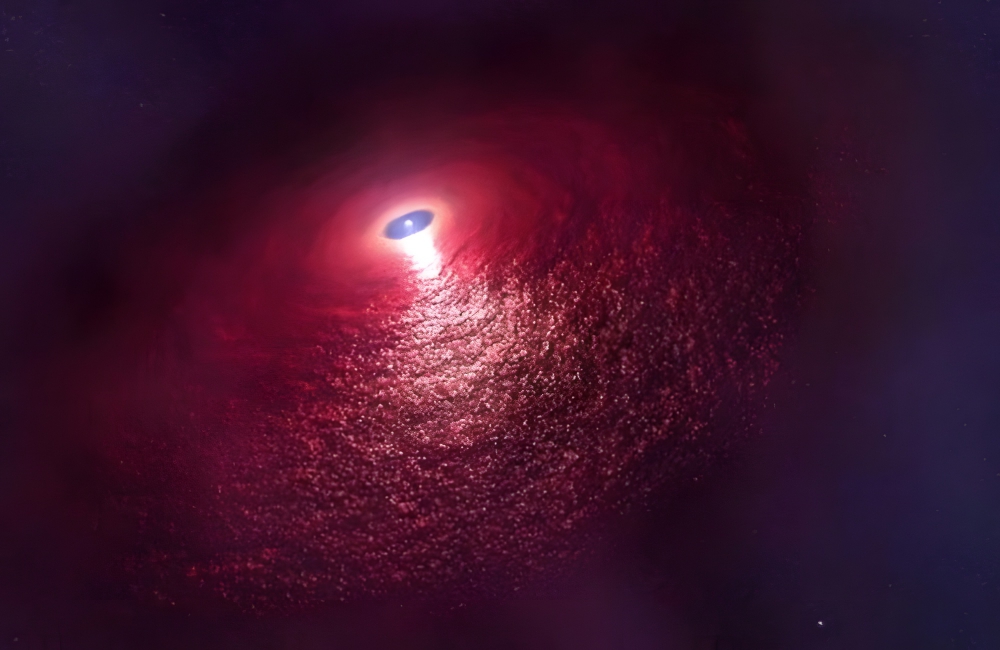
Infrared Stream @dailymail/Pinterest
These astronomers uncovered a long stream of infrared light emitting from a neutron star eight-hundred light years away from Earth. This had never before been observed. The researchers hypothesized that a disk of dust circling the star could have generated the infrared signal, but that explanation has not been confirmed yet.