
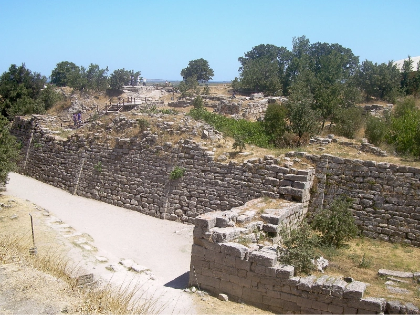
7. The Legacy of Troy: Bridging Ancient and Modern Worlds
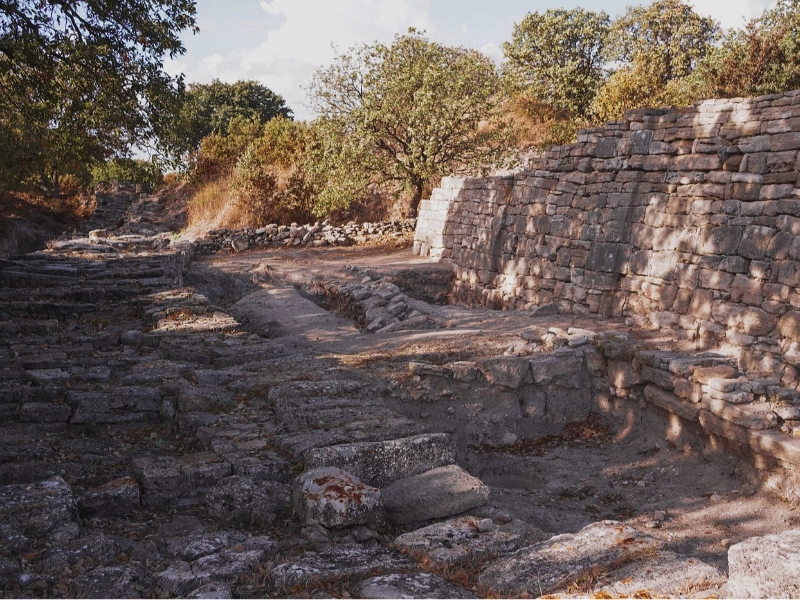
Troy’s legacy goes much beyond its archaeological sites or appearance in ancient literature. It still shapes our knowledge of history, shapes modern civilisation, and offers insightful analysis for current society. This ongoing influence of Troy shows the ability of myth and history to resound over millennia, therefore linking the ancient world to our own in deep and often surprising manner.
One of the most important features of Troy’s legacy is its influence on our attitude to historical study and archaeology. Archaeology underwent a sea change when Troy was discovered and excavated in the 19th century. Despite its dubious techniques, Heinrich Schliemann’s study proved the possibility for finding tangible proof of events recorded in ancient books and helped establish archaeology as a scientific field. With modern tools like ground-penetrating radar and DNA analysis offering fresh insights into the site’s past, the continuous excavations at Troy are stretching the limits of archaeological methods.
The arts and literature have likewise suffered long effects from Troy’s narrative. Themes and characters from Homer’s epics have evolved into archetypes, endlessly reinterpreted and remade in many pieces of poetry, fiction, and theatre. From Shakespeare’s “Troilus and Cressida” to contemporary books like Madeline Miller’s “The Song of Achilles,” the Trojan story still motivates authors to investigate ageless subjects of love, conflict, valour, and human nature. From ancient Greek vase paintings to modern installations, Troy has been a topic of obsession in the visual arts each generation seeking fresh approaches to show and interpret the mythical city and its people.
Within popular culture, Troy is still rather prominent. Often using artistic licence with the source material, Hollywood versions, computer games, and graphic novels continue to deliver the tale to fresh audiences, therefore preserving the legend in the public mind. Using the Trojan War as a prism through which to view themes of power, gender, and war in our own day, these modern retellings frequently mirror contemporary concerns.
The narrative of Troy also functions as a warning about the terrible nature of war and the hubris of strong nations. Modern viewers who have seen the ravages of war in their own lifetime may find resonance in the fall of a great metropolis brought low by ten-year strife. The complicated reasons of the Trojan saga’s characters—honor, love, duty, revenge—continue to offer material for debates on ethics, leadership, and human behaviour during crises.
From an instructive standpoint, Troy presents a special chance to include students in ancient history. Troy is a perfect subject for multidisciplinary research because of the intriguing story combined with concrete archaeological data, which bridges literature, history, archaeology, even the natural sciences. Many colleges and institutions start their exploration of more general issues in ancient Mediterranean civilisations, classical literature, and the evolution of Western society using the tale of Troy.
Troy’s legacy also relates to cultural identification and international affairs. Using the reputation of the ancient city to support their own cultural narratives, several countries and people have claimed descent or connection to the Trojans for millennia. From the Romans, who traced their roots to the Trojan hero Aeneas, to modern Turkey, which recognises Troy as part of its rich historical legacy, the site continues to have in influence in forming national and cultural identities.
The continuous interest with Troy also emphasises the complicated link between myth and history. The Trojan saga’s mix of reality and fiction begs significant issues about how we view the past and the part narrative plays in forming our knowledge of it. This interaction of myth and archaeological data is a useful case study for critical thinking and historical source evaluation.
At last, Troy’s legacy as a UNESCO World Heritage Site emphasises the need of safeguarding our common cultural inheritance. The worldwide attempts to preserve and investigate Troy provide an example for cultural cooperation and the acceptance of shared human history. The preservation of the place guarantees that next generations will always be inspired by and learners from this historic metropolis.
Troy left behind a legacy with several dimensions and scope. Troy keeps bridging the ancient and modern worlds from its influence on art and literature to its effect on archaeology and education. Troy’s narrative is still pertinent as we negotiate the difficulties of the twenty-first century since it provides insights on human nature, the effects of war, and the ongoing power of myth and history to form our perspective of the world.
 zi ang