
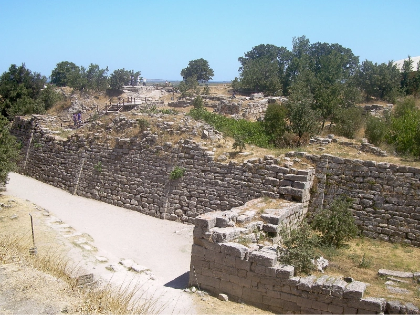
4. Life in Ancient Troy: Daily Existence in a Bronze Age City
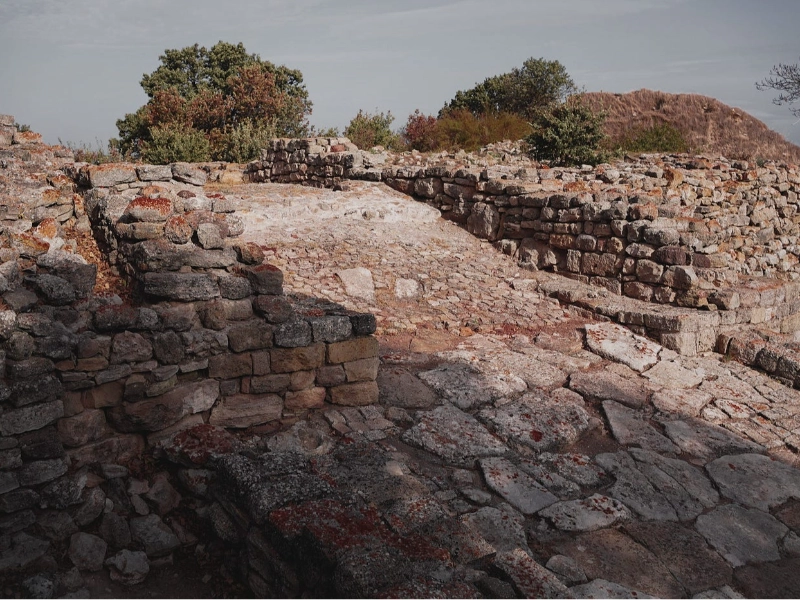
Although much popular imagination about Troy centres on its famous war, archaeological data offers amazing new perspectives on the daily life of its people over several eras. The Hisarlik excavations have unearthed a treasure of data on urban design, architecture, handicap, and social systems in this ancient metropolis.
With its great walls and gates, Troy’s citadel dominated the terrain and housed the hub of political and religious activity. Archaeologists have found the remnants of enormous buildings probably used as palaces or administrative hubs within these defences. These buildings, with their remarkable stone foundations and signs of multi-story construction, convey the wealth and sophistication of Troy’s governing class.
Outside the citadel, in the lower city, a more varied picture of Trojan life surfaces. Reflecting the class stratification of the population, residential districts exhibit a range of housing styles from basic one-room cottages to more sophisticated multi-room houses. There are now clear streets and lanes that help us to understand the urban design of the city.
The objects discovered at Troy offer priceless insights on daily life and workmanship. Simple cooking pots to exquisitely adorned works show a vibrant ceramic market. Tools, weaponry, and jewellery among other metal objects highlight the talents of Trojan metalworkers. While animal bones and plant remnants provide insights on the food and agricultural methods of the ancient Trojans, the finding of loom weights and spindle whorls alludes to a major textile industry.
Troy boasts plenty of evidence of foreign trade. imported commodities from all around the Mediterranean and beyond imply the city was close to long-distance trading hubs. Luxurious objects include amber from the Baltic, lapis lazuli from Afghanistan, and ostrich eggshells from Syria or Egypt suggest that Troy was a cosmopolitan centre with broad ties.
Temple and cult object presence in Troy indicates the religious life there. Other ceremonial objects and figures offer hints regarding the values and customs of the ancient Trojans. Although the particular gods revered in Troy are not always obvious, the archaeological data points to a rich religious life changing throughout generations.
Research of Troy’s human remains has produced details on demographics, health, and cuisine in the ancient city. Skeletal remains analysis has shown evidence of several diseases, injuries, and dietary deficits, therefore depicting the difficulties experienced by the community. Simultaneously, the existence of people living to advanced years implies that some people in Troy may have long and rich lives.
Archaeologists and historians have been able to vividly depict ancient Troy by combining these several lines of evidence. From the busy markets and workshops to the holy sites of temples and shrines, from the great halls of the citadel to the little homes of common people, Troy emerges as a dynamic and multifarious urban centre, one that was vital in the Bronze Age world long before it became the subject of legend.
 zi ang