
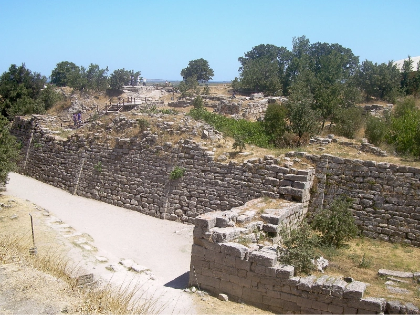
3. Troy’s Strategic Importance: A Crossroads of Civilizations
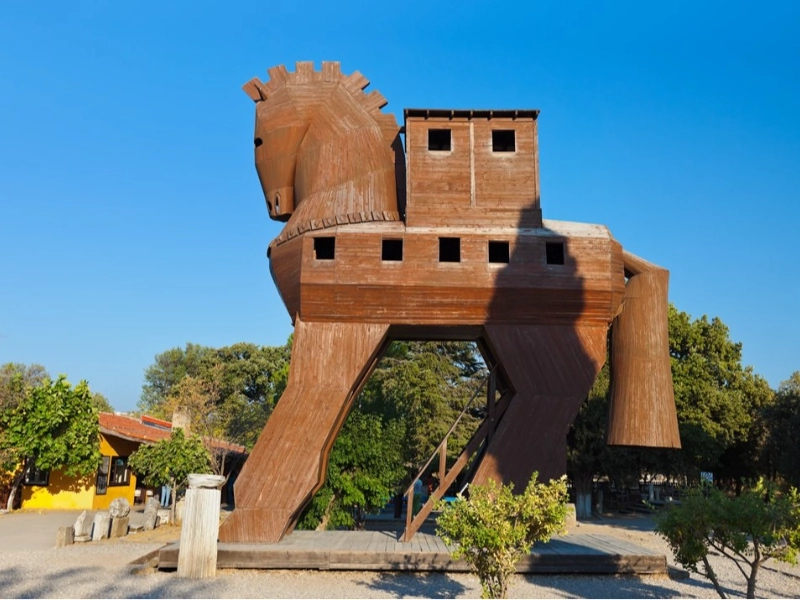
Troy’s continuing relevance goes much beyond its legendary character. The city’s great strategic value in the ancient world came from its position near the Dardanelles strait’s opening. A vital commerce route and gateway between Europe and Asia, this narrow stream linked the Aegean Sea to the Sea of Marmara and finally to the Black Sea.
Mastery of this strategic site helped Troy to grow into a rich and strong city-state. With objects from several civilisations discovered at the site, archaeological data points to Troy as a significant commercial centre. Discovered among the ruins, Mycenaean Greek pottery, Balkan jewellery, and items from as far as Central Asia point to Troy’s centrality in vast trading networks.
The city’s location also made it a logical site of war between several powers. Troy found itself caught between the ambitions of several empires and civilisations over its long history. It most certainly contributed to the intricate interactions of the Mycenaean Greeks, the Hittite Empire, and other Anatolian nations in the Bronze Age. Later, in the Classical and Hellenistic periods, the location remained strategically significant; Alexander the Great and Julius Caesar both paid respect to the fable city by visiting the ruins.
Furthermore adding to Troy’s significance were the region’s geological and topographical characteristics. While the neighbouring mountains gave natural resources such minerals and lumber, the rich lowlands around the city offered agricultural richness. Agricultural output, raw material availability, and control of marine trade routes taken together produced the ideal circumstances for Troy to grow as a regional power.
Knowing Troy’s strategic significance helps one to relate the battles found in ancient literature. Although Homer’s portrayal of the Trojan War may be mostly mythical, it most certainly reflects actual geopolitical conflicts and attempts for control over this vital area. The city’s riches and strategic location would have made it a desirable target for competing nations, therefore sparking several centuries of conflict.
The Dardanelles strait is still a vital waterway today; contemporary cities like Çanakkale still gain from its strategic position. The ongoing significance of this geographical feature emphasises Troy’s ageless relevance and clarifies why the site has been repeatedly occupied and fought across history.
 zi ang