
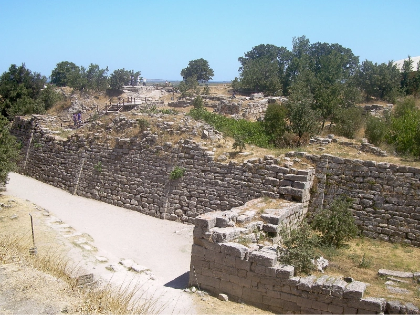
Set off a voyage across time to Troy, an ancient city where history and mythology meet. Examining Troy’s legendary beginnings, archaeological finds, and ongoing cultural influence, this essay explores its fascinating narrative. Discover the secrets of this amazing location that still inspires and fascinates academics, visitors, and history buffs both from Homer’s epic stories to contemporary digs
1. The Legend of Troy: Separating Fact from Fiction
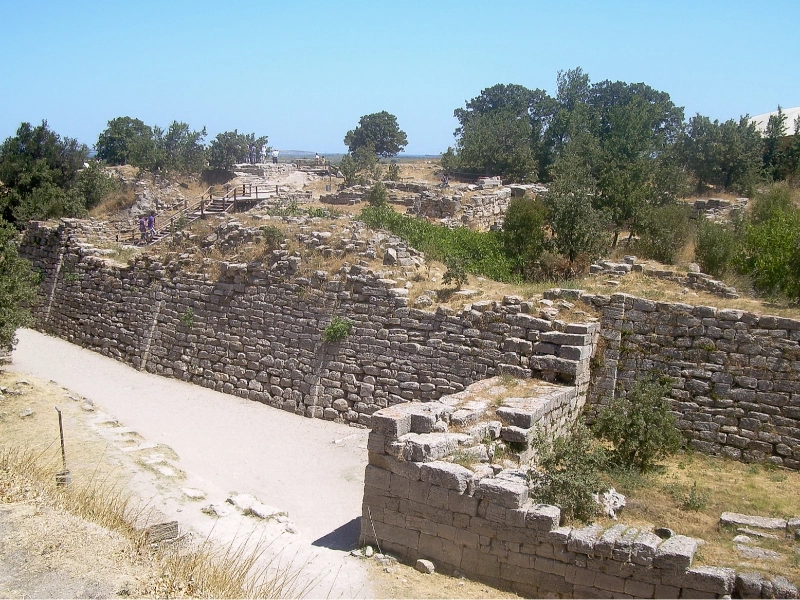
For millennia, people have been enthralled with Troy’s tale, which skilfully combines myth with history in an epic scale. This myth is centred on the well-known Trojan War, which Homer’s Iliad and Odyssey immortalise. These ancient Greek poems chronicle a fight started by Paris, prince of Troy kidnapping Helen, the wife of Spartan king Menelaus. One of the most memorable stories in Western literature is now the ten-year siege of the city culminating in the ingenious ploy of the Trojan Horse.
How much of this narrative, though, is founded on fact? Scholars have long argued on the historical truth underlying the story. Archaeological data points to Troy as a historical location and shows that it may have been involved in major late Bronze Age conflicts, even if the precise events Homer’s epics describe could be mythical or overblown. The difficulty is separating the real historical events that might have motivated these stories from the creative licence adopted by ancient storytellers.
New studies on the possible historical background for the Trojan War throw fresh insight on Certain historians suggest that the struggle might have been a composite of multiple conflicts waged over control of the strategically significant Dardanelles waterway, which links the Aegean Sea to the Black Sea. Others say the narrative might mirror more general geopolitical conflicts between Mycenaean Greeks and the Hittite Empire, which ruled most of Anatolia during this age.
Whatever its historical reality, the myth of Troy has had a significant influence on Western society, motivating a great deal of film, literature, and art. Achilles, Hector, Odysseus, and Helen’s characters—who represent everlasting themes of heroism, obligation, love, and treachery—have evolved into archetsons. Modern viewers still find great resonance in the narrative, which explores human nature and the complexity of conflict and peace.
Deeper exploration of the legend of Troy should help us to realise how much narrative shapes our perspective of the past. The Trojan story’s mingling of myth and history tells us that layers of cultural interpretation and creative expression sometimes influence our view of ancient events. Troy is a unique case study in the interaction between archaeology, literature, and cultural memory as this interaction between reality and fiction fuels scientific discussion and public curiosity still.
 zi ang