
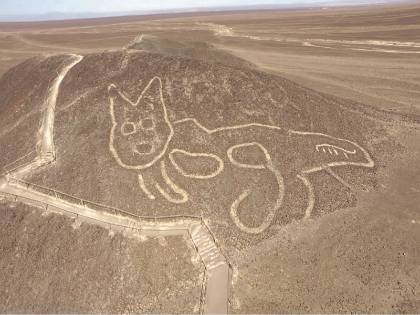
One of the most fascinating riddles in archaeology, the Nazca Lines are carved into the dry Peruvian desert. Seen only from above, these massive geoglyphs—some spanning more than 30 metres wide—show different figures and geometric forms. Designed by the prehistoric Nazca civilisation between 500 BCE and 500 CE, these amazing works of art still captivate both experts and amateurs alike and inspire ideas regarding their intended use and techniques of manufacture. Examining its background, relevance, and ongoing questions, this essay explores the amazing world of the Nazca Lines.
1. The Discovery and Initial Fascination
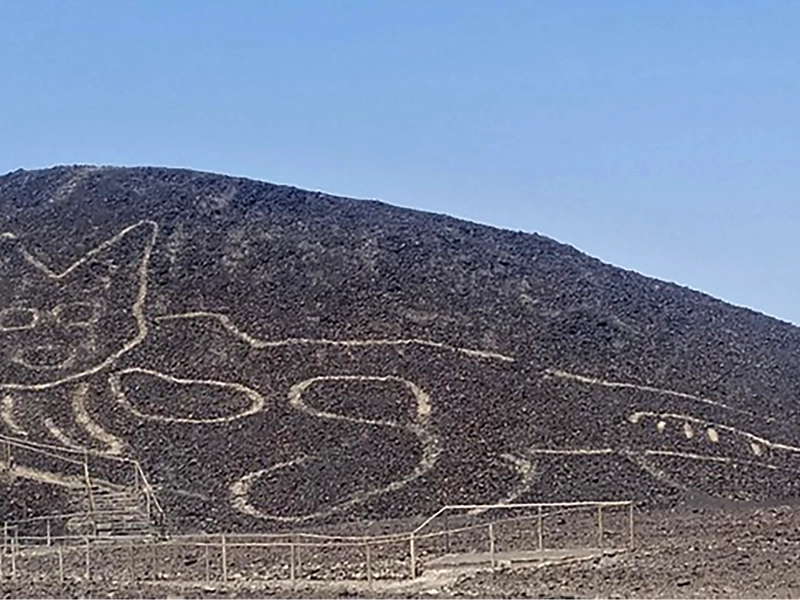
The discovery of the Nazca Lines is a fascinating narrative as much as the geoglyphs are. The modern world first became aware of these large ground drawings only when commercial air travel first emerged in the 1920s. Overlooking the Nazca desert in Peru, travellers started to see odd lines and figures carved into the terrain below. But first to investigate the lines professionally in 1927 was Peruvian archaeologist Toribio Mejia Xesspe. He came found them while traversing the foothills first supposing they were old irrigation systems.
When American historian Paul Kosok flew over the region in 1941, the real insight dawned. On the day of the winter solstice, he observed one of the lines squarely pointing towards the setting sun. Inspired by this discovery, he dubbed the Nazca desert “the largest astronomy book in the world,” generating great curiosity and conjecture on the lines’ authors and intent. German mathematician and archaeologist Maria Reiche, who devoted her life to researching and conserving the Nazca Lines, later carried on and enlarged Kosok’s work.
Reiche’s relentless work garnered the geoglyphs international recognition. She painstakingly charted the numbers, examined their alignments, and suggested astronomical explanations. Her efforts not only greatly advanced our knowledge of the lines but also were rather important in their preservation. Reiche’s campaign helped the region to be named a UNESCO World Heritage Site in 1994, therefore guaranteeing its preservation for next generations.
Decades of study, conjecture, and awe were set up by the discovery and first obsession with the Nazca Lines. It tested our knowledge of the capacities of ancient civilisations and opened fresh directions in archaeology. The lines’ existence begged concerns about the Nazca people’s technological and organising abilities, which led to a reassessment of our knowledge of pre- Columbian South American civilisations. Since then, many academics, archaeologists, and fans have been motivated to explore the riddle of the Nazca Lines, therefore generating a vast body of knowledge and hypotheses still developing today.
2. The Nazca Culture: Creators of the Desert Canvas
One must comprehend the culture that produced the Nazca Lines if one is to really value them. Between 100 BCE and 800 CE, the Nazca civilisation thrived along southern Peru’s coast. Developed in one of the driest areas on Earth, they were a sophisticated civilisation with amazing adaptation and inventiveness in their approach to engineering, art, and agriculture.
The Nazca people were renowned for their irrigation techniques, textiles, and advanced ceramics. To get water from the highlands to their parched country, they developed a complex network of subterranean aqueducts some of which still operate today. This control over their hostile surroundings let them grow food and create a vibrant community in an area where such progress appeared unthinkable.
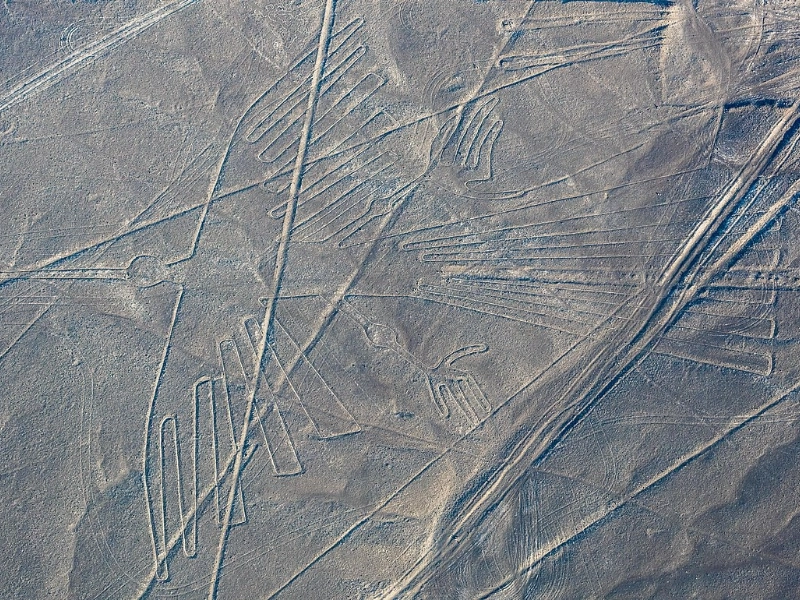
Their artistic ability transcended textiles and ceramics. The Nazca Lines are evidence of their gigantic magnitude technological mastery and inventiveness. These geoglyphs have to be created with great awareness of geometry and large-scale design, exact execution, and rigors preparation. Many of these drawings are only completely visible from the air, which has spurred a lot of conjecture on the Nazca people’s capacity and the intended use for these massive artworks.
Deeply spiritual, the Nazca society had a complicated pantheon of gods and a rich legacy of festivals and rites. Many academics feel that the Nazca Lines’ construction was intimately related to their religious ideas and practices. In their cosmology and worldview, the imagery of animals, vegetation, and geometric forms could have had great symbolic resonance.
Notwithstanding their successes, the Nazca civilisation finally fell apart probably from a mix of social unrest and environmental causes. Still, their legacy remains in the mysterious lines they left behind, enthralling and confusing us decades later. The study of the Nazca civilisation reminds us of the inventiveness and originality of our predecessors, especially in the face of difficult climatic conditions, and offers insightful analysis of the capacities of past civilisations.
 zi ang