
5. The Impact on Egyptology and Historical Understanding
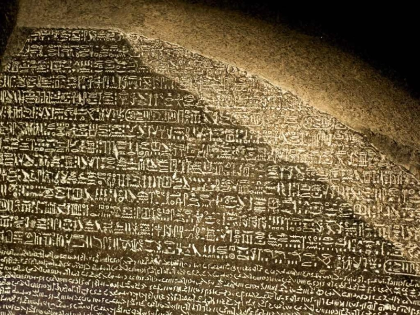
The field of Egyptology and our knowledge of ancient history were profoundly and permanently changed by the Rosetta Stone and Champollion’s outstanding work enabling the decipherment of hieroglyphs. This discovery let academics explore the rich fabric of ancient Egyptian civilisation by opening a great wealth of data hidden away for millennia.
The capacity to read and comprehend the innumerable inscriptions discovered on monuments, tombs, and papyri throughout Egypt was among the most immediate effects. Texts that had been silent for millennia came alive to expose the ideas, beliefs, and daily life of the ancient Egyptians. Now one could study historical records, religious books, literary masterpieces, and administrative documents in their own tongue, offering hitherto unheard-of understanding of Egyptian society.
The far more exact chronology of ancient Egyptian history made possible by this fresh capacity to decipher hieroglyphs By matching written documents with archaeological discoveries, academics could now create a more exact chronology of pharaohs, kingdoms, and significant events. This improved our knowledge of Egyptian history and helped Egypt to be positioned in the larger framework of ancient Near Eastern societies.
The decipherment transformed our knowledge of ancient Egyptian religion and mythology as well. Now one could read and examine religious literature including the Book of the Dead, inscriptions on temple walls, and songs to many gods. This resulted in a far greater respect of Egyptian spiritual beliefs, afterlife ideas, and the part religion plays in daily life.
Regarding literature, knowing hieroglyphs revealed a rich legacy of wisdom literature, poetry, and storytelling. Works displaying the skill and emotional depth of ancient Egyptian writing included the Story of Sinuhe, the Teachings of Ptahhotep, and several love poems.
The influence went beyond Egypt, itself. Hieroglyphic decoding helped one to better grasp Egypt’s interactions with surrounding societies. Trade agreements, diplomatic letters, and military war narratives offered fresh angles on old world diplomacy and the interdependence of the ancient globe.
Furthermore, the technique created for hieroglyphic decoding proved useful for handling other ancient inscriptions. The success with Egyptian hieroglyphs motivated and guided attempts to decode other vanished writing systems, notably cuneiform and Linear B, therefore increasing our knowledge of ancient civilisations.
The preservation and study of Egyptian relics also benefited much from the capacity to decipher hieroglyphs. Archaeologists and conservators could more precisely interpret and protect ancient sites and objects knowing the inscriptions. More informed excavation methods and conservation initiatives resulting from this guaranteed better protection of Egypt’s cultural legacy for next generations.