
3. Early Attempts at Decipherment
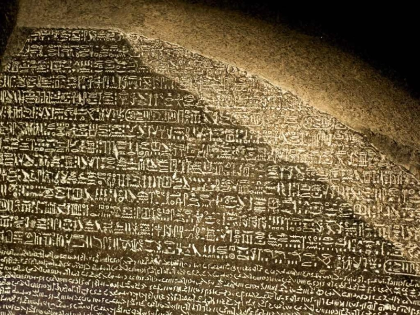
Finding the Rosetta Stone in 1799 set off a scholarly competition across Europe to be the first to translate the ancient Egyptian script. Over two decades of competition, some of the brightest brains of the day wrestled with the mystery of hieroglyphs. Although the ultimate breakthrough would arrive later, these early efforts set important foundation and created techniques that would be quite helpful in the decipherment at last.
English polymath Thomas Young, well-known for his work in physics, physiology, and languages, was among the most important early contributions. Young distinguished himself from many of his colleagues by approaching the Rosetta Stone with a scientific rigour. His work on the stone started seriously about 1814 and over the next few years he made several significant discoveries and observations.
Young’s most significant contribution was his accurate realisation that the hieroglyphic script included both ideographic and phonetic components. This realisation was basic since it challenged the popular belief that hieroglyphs had just symbolic meaning. Young realised that some hieroglyphs stood for full words or ideas while others, like letters in an alphabet, reflected sounds.
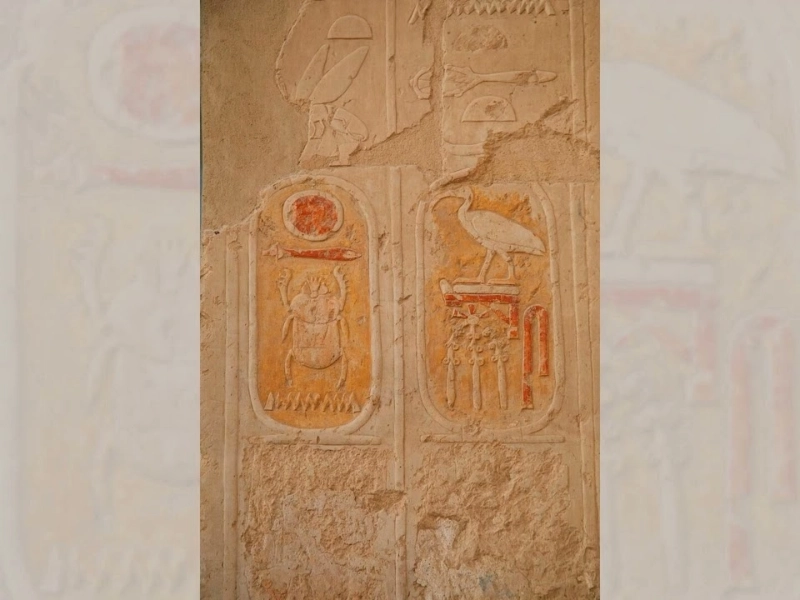
Young also found names for Ptolemy and Cleopatra in the hieroglyphic text. He guessed that the oval rings—now known as cartouches—contained royal names by contrasting the Greek language with the hieroglyphs. Since it offered some of the earliest clear ties between certain hieroglyphs and their meanings, this was a major advance.
Young couldn’t completely understand the hieroglyphic script even with these significant developments. Still, his work set a vital groundwork for next projects. Young’s results were extensively available to other researchers working on the issue since they were printed in the Encyclopaedia Britannica in 1819.
Swedish diplomat and academic Johan David Åkerblad was another major early contributor. Åkerblad concentrated on the middle text on the Rosetta Stone, the Demotic script. In this field, he made great improvement, accurately spotting several Demotic words and their hieroglyphic equivalents. Though not finishing the decipherment, Åkerblad’s writings offered insightful analysis of the Demotic and hieroglyphic script structures.
Important contributions during this era also came from the French scholar Silvestre de Sacy. He found their equivalents in the Demotic script and accurately noted the Greek text’s spots where royal names surfaced. The phonetic character of some Egyptian scripts was established thanks in great part on this effort.
Though not totally successful, these early efforts greatly advanced knowledge of ancient Egyptian writing systems. They showed that decipherment was feasible and gave next generations great beginning points for their own investigation. The approaches established during this period—especially the comparative study of parallel texts and the emphasis on proper name identification—would be very helpful in the last breakthrough.
Furthermore, these first initiatives underlined the difficulty of the current work. The intellectuals of this era came to see that the sophisticated writing systems with their own internal logic and organisation were somewhat different from the simple codes that could be readily cracked in ancient Egypt. The ultimate decipherment would depend on this knowledge since it let scientists tackle the challenge with the complexity and depth needed.
The ground was now ready for a breakthrough, but it would take the ingenuity of one man—building on the labour of his forebears—to at last reveal the hieroglyphic secrets. Jean-François Champollion was that individual; his contributions would permanently alter Egyptology’s profile.