
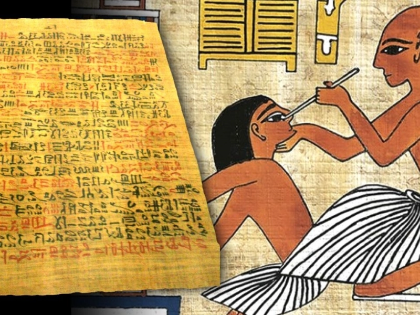
6. The Legacy of Ancient Egyptian Medicine
The medical information kept in the ancient Egyptian papyri has had a long-lasting effect on the evolution of medicine, therefore guiding later medical traditions and providing the foundation for many contemporary medical procedures. The methodical approach to diagnosis and treatment as well as the focus on case observation and documentation predicted the evolution of evidence-based medicine—the pillar of contemporary medical practice.
Often regarded as the basis of Western medical tradition, Greek medicine is one of the most important legacy of ancient Egyptian medicine. It is well known that Greek doctors, including Hippocrates, examined Egyptian medicinal books. Noting that there was a doctor for every area of the body, the eminent Greek historian Herodotus wrote highly of Egyptian medical experts. Originally evolved in ancient Egypt, this idea of medical specialisation is now a fundamental aspect of contemporary healthcare systems.
Modern research has corroborated many of the remedies detailed in the papyri, therefore highlighting the empirical basis of Egyptian medicine. For instance, the osmotic impact and enzymatic synthesis of hydrogen peroxide help to explain the use of honey as an antibiotic in terms of Another example of Egyptian medical knowledge that has endured is the usage of willow bark for pain relief, now recognised to be owing to the salicylic acid (a forerunner of aspirin).
Especially those for treating bone fractures and dislocations, the surgical methods detailed in the Edwin Smith Papyrus are very similar to those applied now. The way the papyrus describes brain traumas and their impact on the body reveals an awareness of brain function not matched for millennia. Though not totally true, even the idea of “channels” in the body might be considered as a forerunner of our knowledge of the circulatory and neurological systems.
With its emphasis on practical experience and written information, the Egyptian approach to medical education established a model being followed. Medical schools now still employ case-based learning—that which Edwin Smith Papyrus describes—where students study individual cases to understand diagnosis and treatment approaches. Combining academic knowledge with practical experience, this kind of medical education has shown to be a successful tool for preparing medical practitioners.
Moreover, the foundation of medical literature growth was the ancient Egyptian habit of written medical information recording. Modern medical textbooks and clinical guidelines reflect the methodical arrangement of medical knowledge in the papyri, with well marked sections for diagnosis, prognosis, and treatment.
Recent years have seen a rebirth of interest in the whole approach to health and healing the ancient Egyptians used, which took physical and spiritual elements into account. Reflecting the comprehensive perspective of the ancient Egyptians, many contemporary healthcare systems are realising the need of attending to the psychological and spiritual needs of patients alongside their physical diseases.