
5. The Intersection of Medicine and Religion
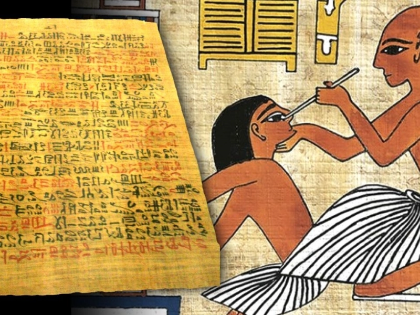
The medical papyri demonstrate the complex relationship between medicine and religion in ancient Egyptian culture even while they expose a surprisingly scientific attitude to treatment. The Egyptians thought of health holistically, in which spiritual and bodily well-being were intricately entwined. The medical books, which frequently mix logical therapies with magical spells and invocations to the gods, reflect this view and provide a special fusion of empirical observation and spiritual practice.
Some gods in ancient Egyptian society were intimately connected with healing and medicine. Originally a royal builder who was deified upon his death, the god Imhotep came especially under respect as the patron of medicine. Medical learning and practice centred on temples of Imhotep, including the one at Saqqara. Seeking cure, pilgrims would travel enormous distances to these temples; priests would interpret their dreams as part of the diagnostic process.
Likewise, the goddess Sekhmet—often portrayed as a lioness—was supposed to be able to start and heal illnesses. Often serving as physicians, priests of Sekhmet combined their religious obligations with medical expertise. This blending of religious and medical duties emphasises the whole character of Egyptian medicine, in which physical therapies were regarded as inseparable with spiritual interventions.
Many times, the medical papyri involve magical spells to be performed alongside medical therapies. These spells were considered as a necessary component of the healing process rather than as separate from or less effective than physical remedies. The Ebers Papyrus, for example, has a spell to be performed while using a remedy: “May Isis heal me, as she healed her son Horus of all the suffering which his brother Set had inflicted upon him…” Such incantations were supposed to call for the power of the gods to assist in the healing process.
This mixing of magic with medicine captures the Egyptian perspective, in which the natural and supernatural domains were not cleanly separated. It also emphasises the psychological side of healing since it acknowledges the influence of ritual and belief on the recovery process. Modern studies on the placebo effect and psychosomatic diseases imply that an all-encompassing strategy may have some worth as the efficacy of the treatment depends much on the belief of the patient.
Another crucial element of Egyptian medical treatment bridging the physical and spiritual spheres was the use of talismans and amulets. Often bearing spells or symbols of protecting deities, these things were said to prevent disease and hasten healing. The great use of such objects shows the Egyptians’ conviction in the power of symbolic representation and the interdependence of the physical and spiritual spheres.
Fascinatingly, Egyptian medicine has a significant religious component but the medical papyri also reveal a readiness to admit the limits of remedies, both magical and physical. For instance, the Edwin Smith Papyrus has examples were the prognosis is recorded as negative, implying a practical attitude that acknowledged when a condition was beyond the reach of the doctor.