
2. The Role of Papyrus in Preserving Medical Knowledge
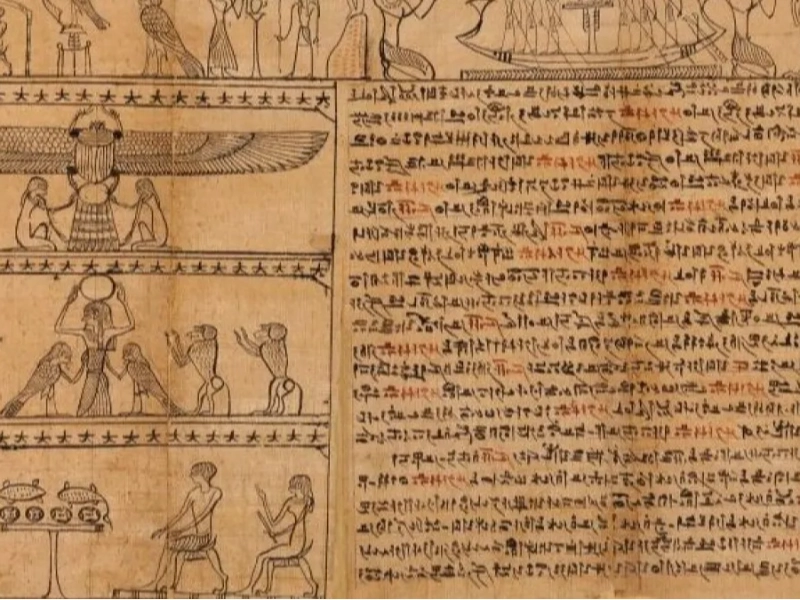
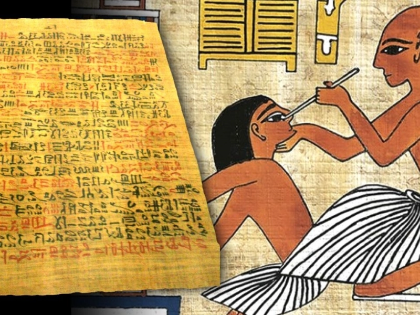
Medical information was greatly preserved and passed on over generations using the ancient Egyptian writing medium, papyrus. Not only was this amazing plant-based paper robust, but it also offered the perfect surface for entering thorough medical data. The skill of papyrus manufacture by the ancient Egyptians enabled them to produce vast medical books that have survived for thousands of years, therefore offering priceless insights into their medical techniques and evidence of their advanced society.
Making papyrus itself was a complex trade displaying the Egyptians’ inventiveness and meticulous attention to detail. Growing abundantly in the Nile Delta, the papyrus plant’s stems were chopped into thin strips. After that, these strips were pushed together and stacked perpendicularically. The plant’s natural adhesive qualities with the pressure exerted during manufacture produced a smooth, robust writing surface. The resultant sheets may be combined to form scrolls of enormous length, permitting the recording of vast medical treatises and other crucial records.
In Egypt’s dry environment, papyrus’s longevity has been vital in maintaining some of these ancient books—some of which have survived for more than 3,500 years. The material’s resilience to deterioration in desert environments as well as the Egyptians’ habit of keeping significant records in sealed jars or tombs account for this amazing lifetime. The preservation of these medical papyri has enabled contemporary researchers to acquire hitherto unheard-of understanding of the medical knowledge and techniques of this ancient society.
Medical books were written on papyrus not only for basic record-keeping. Within the ancient Egyptian medical society, these scrolls fulfilled several functions. First of all, they served as teaching aids for next generations of doctors. The exact nature of the material kept on these papyri points to a methodical approach to medical education, in which students probably study and memorise the contents as part of their training. Second, the papyri gave practical doctors a thorough guide for diagnosis and treatment of a broad spectrum of diseases, therefore acting as reference tools.
Standardising medical practices across ancient Egypt also depended much on the medical papyri. Recording and distributing medical knowledge in a written form helped the Egyptians to create a uniform approach to treatment all over their civilisation. This standardisation most certainly helped Egypt’s advanced level of medicine to stand out from other modern societies.
Moreover, the usage of papyrus let medical knowledge grow and improve over time. New discoveries and effective therapies could be included to current books, hence building an always growing corpus of medical knowledge. This iterative process of knowledge development set the stage for the scientific method of medicine that would be advanced in next civilisations.