
S.T.O.P. This is the technique that pros like Mark Jenkins use when getting lost in the wilderness without a GPS or a phone available. It stands for stop, think, observe, and plan. Avoiding injury, getting clean water, and finding a way back to civilization are all priorities that could take longer than expected.
That’s why today, at Bright Side, we’ve compiled a few practical tips that could come in handy in case you’re lost out in the wilderness.
1. Wrap a plastic bag around branches to harvest water.
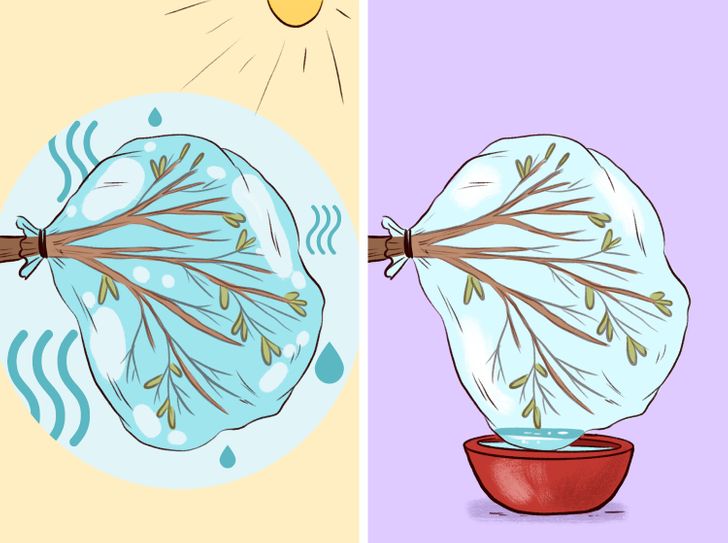
Finding a source of fresh water to drink is a priority when lost in the wilderness. The time humans can survive without water depends on the conditions. For reference, an athlete exercising hard in hot weather can dehydrate, overheat, and die over a period of a few hours. Fortunately, using condensation to obtain fresh water is fairly easy. By wrapping a Ziploc (or any other plastic bag) around a leafy branch that is exposed to the sun, you can have an unlimited supply of fresh water.
2. Wrap your body with bubble wrap and/or leaves to keep warm.
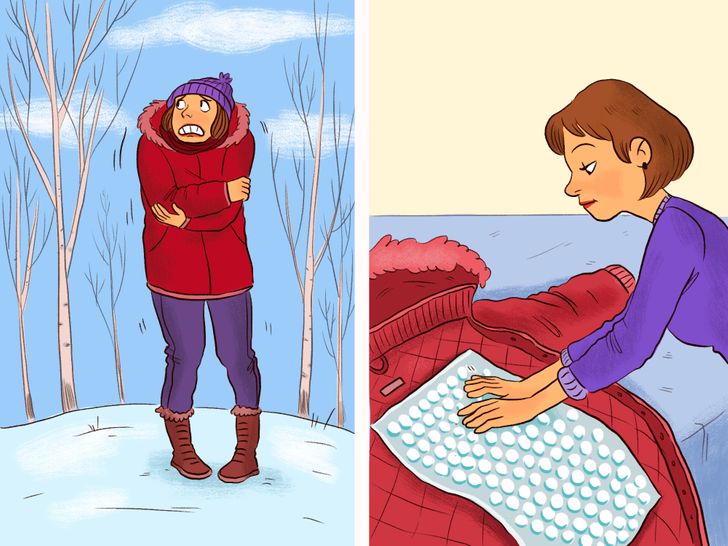
This may seem like an impractical tip, but packing bubble paper is extremely important when camping in cold weather. Since bubble wrap keeps a layer of air as a buffer, it acts as a great insulator. It’s even used to insulate windows during the winter. If you forgot to do that, you can always use dry leaves as a substitute. Research has shown that dry apple tree leaves, for example, improve thermal insulation.
3. Collect morning dew with ankle grass-bracelets.
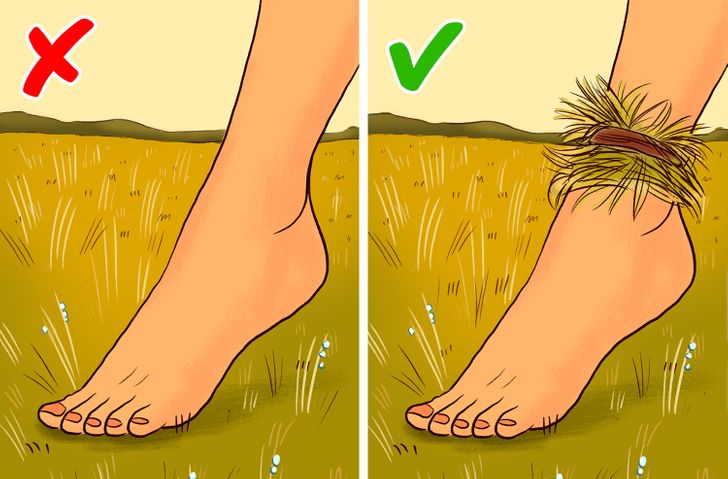
This technique is commonly used by Australian aboriginal people who would walk long distances without carrying water. They would form a ball of dried grass or even wrap it around their ankles while walking before sunrise to collect dew water.
4. Sleep in an elevated bed to avoid hypothermia.
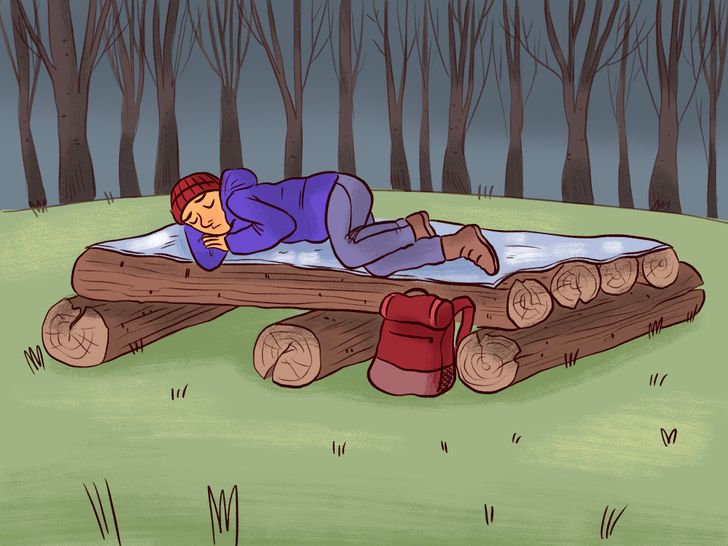
Once you’ve managed to find water, and since it’s always smart to avoid walking in the darkness to prevent accidents, you’ll want to find shelter if you have to spend the night in the wilderness. If you can’t find a cave or any other way to protect yourself from rain, you have to make sure to insulate your body from the cold ground by sleeping elevated, in order to avoid hypothermia.
5. Rub your hands with pine needles to reduce mosquito bites.
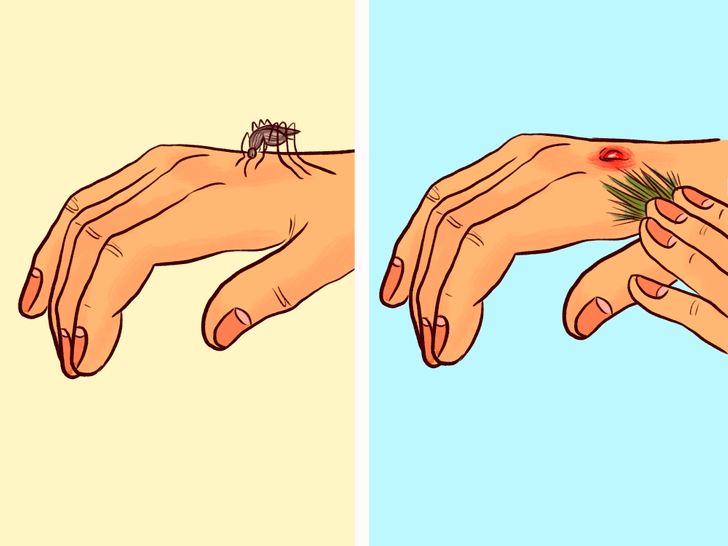
Although no natural remedy against mosquitoes works as effectively as DDT, you can use natural remedies to avoid these potentially dangerous insects. Pine oil, for example, can act as a deterrent to mosquitos and certain types of ticks due to its smell. Burning leaves such as citronella, could also repel insects.
6. Play dead when encountering big animals like grizzly bears.
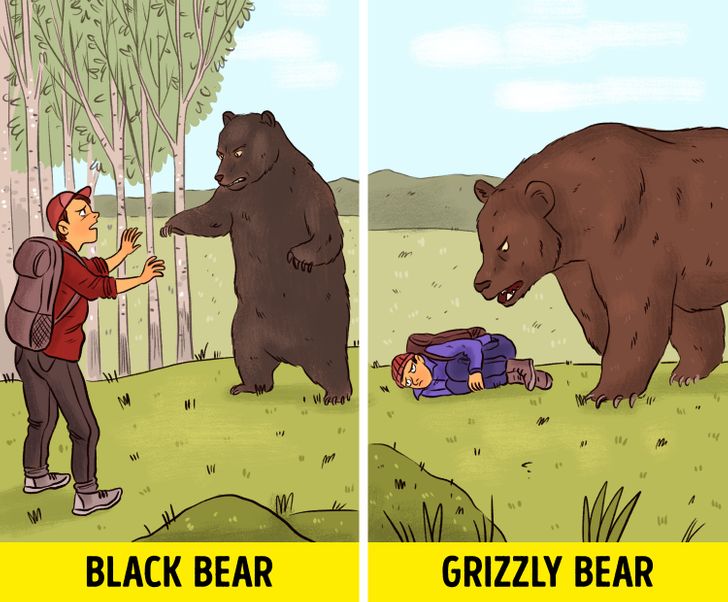
When running into a bear, the best thing to do is slowly back-step yourself out of the situation, since most of the times the bear is actually more afraid of you than you are of it. On the other hand, during a black bear attack, fighting back is a good idea, but a grizzly bear is much larger and more powerful, so the best chance of survival is to curl up in a ball and play dead.
7. Cross where the water is deep and slow, instead of where it’s shallower and moving faster.
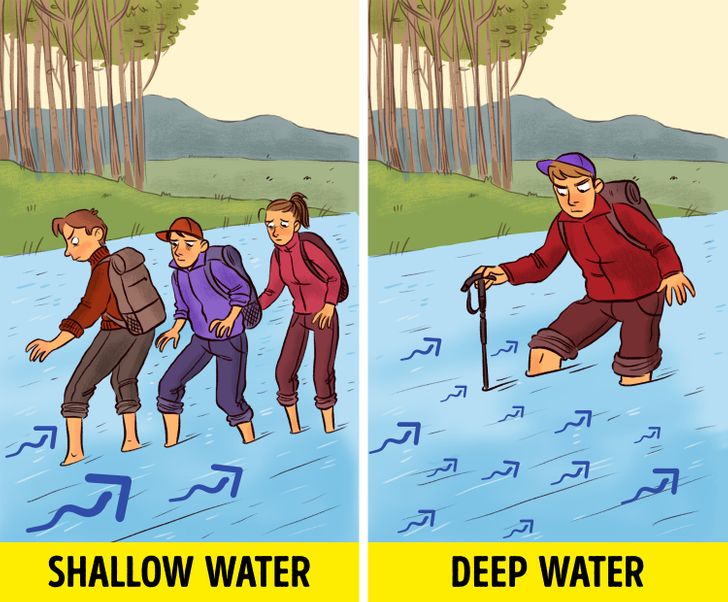
Crossing a river might seem easy, but you actually have to do it carefully. The safest places to cross are often straight sections between river bends. The swifter the current, the shallower it needs to be to safely cross. You can always throw a stick in to see how swift the current is, but in case you have doubts, remember that it’s better to cross deep, slow water, than swift and shallow water. If you do cross, always face upstream, with the water flowing toward you, and lean forward slightly, keeping your feet shoulder-width apart. Bending your knees to lower your center of gravity and having a third point of contact can ensure your safety if you’re crossing alone.
8. Carve ice into a lens-like sphere to create fire.
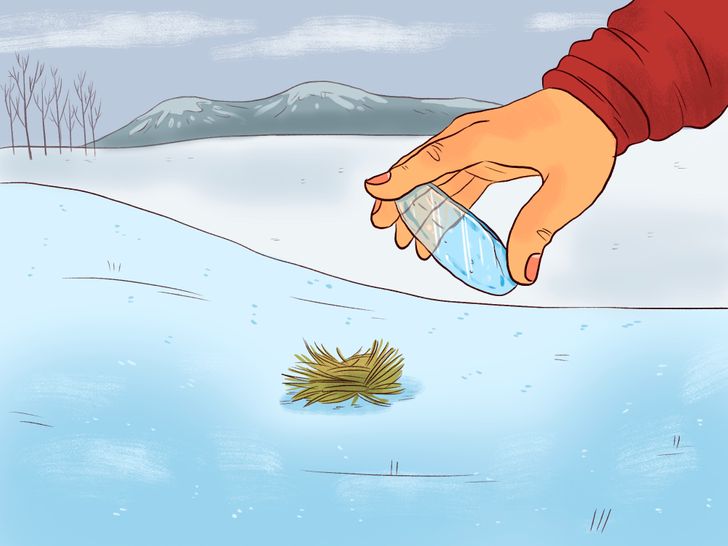
A clear ice block, that is about 5 cm thick, can be turned into a lens to create a fire using the same technique that you’d use with a magnifying glass. The trick is to create a convex lens (thinner around the edges and thicker in the middle). Then smooth the surface with your hands to tune up the efficiency of the ice lens.
9. Collect wet leaves to burn them and create smoke signals.
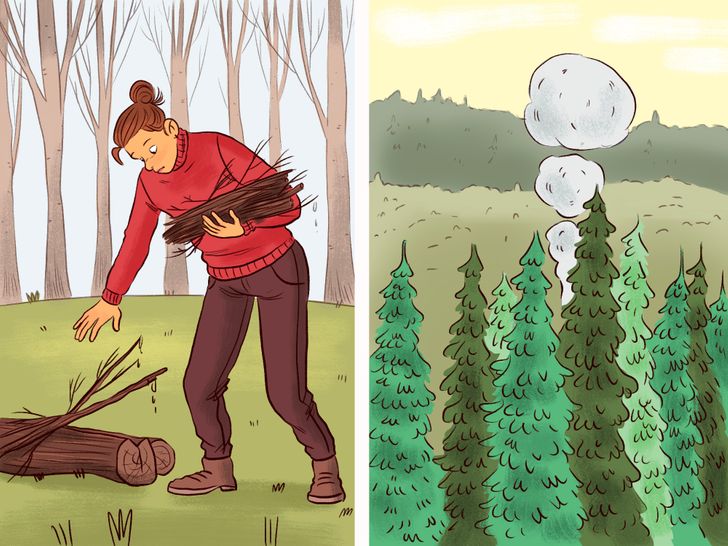
Once you’ve found water, shelter, and fire, your priority should be to reduce the time you’ll spend in the wilderness. Using a smoke signal could save your life. Once you’ve started a fire, you’ll want to create as much smoke as possible. This can be done by using wet leaves. Then, use a wet blanket or big leaves to section the smoke column into 3 puffs. If an airplane or a boat sees your smoke signal, they won’t confuse it for a wildfire. The 3-puff smoke column is a Native American and a Boy Scout emergency code.
10. Use ash as disinfectant to wash your hands.
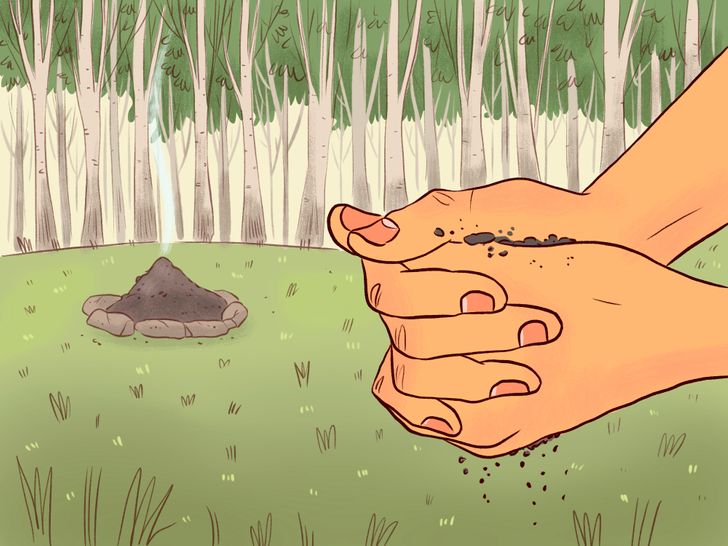
Hygiene might seem like the least of your concerns when you’re lost in the wilderness. However, it might happen that you need disinfect your hands, to heal yourself when performing minor operations. Ash, for a long time, has been neglected as an alternative to soap. When lost in the wilderness, ashes from campfires can be used since, according to this study, they are as efficient as soap.
Bonus: Ignore survival myths like drinking pee or moss only growing North.
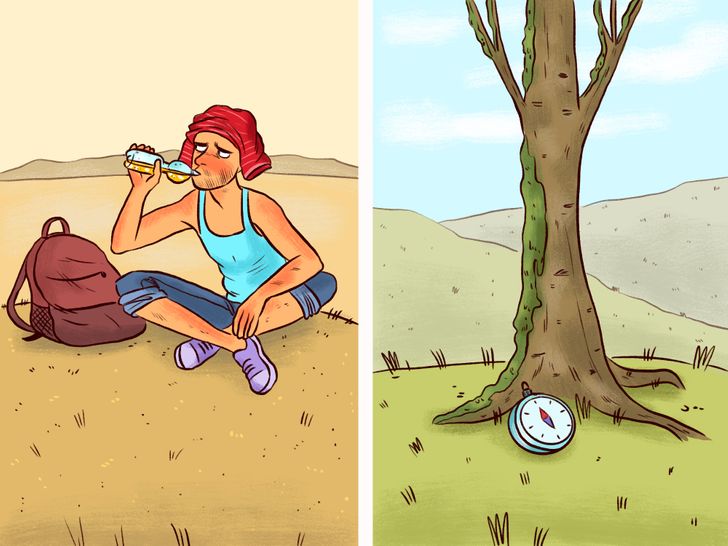
Drinking pee or using moss as a guide when lost are a few myths made popular by movies. Unfortunately, both are wrong. Despite the fact that pee is more or less sterile if your kidneys are healthy, the whole point of urinating is for the your body to filter excess salts and minerals from the blood. Drinking it again, could make your kidneys have to work harder and make you thirstier due to its sodium content. As for the moss growing North myth, moss is tuned for survival. It grows wherever it’s damp and not sunny. In some places in the Northern Hemisphere, this happens to be North, but it doesn’t have to be that way. In the Southern Hemisphere, moss grows to the South.
Tips may vary depending on the climate of your destination. Do you have any tips that could be helpful for our readers? What other survival myths do you think should be debunked?
13
 zi ang