
Sometimes when there is a hard day at work or when we feel stressed, we might involuntarily say something wrong to our boss. But there are certain phrases that you shouldn’t say no matter what. Because they may ruin your chances of getting promoted or may even lead to the termination of your contract.
At Bright Side, we decided to ask experts what you shouldn’t say to your boss and what would be a better answer in different situations. And our wonderful illustrators helped us to visualize it.
1. “I can’t work with him/her.”
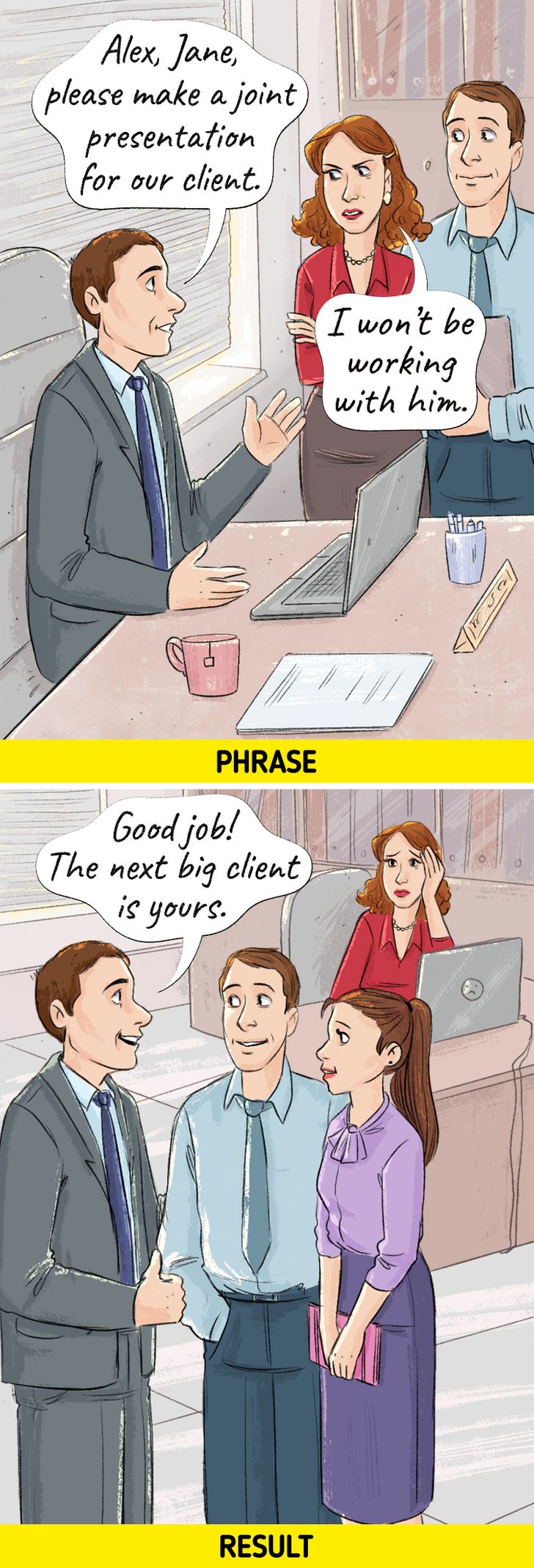
There are moments when we are so unhappy about our colleague that we want to discuss it with someone, but complaining at work is unprofessional. If your colleague, who you have a conflict with or who you just don’t like, hasn’t broken any company policies or made a big professional mistake, keep your dissatisfaction to yourself. Your boss won’t be happy to find out that you can’t work with this person. You’re expected to cope with personal feelings to achieve excellent results. And if you can’t, next time you will probably not be trusted with an important project.
What you should say instead: nothing.
2. “I don’t know how.”
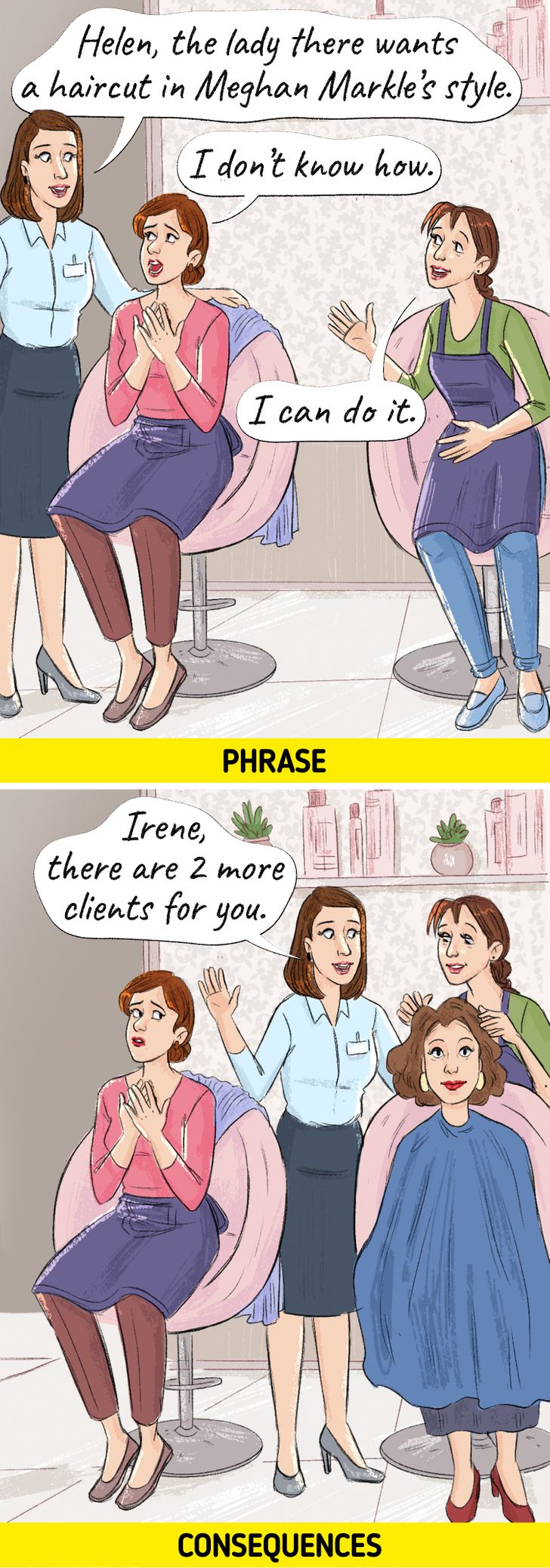
If you receive a new task that seems difficult to you because you’ve never done anything like this before, take your time before saying no. It’s hardly possible that your boss would give you a task you can’t handle, and it’s likely that it’s within your responsibilities. When you say, “I don’t know how,” it signifies the fact that you’re not motivated to learn and try something new.
What you should say instead: “It will be difficult for me to do it because… But we can try doing it like this…”
3. “This is not my responsibility.”
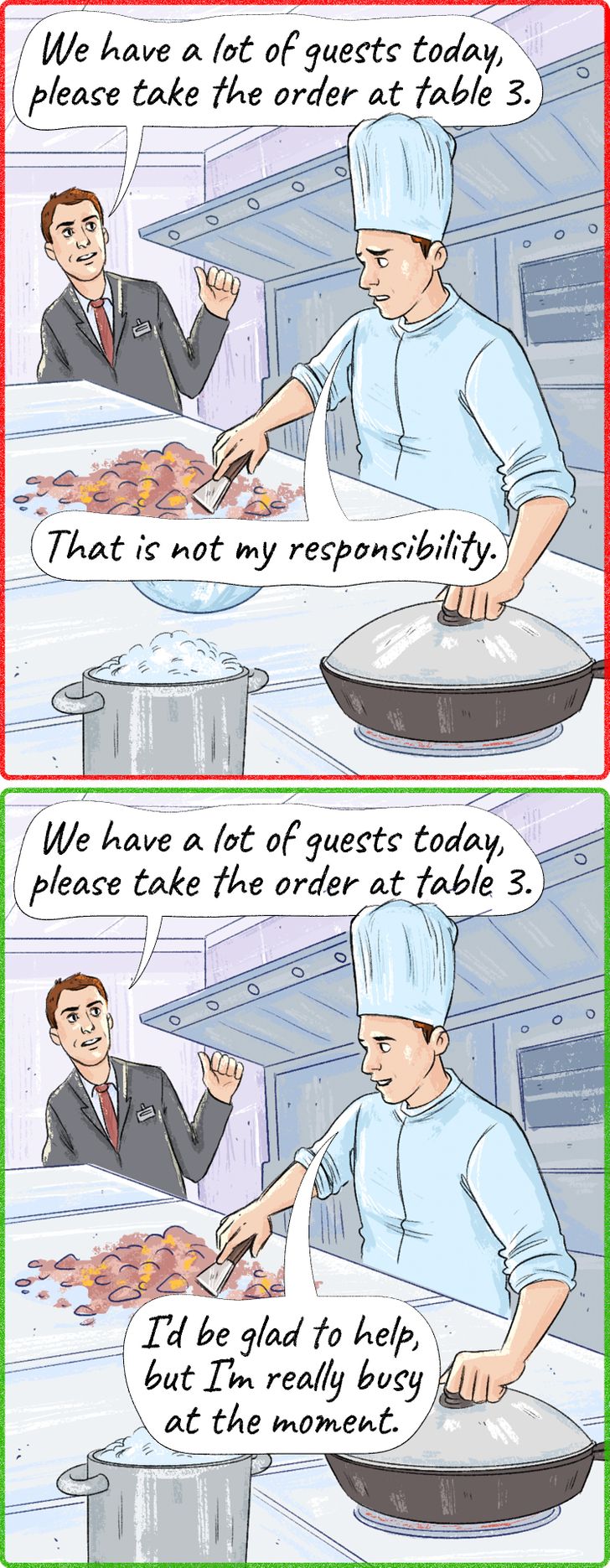
Your boss may assign you a task that is not related to your main work. But even if this happens, don’t say that this is not your responsibility in a resolute manner. Your boss may perceive this answer as a personal insult, or suspect that you’re not a team player or not dedicated to the company’s success. In the future, you probably won’t receive similar tasks and it can ruin your chances of getting promoted too. This doesn’t mean that you should just go and fulfill any of your boss’s weird requests, you just have to learn how to say no in a tactful manner.
What you should say instead: “I’d be glad to help, but I’m really busy at the moment.” “I’m ready to take on additional responsibilities but I’m afraid I’m not really experienced with this, and I don’t want to let you down.” “I’m always happy to try something new. Let’s discuss who I can delegate some of my current projects to so that our work doesn’t suffer from this change.”
4. “I’ll try.”
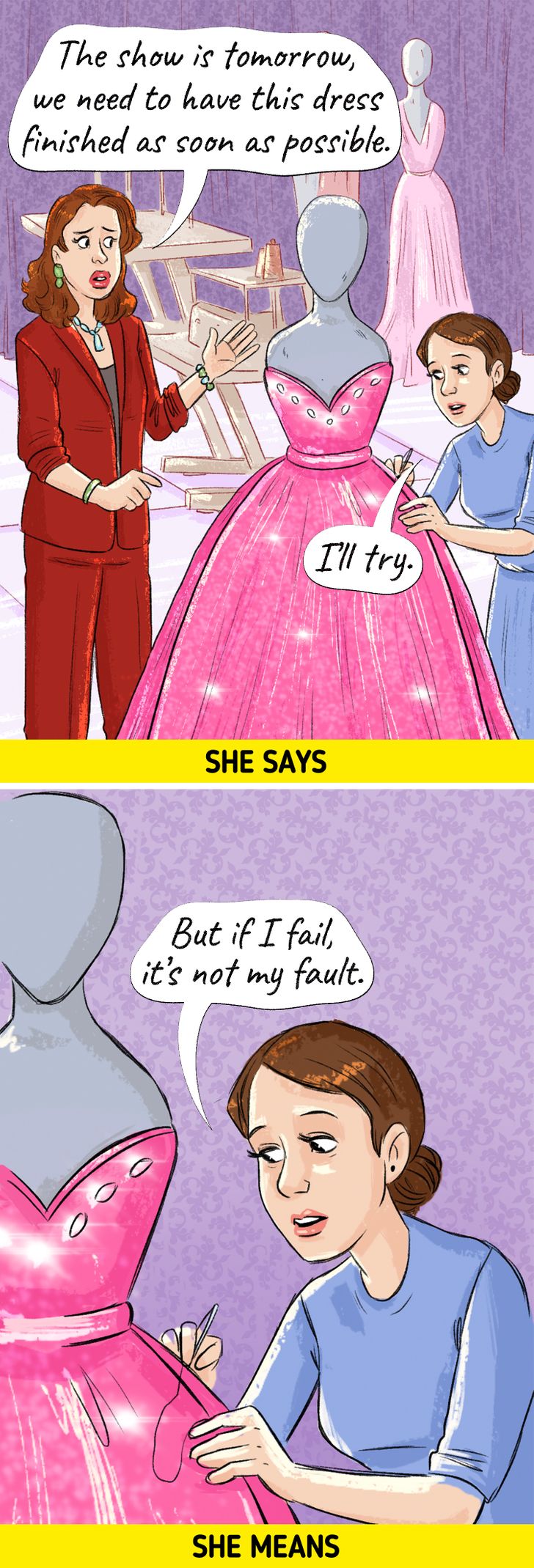
The words “I’ll try” imply the possibility of failure. When your boss asks you to do something, and you reply with something like this, you seem to be avoiding responsibility. Besides, it sounds like you can’t give a specific answer which can be pretty irritating. If you’re sure that you can meet the deadline just say so. If not, explain why you can’t or ask for help or postponing the deadline if necessary.
What you should say instead: “Will do.” “To meet the deadline, I’ll need…”
5. “We’ve always done it like this.”
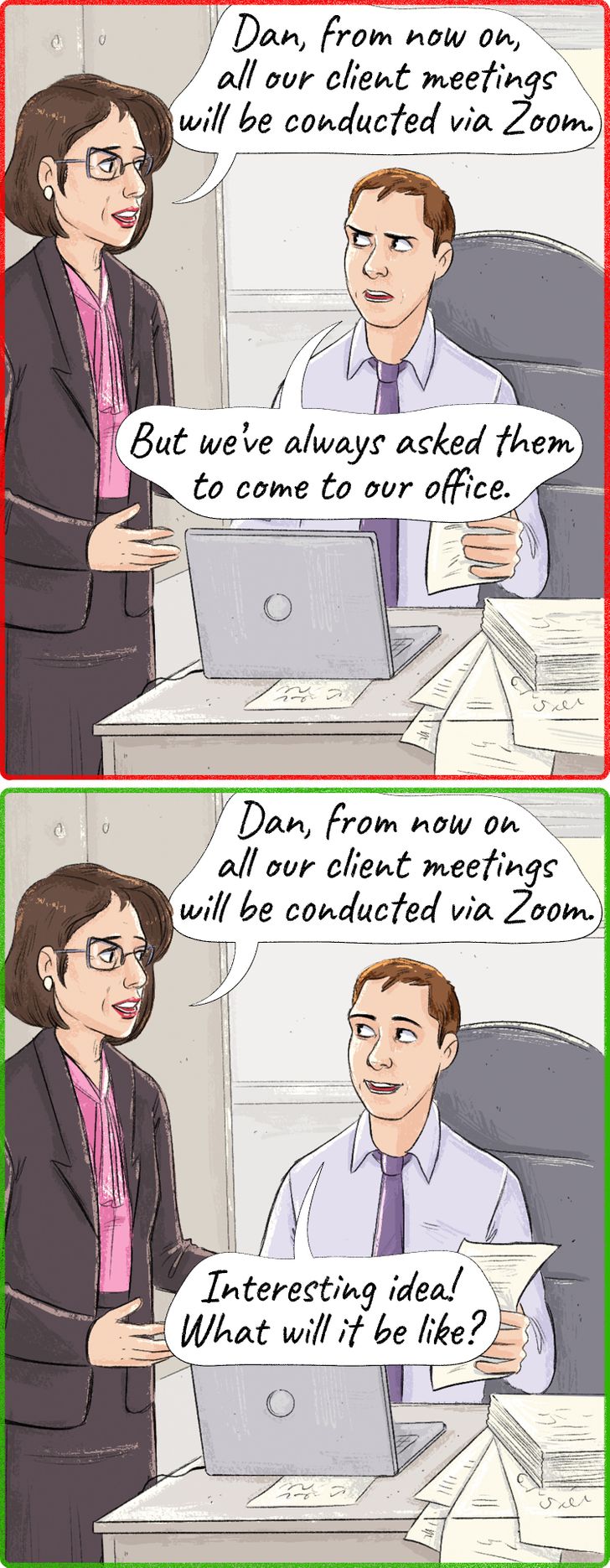
A good manager will definitely appreciate the ability of their subordinates to be flexible and easily adapt to changes in the working process. But if you insist that you’re used to doing something only in a certain way and don’t want to change anything, you show that you are stuck in the past and can’t keep up with the progress.
What you should say instead: “It’s an interesting idea. How does it work?” “It’s a new approach. Let’s discuss pros and cons.”
6. “It’s impossible. I can’t do it.”
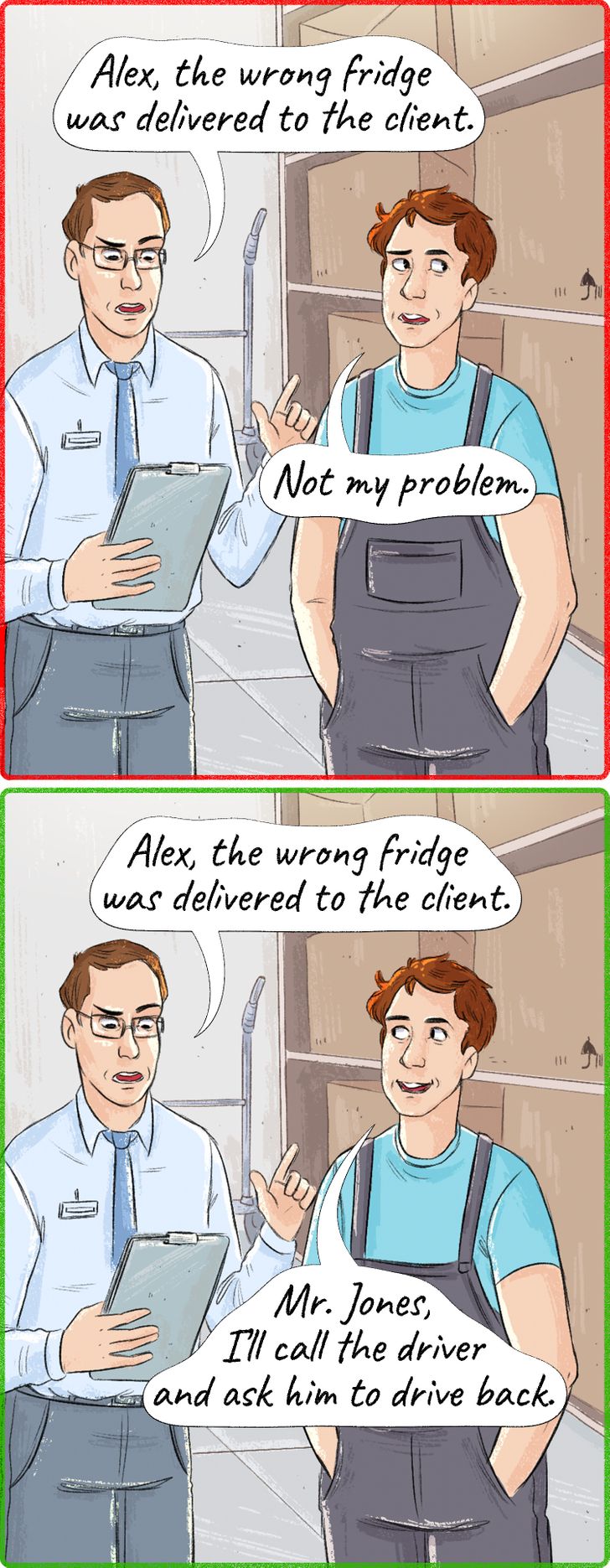
When you make a mistake and tell your boss that you can’t do anything about it, you demonstrate your passive and even pessimistic problem-solving skills. This approach will hardly be appreciated. Try to find ways to solve the problem or explain why this can’t be solved.
What you should say instead: “Let’s discuss what can be done under these circumstances.” “Right now I can do this…”
7. “I may be wrong but…” / “Maybe this is a bad idea but…”

By saying these words, you imply that you’re not sure about your idea which devalues the thing you want to say. A manager is likely to hear that your idea is bad or that you’re wrong.
What you should say instead: Begin your proposal with something like “I believe,” “I’m sure,” or “I recommend.”
8. “You’re wrong.”

It’s not the best idea to tell your boss directly that they’re wrong, especially in the presence of other colleagues, even if it’s true. It undermines their authority. Direct critique can lead to the fact that you won’t be invited to the next meeting or that your ideas will be ignored. If your boss made a small mistake, don’t say anything. If the mistake is more significant, choose your words mindfully and speak them in a friendly tone of voice.
What you should say instead: “Perhaps, I’m wrong but…” “I have different information. Let me check it and come back to you to continue our discussion.”
9. “I did my best.”
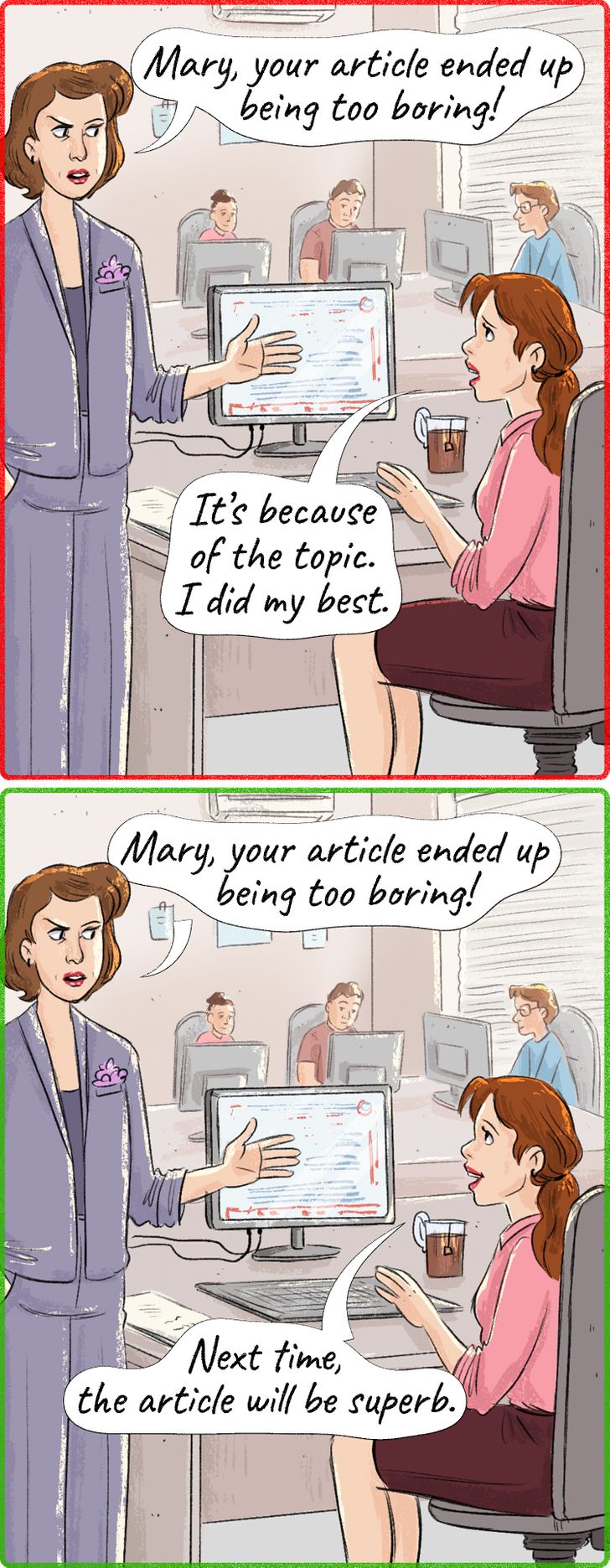
This phrase sounds like an excuse even if you’ve really done everything to save the situation. If you made a mistake, try to correct it, and inform your boss about what else can be done in the resulting situation. And if nothing can be done, say that you’ll do it right next time.
What you should say instead: “Let’s discuss what else can be done in this situation.” “I’ll be glad to do it again.” “Next time, I’ll do everything right.”
10. “…or I quit.”
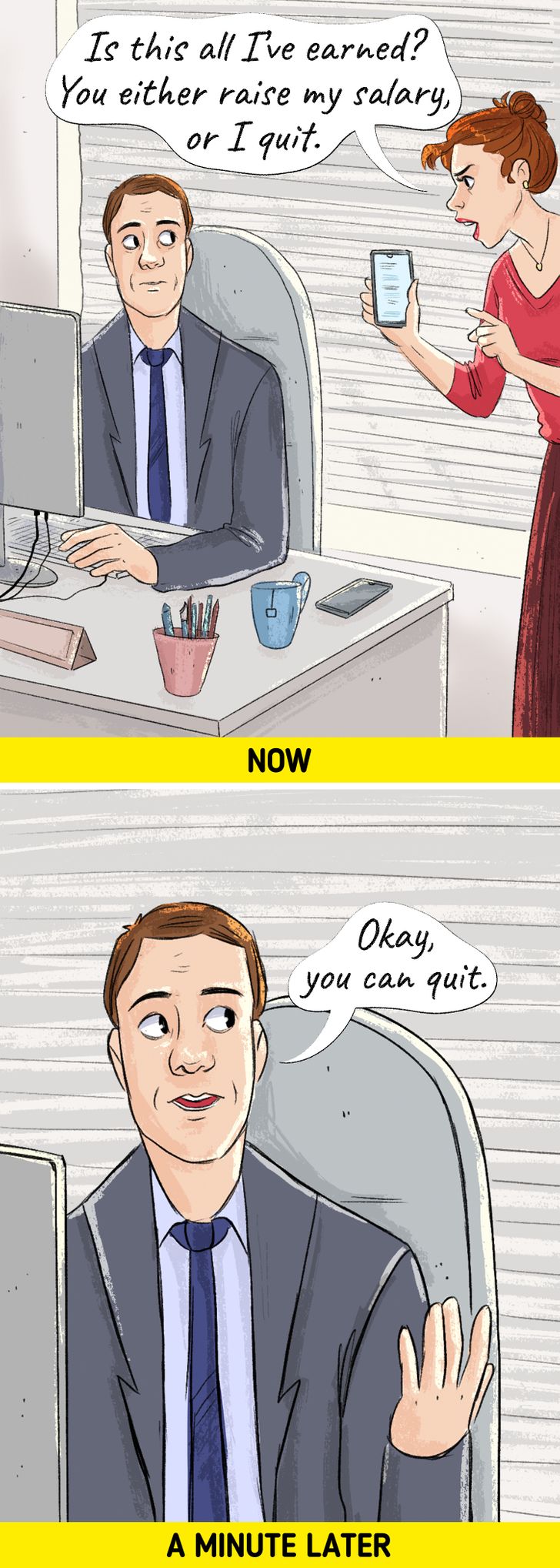
An ultimatum is a bad idea for practically any situation. The words “If you don’t do it, I’ll quit” sound like a threat, while making these statements is unprofessional in general. It’s more likely that your manager will start looking for someone to replace you after these words, thinking that you’re an unreliable employee who uses blackmail to achieve your goals. Still, if you’ve said this to your boss, be prepared to quit.
What you should say instead: nothing.
Have you ever said anything like this to your boss? What were the consequences? Tell us in the comments below.
5
 zi ang