
9. The Underwater Glider: Efficient Long-Term Ocean Monitoring
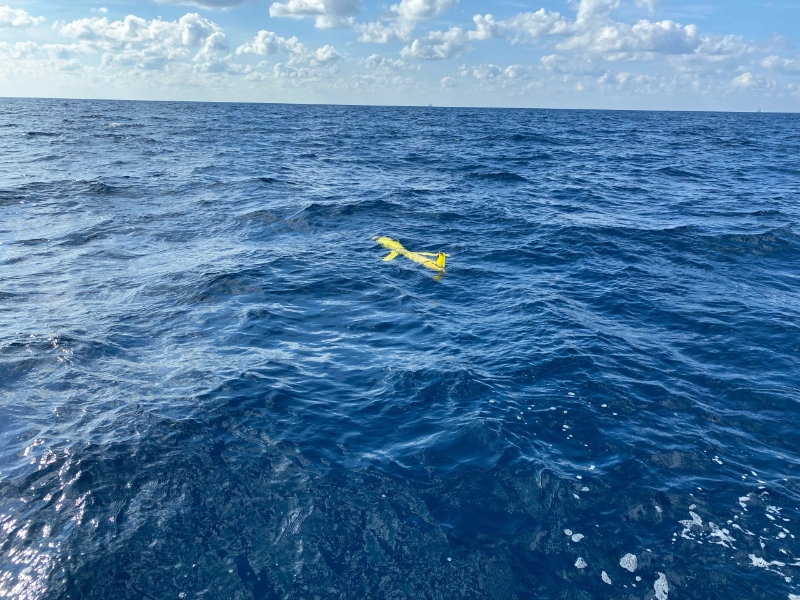
In long-term ocean monitoring and reconnaissance, the underwater glider marks a major advance. These self-contained vehicles may run long missions spanning weeks or even months since they are made to glide across the water column using little energy. Operating by varying their buoyancy to move up and down in the water, underwater gliders use small wings to translate vertical movement into forward propulsion. Their great energy-efficiency from this unusual form of propulsion allows long-distance missions that would be either impossible or impractical with conventional propeller-driven vehicles to be enabled. With a range of sensors, Underwater Gliders may gather as they travel large distances of the ocean data on temperature, salinity, oxygen levels, chlorophyll content, and other oceanographic factors. Underwater Gliders are great instruments for investigating ocean processes, tracking climate change, and enhancing weather forecasting models since they allow one to compile continuous, high-resolution data over vast spatial and temporal ranges. Underwater Gliders’ capacity to operate in demanding environments—including under ice and in remote ocean areas—where conventional sampling techniques are difficult or unsafe to use—is one of their main advantages. When the glider surfaces, the data these gadgets gather can be sent to shore stations via satellite, enabling almost real-time observation of ocean conditions. Gliders with upgraded capabilities—including better sensors, longer endurance, and the capacity to run at deeper depths—are emerging as technology develops. Underwater Gliders are becoming a necessary part of worldwide ocean observing networks since their success in offering reasonably priced, long-term ocean monitoring helps greatly to clarify marine ecosystems and climate processes.
 zi ang