
5. The Side-Scan Sonar: Painting Detailed Pictures of the Seafloor
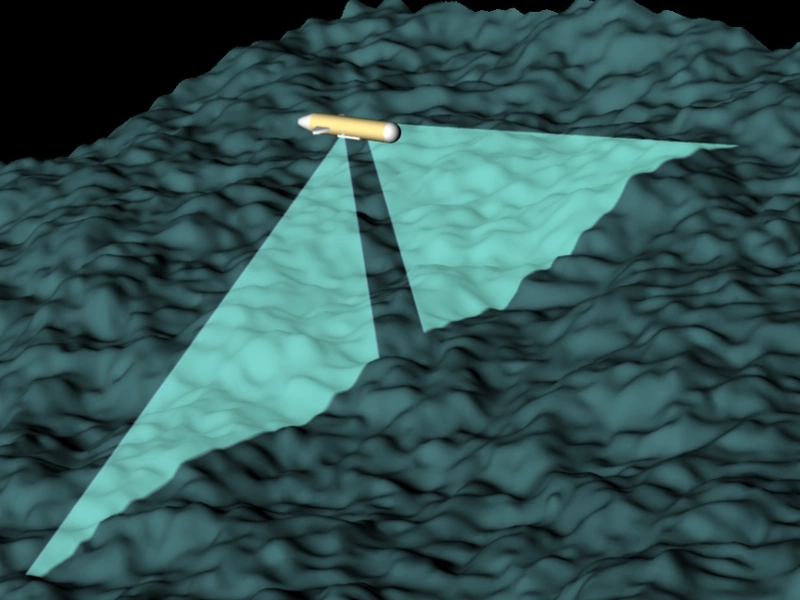
Highly detailed views of the seafloor and submerged objects made possible by side-scan sonar technology have transformed underwater surveillance. Usually trailed behind a vessel or mounted on an autonomous underwater vehicle, this complex device operates by producing fan-shaped beams of sound perpendicular to the path of the sensor. These sound waves produce a rich acoustic picture of the underwater scene as they bounce off the seafloor and other objects. The resultant data can be handled to provide extremely accurate and detailed depictions of the seafloor, often mimicking aerial photos in their clarity and detail. From shipwrecks and trash to geological formations and even schools of fish, Side- Scan Sonar shines in spotting and identifying a broad spectrum of underwater phenomena. For maritime surveys, underwater archaeology, and search and recovery missions, its fast and effective coverage of big regions makes it a priceless instrument. Because modern side-scan sonar systems run at several frequencies, operators can select between wide coverage or high-resolution imaging depending on the particular needs of their operation. Modern signal processing methods have improved Side-Scan Sonar’s capabilities even more by allowing the discrimination between different kinds of seafloor sediments and item recognition under half-buried seabed. Many well-known underwater discoveries have been made possible by this technology, which has also evolved into a regular instrument in the toolkit of naval forces, offshore businesses, and marine researchers all around. As resolution, range, and data processing stretch the envelope of what humans can see and grasp under the waves, Side-Scan Sonar’s success in underwater reconnaissance keeps growing.
 zi ang