
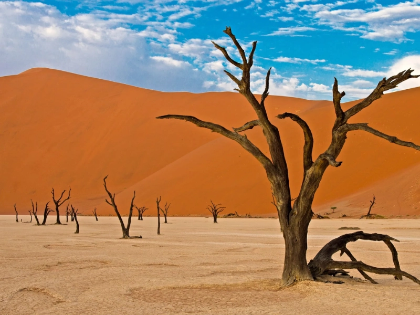
3. The Ghost Trees of Deadvlei
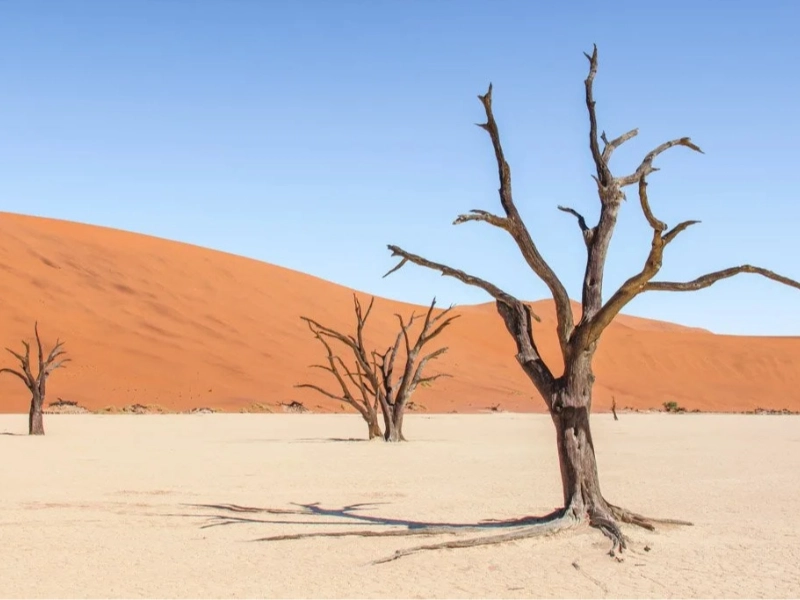
Deadvlei, a white clay pan studded with the charcoal skeletons of ancient camel thorn trees, lies deep in the desert. These 900-year-old tree remains produce one of the most strange scenes on Earth. The sand dunes cut off their water supply and the trees perished when the temperature increased; instead of rotting, the arid climate protected them by scorching the trees. A photographer’s paradise is created by the contrast among the black trees, white salt pan, rust-red dunes, and deep blue sky. These trees are amazing; they are too dry to break down, thereby acting as natural mummies silently attesting to the environmental changes of the desert over ages.
4. The Living Desert Phenomenon
The Namib Desert, with its hostile environment, supports an amazing variety of adaptive living forms that together create what scientists refer to as the “Living Desert” phenomenon. From the fog-harvesting Namib Desert beetle to the web-footed gecko able to bury itself in the sand within seconds, several species have developed unusual survival strategies. Crucially for these species, the morning fog of the desert comes from the Atlantic Ocean. Some of the most amazing adaptations in the natural world have evolved from this phenomena: insects that dance complexly to gather water droplets from the fog and plants able to endure years without rain.
 zi ang