
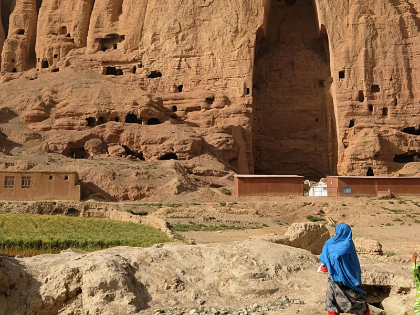
5. The Silk Road Connection: Bamiyan as a Cultural Crossroads
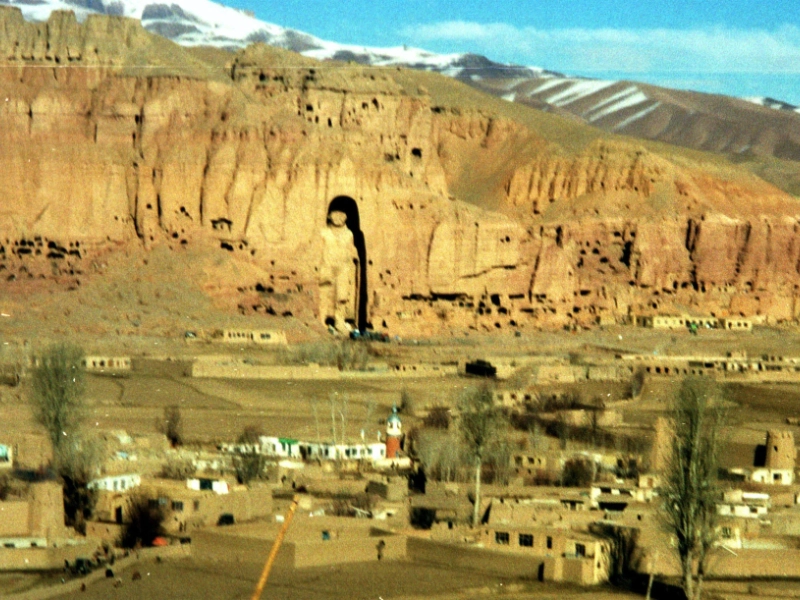
The geographical placement of the Bamiyan Valley along the Silk Road was absolutely vital in determining its historical and cultural importance. Deeper investigation of the site’s past in the years preceding the Taliban’s destruction revealed striking proof of Bamiyan’s function as a dynamic crossroads where many civilisations interacted and shaped one another throughout millennia.
Near the Buddha sculptures, archaeological digs uncovered a wealth of objects that pointed to the cosmopolitan character of ancient Bamiyan. Along with locally made goods, coins from far-off countries—including China, Persia, and Rome—were discovered, creating a picture of a busy commercial centre where traders from all around the known globe came together. These results not only validated Bamiyan’s significance as a halt on the Silk Road but also offered insightful analysis of the first- millennium CE economic systems throughout Eurasia.
The Bamiyan Buddhas’ and surrounding cave’s clear artistic styles highlighted even more the site’s multicultural nature. Inspired by Greek, Persian, Indian, and Chinese artistic traditions, researchers found how perfectly they combined to produce the distinctive Gandharan style defining the Bamiyan artworks. This blending of styles was more than just beautiful; it was a deep interchange of ideas, beliefs, and cultural practices carried out when pilgrims and visitors went through the valley.
Furthermore supporting Bamiyan’s function as a cultural melting pot was linguistic data. Writings in the caverns and on objects were in several languages, including Sanskrit, Chinese, Bactrian, and other Central Asian dialects. This multilingual setting implied that Bamiyan was a centre of learning and cultural interaction where ideas flowed as freely as trade products, not only a place for trade.
The enormous Buddha sculptures in Bamiyan, which epitomised their Buddhist legacy, were evidence of the part the Silk Road played in disseminating ideas and religions. Originating in India, Buddhism moved via the trade channels to reach Central Asia and beyond. Rising as a major Buddhist outpost, Bamiyan drew pilgrims and academics from all around. Originally scattered around the valley, the monasteries functioned as hubs of education where books were translated, ideas were discussed, and fresh schools of thought developed.
Furthermore underlined by the finding of Zoroastrian, Christian, and Islamic artefacts alongside Buddhist remnants was Bamiyan’s religious variety and tolerance over the millennia. various Silk Road cities, where pragmatic tolerance usually triumphed in the interest of trade and cultural interaction, had this coexistence of various religions in one location.
The Silk Road link also clarifies the technical developments brought to Bamiyan via trade. Via the Silk Road, techniques for making pigments, new architectural styles, and engineering innovations arrived; all helped to create and preserve the site’s enormous art and architecture.
A clear picture of Bamiyan formed as researchers assembled these several lines of evidence: not only as a site of Buddhist worship, but also as a bustling hub of cultural interaction that was essential in the trade of products, ideas, and technologies throughout Asia and beyond. Emphasising their value not merely as religious monuments but also as symbols of human interconnectedness and cultural interchange, this knowledge gave the Bamiyan Buddhas and their surrounds new layers of relevance.