
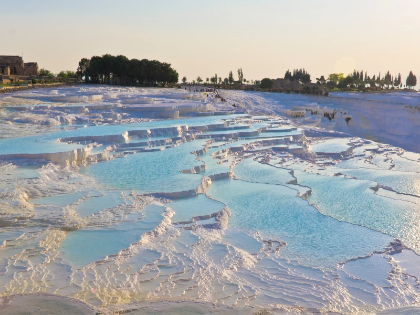
7. The Northern Byzantine Gate
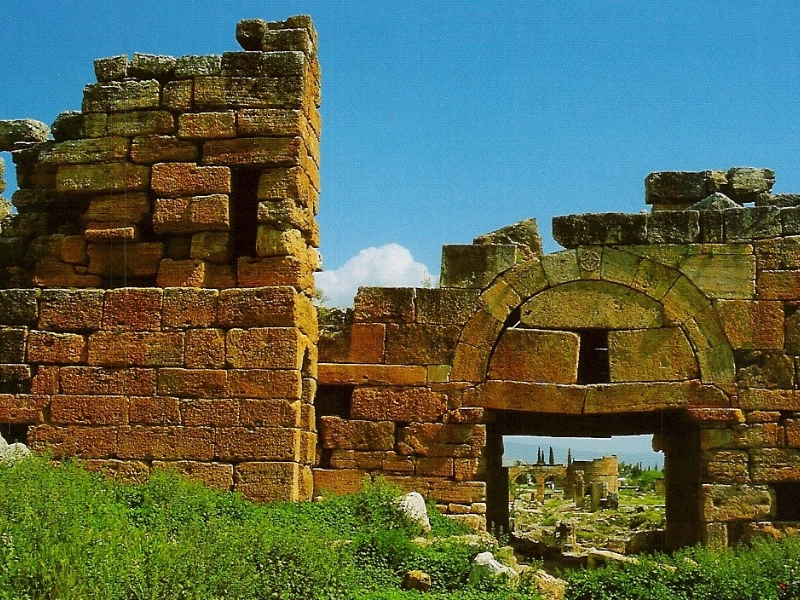
Standing as evidence of the later phases of Hierapolis’ history and the city’s ongoing significance during the Byzantine era, the Northern Byzantine Gate, sometimes known as the Domitian Gate, Built in the 4th century AD under Emperor Domitian’s rule, this towering construction—which stands at the northern gateway to the ancient city—later reinforced in the 6th century. Comprising two great round towers flanking a central entrance, the gate is a wonder of Byzantine military architecture. The sheer enormity of the construction will astound you as you get closer; it has astonishingly endured over time. With small apertures for archers and sturdy walls to resist siege engines, the gate’s design captures the defensive necessities of the late Roman and early Byzantine periods. As you stroll past the gate, you can really picture the activity of past visitors and traders arriving into the city following protracted distances. Excellent views of the surrounding terrain and the expansive remains of Hierapolis are also provided from the area around the entrance. Rising to the top of one of the towers (where reachable) offers a panoramic view of the whole ancient site and the travertine terraces below. From the Hellenistic period to the Byzantine era, Hierapolis’s strategic relevance and lengthy history of settlement are powerfully reminded of by the Northern Byzantine Gate. Anyone fascinated in ancient architecture and military history should definitely visit this outstanding site for its well-preserved condition.
8. The Martyrium of St. Philip
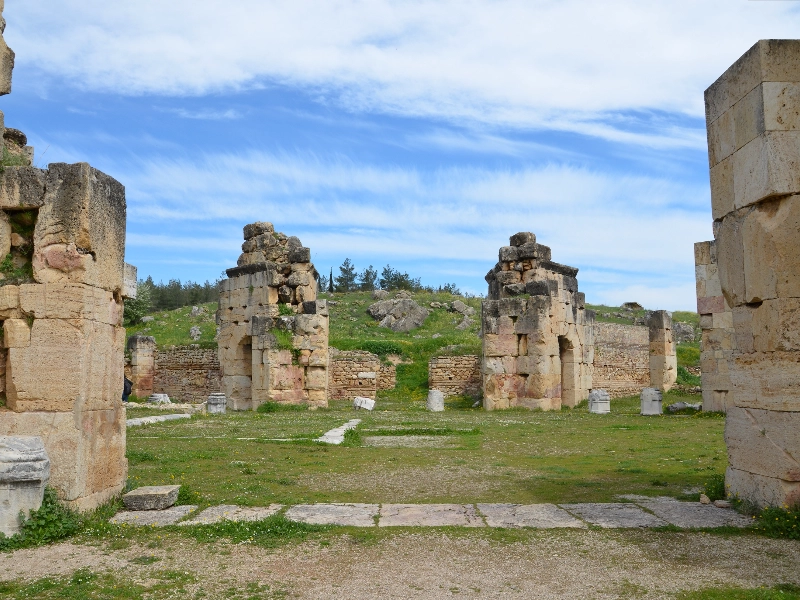
On the eastern slope of the hill gazing over Hierapolis, the Martyrium of St. Philip is a notable religious and historical site. Built in the fifth century AD to honour the martyrdom of St. Philip the Apostle, who is thought to have been crucified in Hierapolis about 80 AD, this octagonal church For both religious and archaeological reasons, the building is extremely significant and a master example of early Christian architecture. The unusual octagonal form of the martyrium will astound you as you go closer since early Christian baptisteries and martyria shared this pattern. Built from native travertine stone, the church blended in perfectly with the surroundings. Though much of the architecture is in ruins, enough still exists to let visitors feel its past grandeur. Eight rectangular rooms, each presumably used for a certain liturgical purpose, round the centre octagonal chamber. Archaeological digs have unearthed complex floor mosaics and architectural elements suggesting the original beauty of the construction. Perfect for photography and meditation, the site’s high elevation provides amazing views over the Lycus Valley beyond and the remains of Hierapolis. For many Christian travellers, the Martyrium of St. Philip is a destination of great spiritual relevance in addition to an architectural wonder. For those interested in early Christian history or looking for a quiet moment among the busy tourist attractions of Pamukkale, the site’s calm environment and historical significance make it a must-visit place.