
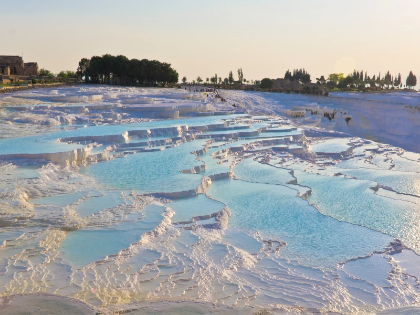
5. The Pamukkale Antique Pool
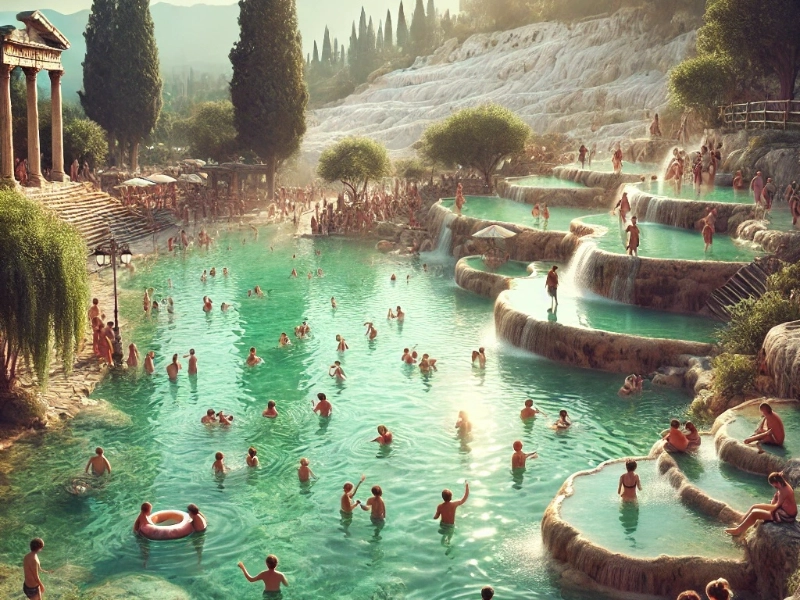
The Pamukkale Antique Pool comes in fifth on our list and really qualifies as a lovely sanctuary. Known either as the Sacred Pool or Cleopatra’s Pool, this amazing thermal pool is a special fusion of old history and natural beauty. The same hot springs that produce the travertine terraces feed the pool, therefore preserving a year-round consistent temperature of about 36°C (96.8°F). The presence of old Roman columns and marble slabs buried in its glistening clean waters distinguishes this pool and adds great charm. These architectural ruins are thought to have dropped into the pool during a 7th-century AD earthquake, producing an alien aquatic scene. You can actually touch bits of history as you swim, feeling the smooth marble underfoot and witnessing the play of light on the submerged columns. Said to offer restorative qualities, especially helpful for rheumatic disorders and skin issues, the mineral-rich waters Modern conveniences include changing rooms, lockers, and a café surround the pool, therefore guaranteeing a pleasant experience for guests. Beautiful flowers also abound here. The environment created by the contrast of the warm, comforting waves with the physical presence of ancient history really feels like entering another planet. Legends link this pool with Cleopatra; the sensation of floating among ancient ruins in the warm, mineral-rich waters feels nothing less than royal. A very remarkable highlight of any trip to Pamukkale is the Pamukkale Antique Pool, which presents a special chance to simultaneously enjoy ancient history and natural beauty.
6. The Necropolis of Hierapolis
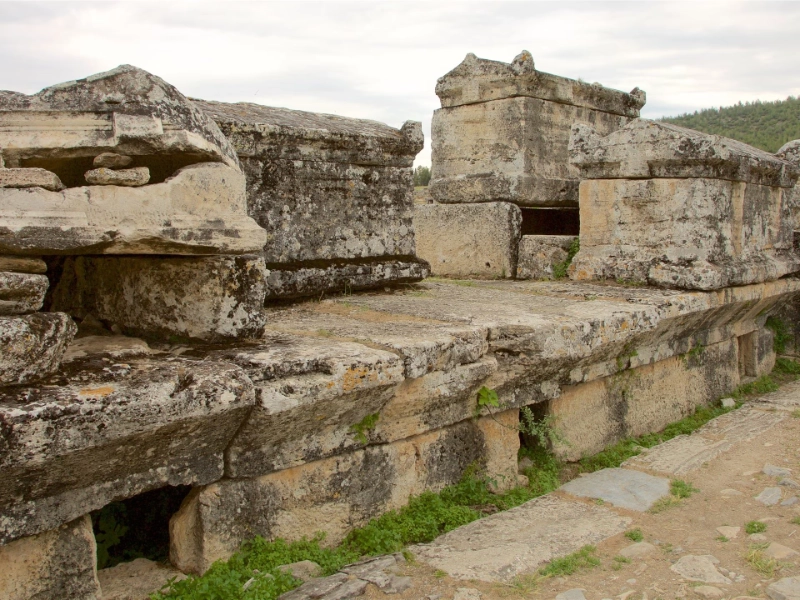
One of Turkey’s biggest ancient cemeteries, the Necropolis of Hierapolis provides a remarkable window into the burial customs and beliefs of the past. Stretching for more than two kilometres along the eastern and northern margins of the ancient city, this “city of the dead” boasts more than 1,200 tombs from the late Hellenistic period through early Christian times. The necropolis is amazing not only in scale but also in the variety and condition of its tombs. From basic sarcophagi to complex family tombs and massive mausoleums, you will come across a great spectrum of burial buildings as you meander around this large archaeological site. Many of the tombs have detailed carvings and inscriptions that shed light on the life and social level of the departed. The rich trader Flavius Zeuxis, who claimed to have sailed the Mediterranean 72 times, had one of the most remarkable constructions. The Tomb of Marcus Aurelius Ammianos, with its well etched reliefs capturing events from Greek mythology, is another famous monument. The necropolis also features distinctive local tomb forms including circular buildings combining Phrygian and Hellenistic styles and tumulus tombs. Discovering how the tombs face the travertine terraces will help you to understand why the ancient people of Hierapolis regarded the hot springs holy even in death. The Necropolis of Hierapolis provides a moving and provocative experience that lets guests link with the past and consider how many civilisations have handled the universal human experience of death and remembering.